Beyond these three primary causes, the full spectrum of conditions that produce red dots on skin is broad. It includes allergic reactions, viral infections, autoimmune disorders, and vascular conditions—each with its own pattern, associated symptoms, and appropriate course of action. Identifying the correct cause depends heavily on the dot’s size, texture, distribution across the body, and any accompanying symptoms.
When red dots require a medical consultation
Not every red dot demands a trip to the doctor, but several warning signs should prompt a medical consultation. Spots that do not fade under pressure, appear suddenly in large numbers, spread quickly, or are accompanied by fever, joint pain, or unusual fatigue fall into a category that requires professional evaluation.
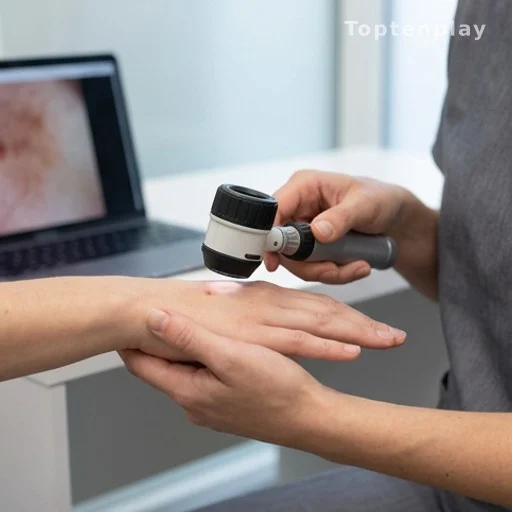
The non-blanching test—pressing a glass or finger firmly against the spot—remains one of the simplest and most reliable first checks. A dot that retains its colour under pressure is more likely to involve bleeding beneath the skin, which narrows the diagnosis toward conditions such as petechiae or purpura rather than a surface-level rash.
For spots that are stable, isolated, and painless—such as cherry angiomas—watchful waiting is generally appropriate. Patients who notice a change in size, colour, or number of existing spots, or who develop new marks without an obvious explanation, are advised to document them with photographs and discuss them with a dermatologist or general practitioner. Early assessment remains the most reliable way to rule out conditions that benefit from prompt treatment.
The remaining causes documented in the full clinical overview — including conditions linked to autoimmune responses, viral infections, and vascular disorders — each carry their own diagnostic criteria and treatment pathways. For patients already managing a known skin condition, any sudden change in the appearance or distribution of red dots should be flagged at the next scheduled appointment. Those with no prior diagnosis who notice persistent or spreading marks are encouraged to seek a first dermatological assessment, particularly if over-the-counter treatments have produced no improvement after two weeks.
Suggested Posts

The study desk puzzle that tricks your brain into missing the obvious
A study desk with books, pens, and a lamp sounds like the easiest possible setting for a spot-the-difference puzzle. Yet that very familiarity is…