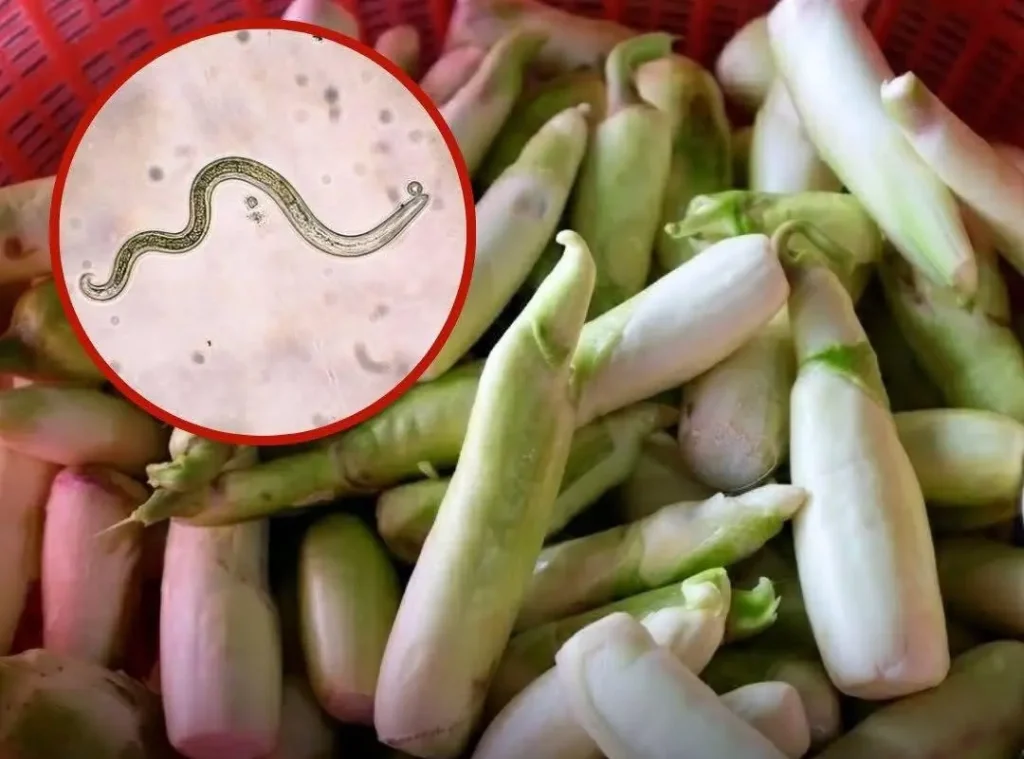
Viral posts have been warning millions of readers that raw aquatic vegetables — including fresh water bamboo shoots — are the most parasite-contaminated food in the world and can trigger brain infections. Health experts agree the risk is real under specific conditions, but say the alarming headlines significantly overstate what the evidence shows.
In brief
- —Aquatic vegetables can carry parasites if grown in polluted water
- —Brain parasite claims circulating online are largely misleading
- —Thorough washing and cooking dramatically reduce infection risk
Why vegetables grown in water carry a higher contamination risk than land crops
Unlike vegetables cultivated on dry land, aquatic plants spend their entire life cycle submerged. That constant contact with water means that if the source becomes polluted — by animal waste, human sewage, livestock runoff, or infected snails acting as intermediate hosts — parasite eggs and larvae can attach directly to the plant surface.

This biological reality is why public health authorities consistently recommend thoroughly washing and cooking aquatic vegetables before consumption. The risk is not hypothetical, but it is also not inevitable: it depends heavily on the quality of the water in which the plants are grown.
Liver flukes, roundworms, and the parasites actually linked to these vegetables
Several parasites have been documented in connection with improperly prepared aquatic plants. Liver flukes of the Fasciola species are among the most cited: infection can produce abdominal pain, fever, fatigue, and liver inflammation. Intestinal flukes affecting the digestive tract have also been associated with contaminated aquatic produce, as have roundworms in environments with poor sanitation.

Infection, however, is far from automatic. The source notes that contamination usually requires specific environmental conditions — polluted water, the presence of particular intermediate hosts, and consumption of raw or inadequately prepared plants. Most people who eat these vegetables in regions where they are a dietary staple do so without incident.
A recurring pattern of food-safety panic online
Viral health warnings about specific foods causing parasitic or neurological infections circulate regularly on social media, often accompanied by graphic medical imagery. Health experts note that such posts typically strip rare worst-case scenarios of their context, presenting exceptional outcomes as routine dangers. The pattern is documented across multiple food categories, from raw fish to leafy greens.
Brain parasites from a single vegetable? Why the viral claim does not hold up
The most alarming version of the story — that eating a contaminated aquatic vegetable can cause brain parasites — is where viral posts become genuinely misleading. Certain parasites, including those responsible for neurocysticercosis and Angiostrongylus infections, are capable of affecting the nervous system. But these are rare outcomes tied to specific pathogens, not a routine consequence of eating aquatic produce.

Eating one contaminated vegetable does not automatically result in a brain infection. Most parasite exposures do not involve the nervous system at all, and the majority of infections are preventable through standard food preparation. The dramatic brain-scan images widely shared online are, according to health experts, designed to shock viewers rather than accurately represent typical outcomes.
Severe neurological symptoms remain uncommon and are generally associated with particular parasites rather than ordinary dietary exposure. Typical warning signs of a parasitic infection — if one does occur — are digestive: persistent abdominal pain, nausea, diarrhea, unexplained weight loss, fatigue, or fever.
Five preparation steps that make aquatic vegetables safe to eat
Generations of cooks across Asia have consumed aquatic vegetables without major problems, largely because traditional preparation methods address the contamination risk directly. Heat is the most reliable safeguard: cooking at high temperatures effectively destroys parasites and microorganisms that may be present on the plant surface.

Beyond cooking, public health guidance points to a short checklist: rinse vegetables thoroughly under clean running water; peel outer layers where possible; soak in clean water before cooking; avoid produce harvested from visibly polluted ponds or waterways; and purchase from reputable suppliers who follow food safety standards.
Certain groups should be especially attentive to these steps. Pregnant women, young children, older adults, and people receiving immunosuppressive therapy or living with chronic illness face greater susceptibility to foodborne infections and should be particularly careful about sourcing and preparation. Aquatic vegetables also provide genuine nutritional value — fiber, vitamin C, potassium, antioxidants, and beneficial plant compounds — making safe preparation a better answer than avoidance.
No major health authority has issued a specific updated advisory on aquatic vegetables in connection with the viral claims currently circulating. The open question for researchers is whether growing urbanisation and changing agricultural water management in parts of Asia will alter contamination patterns in coming years. For consumers, the immediate practical issue is whether food safety labelling and market regulation keep pace with demand for fresh aquatic produce in regions where it is a dietary staple.