The Victorian Origin Of The “WC”: When Toilets Entered Homes
“WC” stands for “Water Closet”, literally a closet with water. This name dates back to the 19th century, a time when indoor plumbing radically disrupted domestic habits. Before this sanitary revolution, populations relied on rudimentary solutions: outdoor latrines, manually emptied chamber pots, or communal facilities shared by several households.
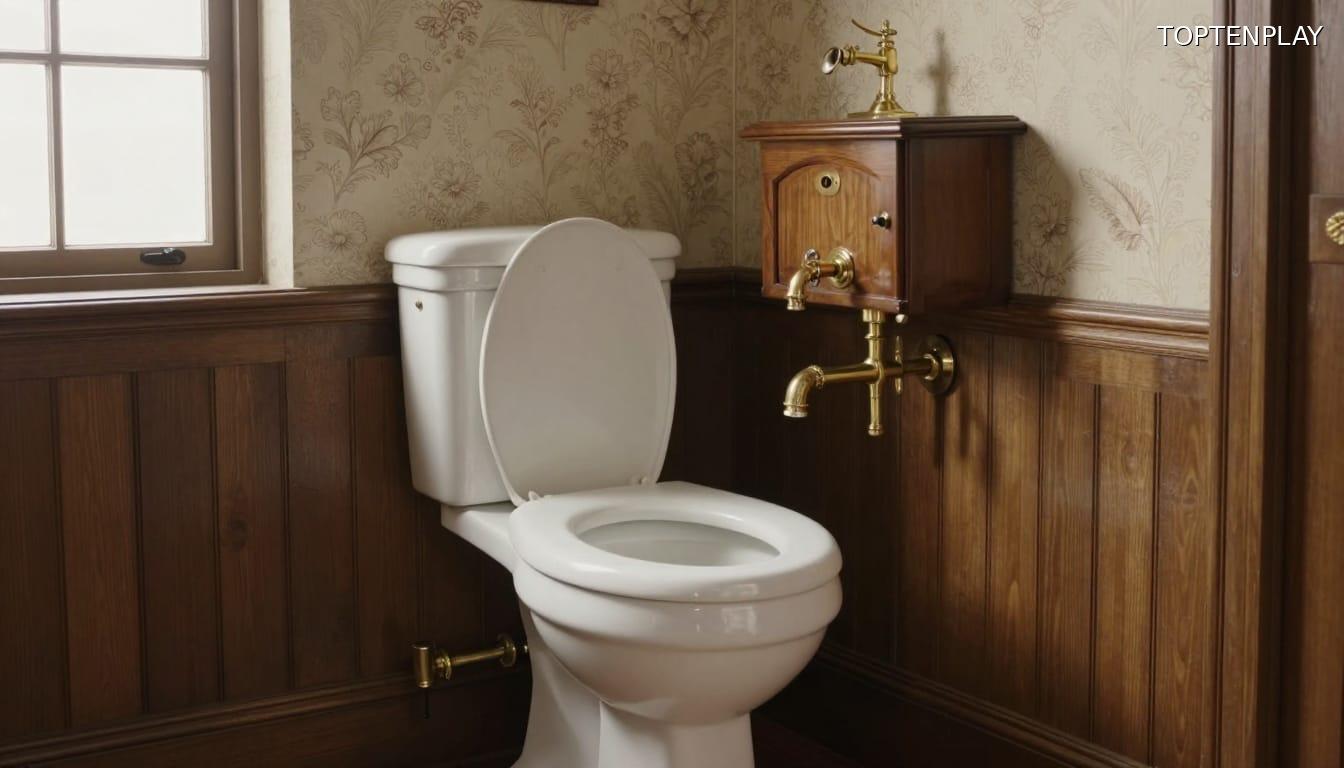
The arrival of flush toilets in homes marked a civilizational break. These facilities were installed in small closed rooms, separate from the main bathing space. The term “closet” specifically designated this enclosed small space, transformed into a functional area thanks to a revolutionary hydraulic system. Running water and the flushing mechanism gave this installation an almost futuristic dimension.
This innovation represented much more than simple comfort. It embodied decisive progress in terms of privacy and hygiene. Having a private place, equipped with an automatic drain, eliminated the humiliating and unsanitary constraints of traditional methods. The “water closet” became the tangible symbol of Victorian modernity, testifying to a household’s standard of living and refinement.
This dedicated room, however modest, profoundly transformed the relationship with the body and cleanliness, foreshadowing the contemporary hygiene standards that we now take for granted.
A Revolutionary Sanitary Advance For The Time
This installation metamorphosed the daily life of Victorian households. Owning a water closet meant breaking free from nightly chores to freezing latrines, the persistent smells of chamber pots, and the health risks associated with basic facilities. The flush instantly solved what generations had suffered as a fatality: the accumulation of waste and the contamination of the domestic environment.
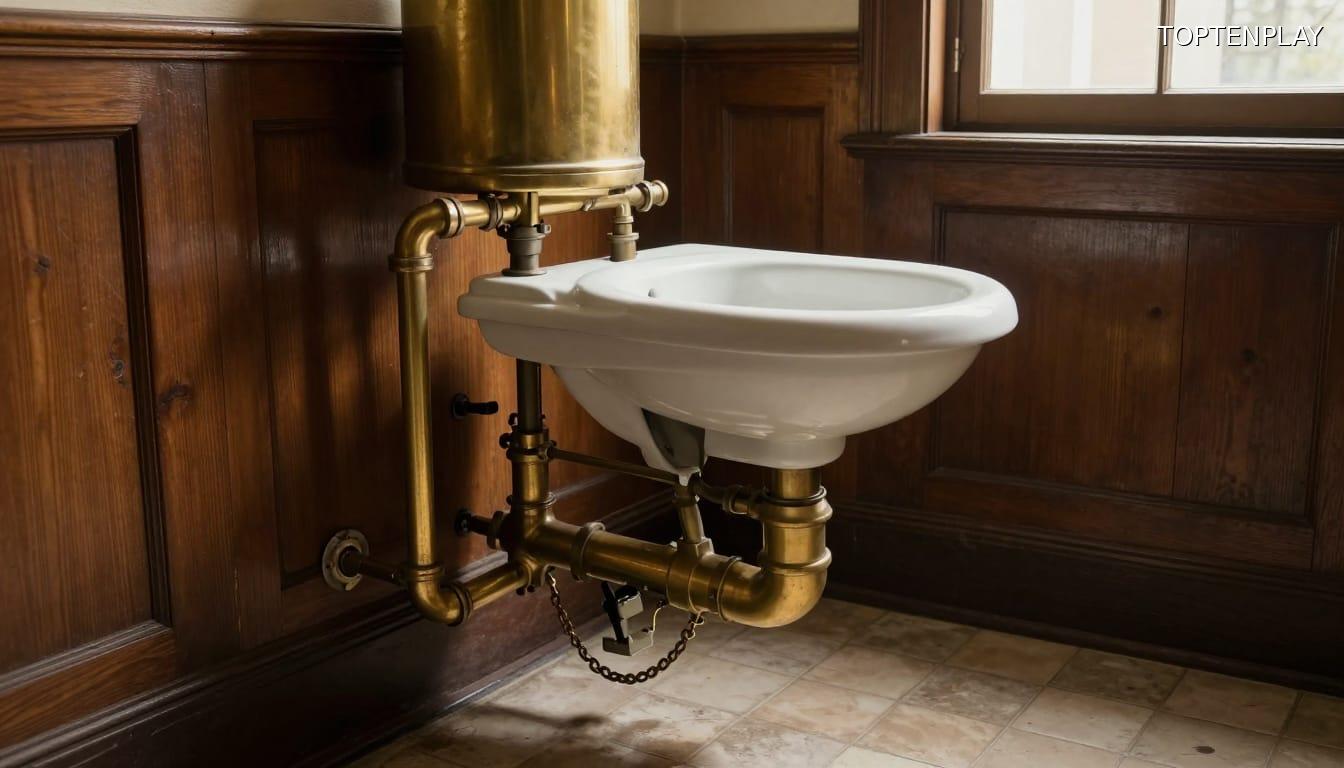
The hydraulic system was a remarkable technical feat. Channeled running water, the flush tank, the drain trap: each component participated in an ingenious mechanism that preserved the healthiness of homes. This automation eliminated direct contact with matter, drastically reducing the spread of gastrointestinal diseases and cholera that decimated unsanitary urban neighborhoods.
The psychological aspect mattered as much as hygiene. Having an enclosed space guaranteed unprecedented privacy, dignifying an act previously treated with collective embarrassment. Equipped households displayed their modernity and social standing. Installing a water closet was expensive, requiring connections, piping, and functional drainage.
This silent revolution foreshadowed current sanitary standards. What represented an exceptional luxury in the 19th century would become, in a few decades, a universal standard whose name would cross continents and eras.

From “WC” To “Restroom”: The Linguistic Divergence Between Continents
This Victorian terminology took radically different paths on either side of the Atlantic. In the United States, “bathroom” and “restroom” gradually established themselves in everyday language, almost completely erasing the reference to the “water closet”. A notable linguistic paradox: Americans systematically refer to these spaces as “bathroom” even when they contain neither a bathtub nor a shower, favoring a comfortable euphemism over technical precision.
The United Kingdom and continental Europe faithfully kept the abbreviation “WC”, perpetuating the semantic heritage of the industrial era. This persistence reveals a distinct cultural approach: where American vocabulary seeks to soften the function through circumlocutions (“to freshen up”, “to rest”), European usage maintains a descriptive sobriety inherited from the precursors of modern plumbing.
Terminological variations reflect different sensitivities toward bodily privacy. “Restroom” suggests a civilized break, “toilets” assumes the primary function, while “WC” remains a neutral, almost administrative code. This linguistic fragmentation in no way prevented the historical abbreviation from conquering a particular status in international spaces, where its conciseness would become precisely its major asset.

Why The “WC” Still Dominates Global Signage
This international predominance is explained by an implacable logic: two universally recognizable letters transcend linguistic barriers. In an airport welcoming passengers daily who master dozens of different idioms, “WC” functions as an immediate visual Esperanto. No translation necessary, no confusion possible.
Public infrastructure managers systematically favor this semantic economy. Railway stations, shopping centers, hotel complexes: wherever multinational populations converge, the Victorian abbreviation imposes itself as an obvious pragmatic solution. A “Restroom” sign confuses non-English speakers, “Toilettes” excludes those ignorant of French, while “WC” remains perfectly neutral and instinctively decrypted.
This universality paradoxically stems from its seniority. Massively spread during British colonial expansion and then normalized by international transport standards, the acronym has acquired a legitimacy that regional neologisms cannot match. Its typographic brevity also facilitates its reproduction on small supports: metal plates, pictograms, emergency signage.
The “water closet” thus survives well beyond its original context, metamorphosed into a global visual code. This durability illustrates how certain historical conventions, carried by their functional simplicity, resist cultural evolutions and are durably anchored in global collective practices.