Porchetta: The Obsession With A Perfect Recipe
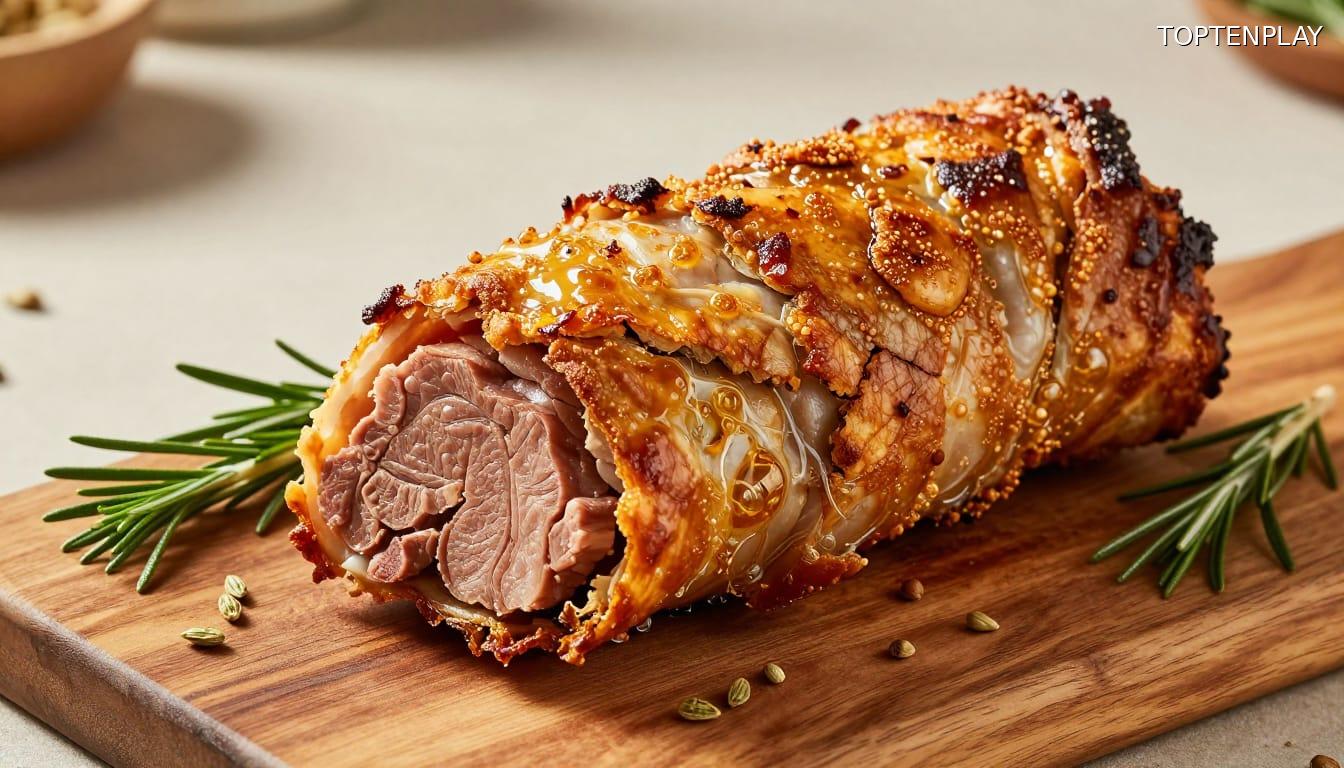
Porchetta, this magnificent rolled Italian pork roast with incredibly juicy meat richly seasoned with herbs and spices, encased in a crispy and blistered skin, has always represented an intimidating challenge. In theory, it sounds simple enough: season, roll, roast until the skin is crispy.
But the crackling never gave satisfaction. The top turned out great, but the sides remained uneven – either rock-hard flat skin instead of crispy, bubbled crackling, or worse, rubbery. And the skin under the roll? A pure rubber catastrophe.
Time and again, research led to frustration with videos that didn’t properly show the sides – we need visual proof! – or whose crackling wasn’t the desired bubbled type.
Abandoning the rulebook was necessary. Instead, applying a foolproof crispy crackling method tested to exhaustion for a pork belly recipe: air-drying in the fridge, slow roasting for succulent meat, then finishing at a high temperature to make the skin blister and crisp.
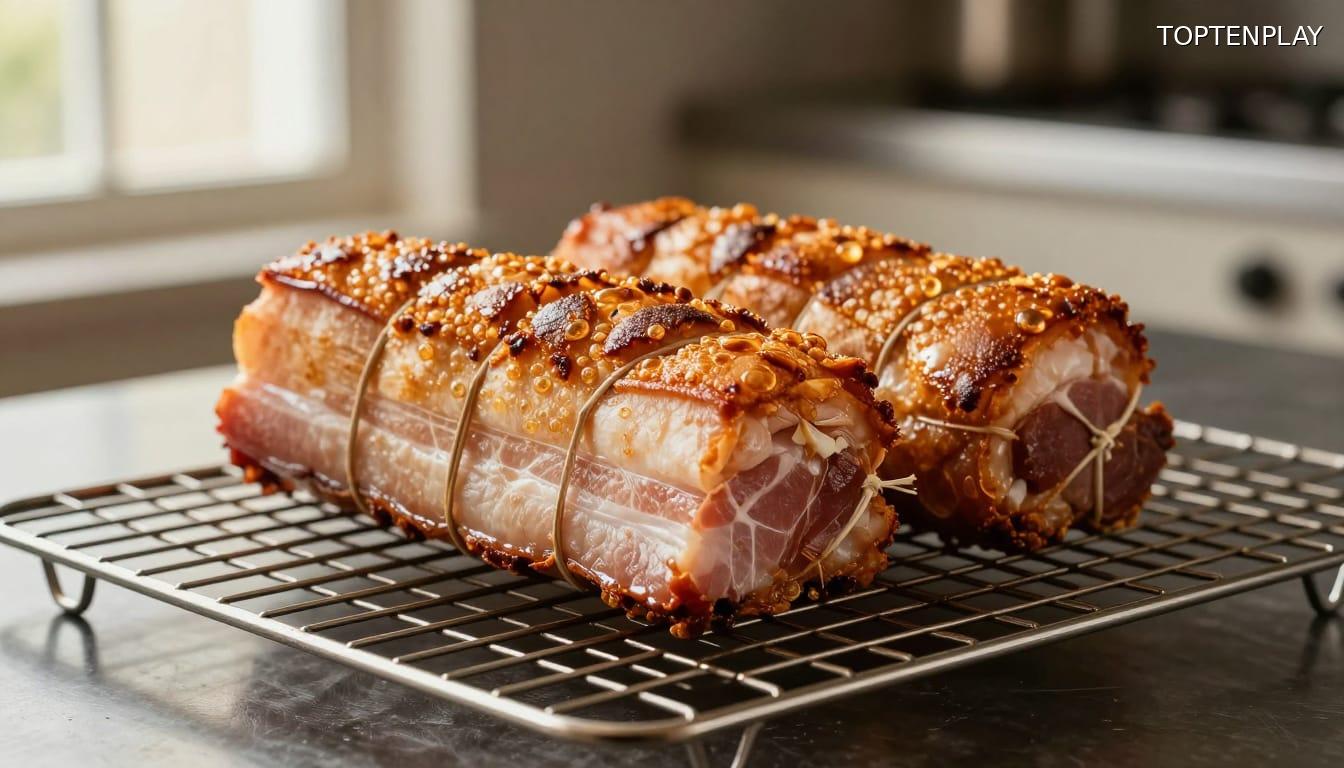
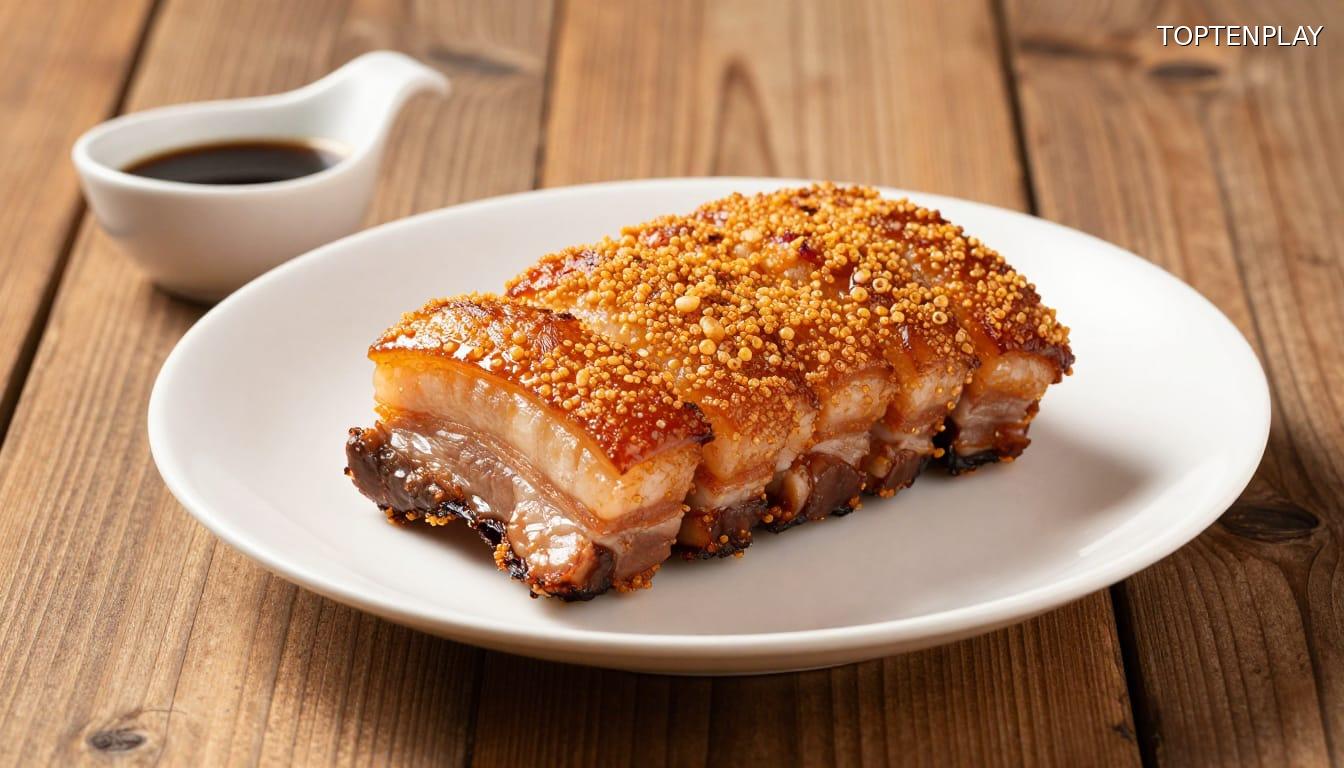
It took a few attempts to get there, but even the harshest food critic was blown away by the quality of this porchetta. The meat perfectly seasoned, highly flavorful, and ridiculously juicy. And that skin! Blistered and crispy crackling everywhere, from one end to the other, even underneath.
The Revolutionary Method: Air Drying And Double Cooking
This perfection wasn’t achieved on the first try. Twelve different versions in just two months, with experiments on cooking temperatures and overnight drying methods: in the fridge with or without salt, no drying versus 12 hours, 24 hours, or 48 hours.
The technique relies on three distinct phases. The prolonged drying in the refrigerator dries out the skin to guarantee the desired crispness. Slow roasting at a low temperature preserves the tenderness of the meat while continuing to dry the surface. The high-temperature finish transforms this dehydrated skin into spectacular blistered crackling.
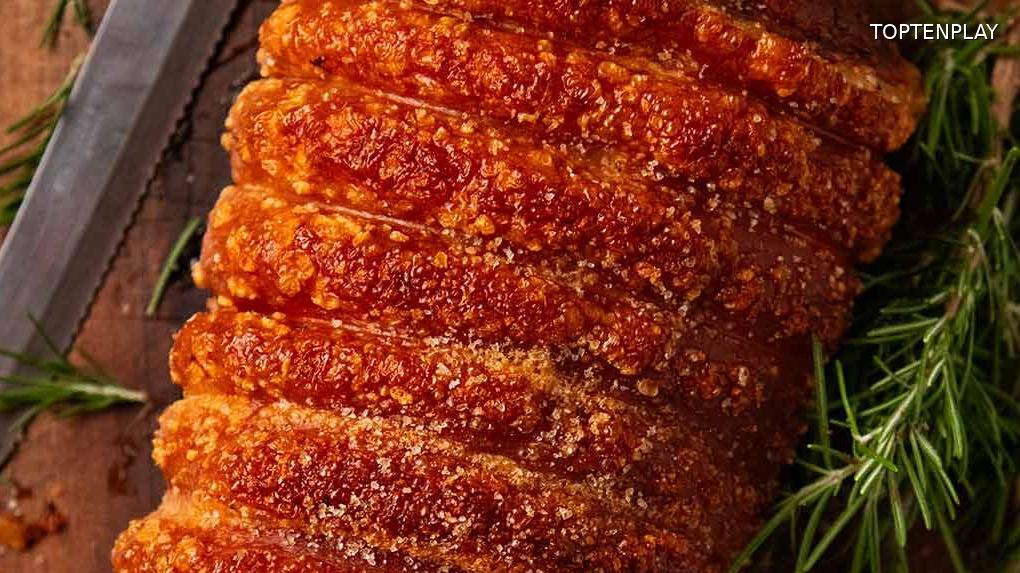
The secret lies in the precise timing of this last step: as the oven gradually heats from 110°C to 240°C, the still-supple skin begins to form bubbles – a fascinating sight. These bubbles must appear before the skin hardens permanently. Once the oven is at full power, these bubbles become golden and crunchy.
This approach eliminates the notorious problem of hard, flat patches of skin that ruin so many porchettas. Rotating halfway through guarantees uniform coloring over the entire surface, including the sides. Even the underside, in direct contact with the rack, develops a remarkable crispness – less spectacularly bubbled than the rest, admittedly, but perfectly crunchy.
The final success materialized under the watchful eye of Dozer, just before his hospitalization. This recipe now carries a special sentimental value, beyond its technical perfection.
Ingredients And Preparation: The Details That Make The Difference
Pork belly is the foundation of this success. Mandatory: 2.5 kg of meat with intact skin, never pre-scored. A single superficial cut is enough to create a 10-centimeter rubbery zone instead of the desired crispness.
The seasoning respects Italian tradition with strategic adaptations. Fennel seeds toasted then crushed in a mortar – never pre-ground powder. Six cloves of garlic crushed into a fine paste. Chopped fresh rosemary, chili flakes for subtle heat. Toasting the spices releases essential oils impossible to reproduce with powdered versions.
Preparation requires precision and patience. Diamond incisions on the meat, 1 centimeter deep, spaced 3 centimeters apart. Manually rubbing the seasoning into every crevice. Then comes rolling in the direction of the ribs to maintain the shape during cooking, with eight strings equidistant at 2.5 centimeters.
Drying in the refrigerator radically transforms the result. Forty-eight hours uncovered on a rack guarantees a spectacular 12/10 crackling. Twenty-four hours produces an excellent 11/10 with some slightly less bubbled areas underneath. Twelve hours minimum allows the seasoning to penetrate the meat and the juices to remain trapped rather than escaping during cooking.
This passive step simply requires refrigerator space and planning. The time investment proves negligible compared to the final result – a porchetta worthy of Italian masters.
Cooking And Sauce: Hands-Free For A Spectacular Centerpiece
This culinary sophistication hides a disconcerting simplicity. Three hours and thirty minutes at 110°C, without intervention. No monitoring, no basting, no rotating the tray. The low temperature slowly transforms the meat into melting tenderness while further drying the crackling – essential preparation for the final crispness.
Then comes the metamorphosis. Oven raised to 240°C, porchetta transferred to a clean tray, a drizzle of olive oil on the surface. Thirty to forty minutes are enough. At twenty minutes, a single rotation of the tray. The magic happens during the temperature rise: the rubbery skin forms fascinating bubbles before the intense heat transforms them into golden, shattered crispness.
The sauce defies all conventions. The concentrated cooking juices and rendered fat eliminate any need for broth. Water only – the salty juices provide all the necessary flavor. Three spoonfuls of pork fat, flour, deglazing the tray with half a cup of boiling water to dissolve the caramelized juices. Two additional cups of water, simmering for two minutes. Velvety texture, deep brown color, incomparable taste.
The porchetta maintains its serving temperature for seventy-five minutes without assistance. For extended receptions, oven at 50°C for a maximum of three hours – juicy meat and perfectly crispy crackling guaranteed. An impressive centerpiece taken out of the oven before the guests arrive, thus freeing up all attention for welcoming and conversation.