📌 Orange sponge cake: the egg white technique for an ultra-moist texture in 20 minutes
Posted 16 March 2026 by: Admin
An Airy Citrus Dessert That Defies Classic Cakes
The orange sponge cake stands out radically from traditional preparations through a unique molecular architecture. Unlike butter cakes that rely on density, this recipe prioritizes maximum air incorporation through a proven technique: the rigorous whipping of 6 whole eggs supplemented by 2 additional whites. This unusual proportion is not accidental.
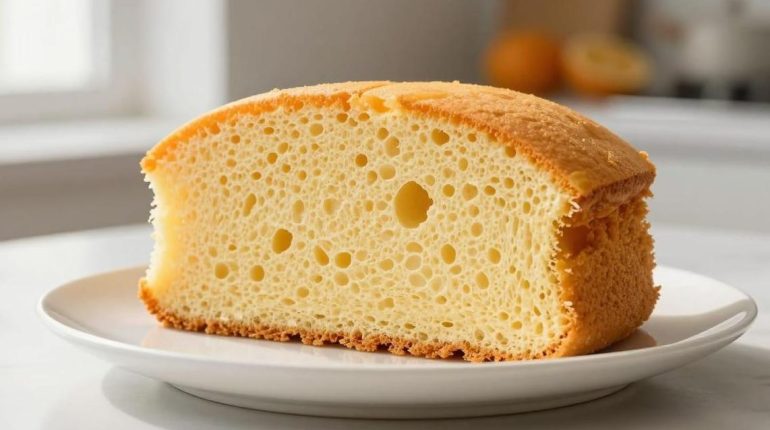
The egg whites, beaten until firm, glossy peaks form, create a microscopic honeycomb structure that traps air. But it is the oil, not butter, that guarantees the persistence of moistness several days after baking. Unlike solid fats that harden upon cooling, oil remains liquid and maintains the crumb’s hydration.
Fresh orange juice (100 ml from a large squeezed orange) and lemon zest diffuse a delicate citrus scent, far from artificial flavors. This natural freshness transforms every bite into a balanced sensory experience, where subtle acidity contrasts with the sweetness of the batter.
The versatility of this cake goes beyond a simple dessert: it is perfect for snacks, brunch, as a birthday base, or as a finale to a family meal. Its texture, comparable to Japanese chiffon cake, gives it a lightness that appeals even to the most demanding palates, while remaining accessible to beginners who master the technique of folding in egg whites.
The Recipe Revealed: 40 Minutes For A Professional Result
This technical feat relies on a precise choreography of eight steps, accessible even to novices. The preparation uses common ingredients: 300g of wheat flour, 300g of sugar, 100ml of freshly squeezed orange juice, complemented by the zest and juice of one lemon. Oil (60ml) replaces traditional butter here, a decisive choice for the lasting flexibility of the crumb.
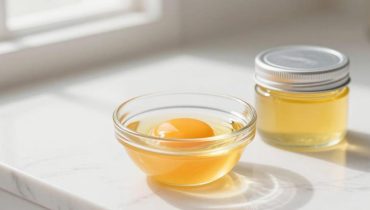
The secret lies in the progressive whipping of the egg whites. After separating the yolks, the whites are beaten while the sugar is gradually incorporated, creating a firm and lustrous foam. This satiny texture is evidence of optimal air entrapment, a sine qua non for the sponge structure.
Incorporation is the critical moment: a first spoonful of whites loosens the batter based on yolks, sifted flour, and aromatic liquids. The rest is integrated using movements that lift the mass from bottom to top, never in circles which would break the air bubbles so patiently obtained. This gesture preserves the honeycomb architecture.
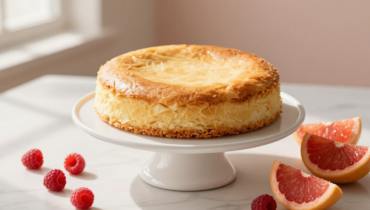
Baking at 170-180°C for 35 to 40 minutes transforms this airy preparation into a golden and puffed cake. The toothpick test, coming out clean, confirms the success. Difficulty level: easy, provided the sequence of operations and working temperatures are scrupulously respected. The result? A texture comparable to professional pastry creations, achieved in a standard domestic setting.
Expert Tips For Guaranteed Success
Beyond the recipe, three technical principles separate failure from perfection. The first concerns the temperature of the eggs: taken out of the refrigerator 30 minutes before use, they reach the ideal room temperature. This physical condition allows proteins to stretch more during whipping, thus capturing 30% more air volume compared to cold eggs. The difference is directly measured in the final height of the cake.
Folding in the whipped whites requires surgical delicacy. Every sudden or circular movement breaks the microscopic membranes that trap air. The spatula must cut through the batter vertically, come up scraping the bottom, then fold the mass over. This technique preserves up to 85% of the air volume compared to only 40% with simple whisking.
The third rule is an absolute taboo: never open the oven door during the first 30 minutes. Every opening causes a temperature drop of 20 to 30°C, destabilizing the protein structure during coagulation. The cake then collapses irremediably, turning the sponge into a compact pancake. Only the window allows monitoring progress without compromising the baking.
Cooling follows a precise thermal logic: 10 to 15 minutes in the mold allow the structure to firm up without condensation, then transferring to a rack removes residual moisture. This double step guarantees a fine crust and a crumb that remains airy three days after baking.
Customization And Storage: A Cake Adaptable To All Desires
This sponge base becomes a field for experimentation with three variants that radically transform the taste profile. The orange-chocolate version integrates 100g of chips distributed uniformly in the batter just before adding the whites, creating a contrast between cocoa bitterness and fruity acidity. The orange-almond alternative replaces 50g of flour with almond powder, enriching the texture with a subtle density while amplifying the moistness. Finally, 50g of shredded coconut bring a tropical dimension that extends the citrus notes.
The orange glaze offers a professional finish in two minutes: 150g of powdered sugar mixed with 2-3 tablespoons of fresh orange juice produce a translucent topping that crystallizes as it dries. This sweet layer contrasts with the airy crumb while intensifying the citrus scent. For a clean presentation, a simple dusting of powdered sugar is enough to reveal the golden relief of the crust.
Optimal storage follows strict rules: 2 to 3 days in an airtight container at room temperature preserves the sponge texture, while the refrigerator extends this duration to 5 days at the cost of a slight reversible firming after 30 minutes out of the cold. Freezing extends viability to 2 months, with the cake regaining 95% of its moistness after slow thawing in the refrigerator.
At 280 kcal per slice, this dessert balances pleasure and moderation, transforming every occasion into a gourmet pretext without compromising daily nutritional intake.