📌 Onion soup au gratin: why Reblochon replaces Gruyère in this winter recipe
Posted 15 February 2026 by: Admin
The Foundations: Preparation and Cooking of the Onions
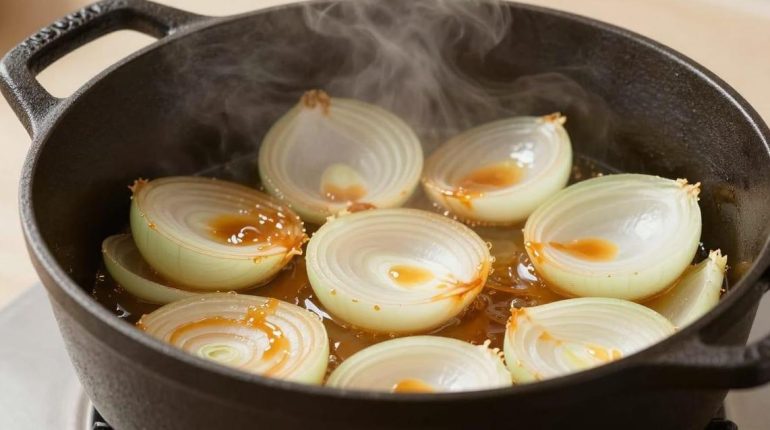
This onion soup revisited with Reblochon is based on a crucial first step: the perfect cooking of the onions. After peeling and slicing them thinly, the technique requires sautéing them in a cast-iron pot without ever letting them brown. This constraint is significant: premature browning would harden the fibers and compromise the desired melting texture.
The addition of the bouillon cube happens directly in the pot, where it gradually dissolves in contact with the onions as they continue to stew. This gentle cooking phase transforms the crunchy slices into a silky base that will then absorb the aromatics of the broth. Patience becomes the secret ingredient here: the onions must reach complete tenderness, almost candied, before any other manipulation.
This foundational step determines the final taste balance. Insufficiently melted onions would produce a soup with a harsh character, while mastered cooking releases the natural sugars that provide the dish’s characteristic roundness. The cast-iron pot guarantees even heat distribution, avoiding burn spots that would ruin the preparation.
Building the Broth: White Wine and Simmering
Once the onions are perfectly melted, the next step is to deglaze the pot with white wine. This technical gesture is not just about adding alcohol: the wine dissolves the caramelized juices at the bottom of the vessel while providing an acidity that balances the natural sweetness of the onions. Controlled evaporation allows the alcohol to volatilize completely, retaining only the fruity aromas of the wine.
Next comes the incorporation of 75 cl of hot water accompanied by a bay leaf. This detail matters: cold water would cause a thermal shock that would block the release of flavors, while already hot water maintains the ideal temperature for a progressive infusion. The bay leaf, a discreet but essential aromatic, diffuses its slightly camphorated notes that define the identity of this soup.
Simmering for 30 minutes over low heat is the true moment of alchemy. During this half-hour, the aromatic molecules of the onions, wine, and bay leaf merge into a complex gustatory synergy. The gentle heat prevents violent boiling that would disperse the scents, instead creating a constant simmer that concentrates the flavors. This patience transforms a simple broth into a gastronomic base ready to receive its final texture.
Thickening and Assembly: The Perfect Texture
The broth, simmering for 30 minutes, now offers a complete aromatic palette, but its consistency is still too liquid for this recipe. This is where cornstarch comes in, a thickening agent that will transform the clear broth into a velvety soup. The technique requires dissolving the starch in a little cold water before incorporation: poured directly into the hot liquid, it would form lumps impossible to dissolve.
Once a homogeneous mixture is obtained, pour it gradually into the pot while stirring constantly. The starch activates its binding power upon contact with heat, thickening the preparation in moments. Maintain cooking over low heat for an additional 5 minutes: this time allows the texture to stabilize completely, preventing it from thinning out after cooling.
During this final phase, preheat the oven to 200°C and prepare the bread by lightly toasting it. This step in the toaster is not optional: it creates a crispy barrier that will resist the soup’s moisture during the gratin process. All types of bread are suitable – baguette, country bread, sourdough – as long as they are toasted. Then pour the thickened soup into oven-safe bowls, ready to receive their crown of bread and Reblochon which will complete this gourmet creation under the intense heat of the oven.
The Reblochon Gratin: Gourmet Finish
The bowls filled with smooth soup await their final transformation, the one that distinguishes this Savoyard version from the traditional Parisian recipe. Place the toasted bread slices on the surface of the steaming liquid: they will float for a few moments before soaking slightly while maintaining their crispy structure. Then cover each slice with thin strips of Reblochon, this cheese with a strong character that replaces the classic Gruyère here.
Reblochon brings an incomparable creamy dimension thanks to its soft paste that melts differently from hard cheeses. Under the effect of heat, it transforms into a golden, slightly bubbling layer, developing milky and nutty aromas that harmonize perfectly with the caramelized sweetness of the onions.
Bake the bowls for about ten minutes, until the cheese reaches that characteristic golden color of a successful gratin. Monitor the cooking: the Reblochon should foam slightly and form a uniform blonde crust without burning. Upon leaving the oven, the crispy surface contrasts with the velvety soup underneath, creating that play of textures that makes the dish so interesting. Serve immediately, while the cheese remains stringy and the aromas reach their maximum intensity.