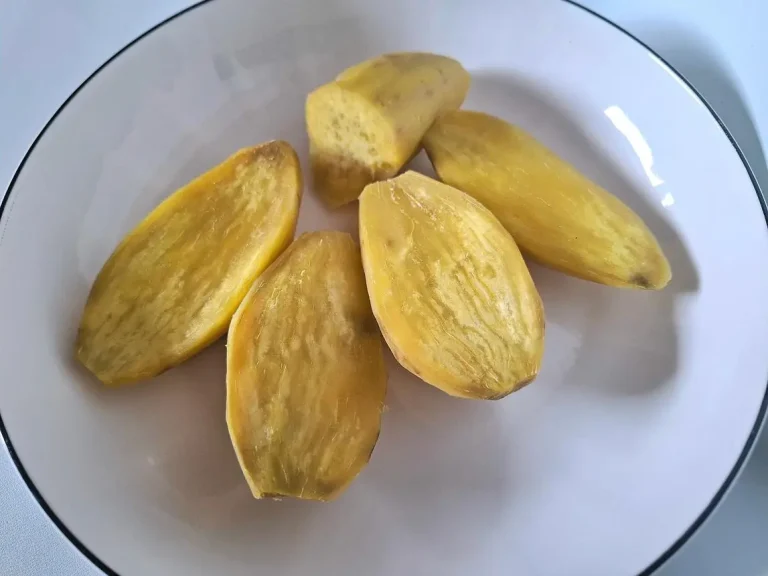
There are evenings when you don’t want much. Just something warm, simple, that smells like home cooking. This onion skin tea is exactly that.

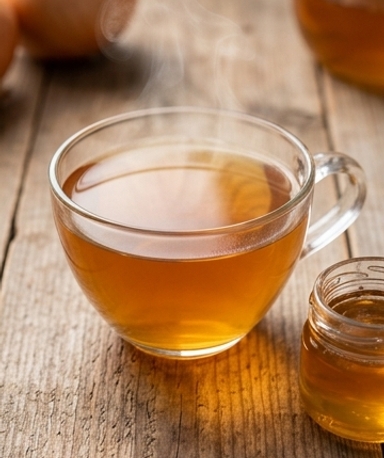
In the cup, the liquid takes on a copper amber hue, like a light black tea — but with that earthy, slightly sweet undertone that recalls grandmother’s vegetable broth. The steam rises gently. The smell is sweet, almost vegetal, but not at all aggressive. Add a squeeze of lemon and a spoonful of honey: the color turns toward pale gold, and the acid-sweet balance makes the drink truly pleasant to sip.
Why you’ll love this recipe
Ingredient Notes
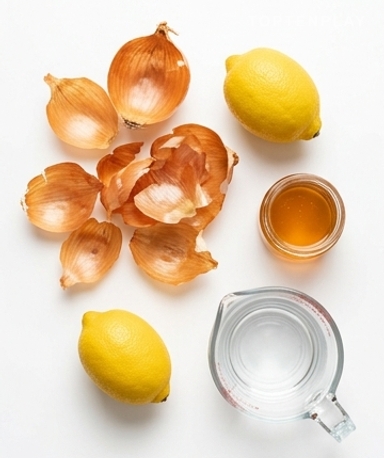
A few organic onion skins, water, honey and lemon — everything needed to prepare this herbal tea.
- Onion skins (1 to 2 onions) : The heart of the recipe. Prefer yellow onions — their skins are thick, rich in golden pigments and flavonoids. The absolute rule: organic onions. We are infusing the skin, so if there are pesticide residues, you’ll be drinking them. No need to keep the very damaged outer layer, but everything else goes in.
- Water (500 ml) : Nothing complicated. Cold tap water if it tastes good where you live, otherwise filtered. Water quality really changes the final taste of such a simple recipe.
- Honey (1 teaspoon) : Totally optional, but highly recommended for the first few times. It rounds out the slight bitterness of the skins. An acacia or blossom honey so as not to overpower the subtle flavors — avoid very strong honeys like buckwheat.
- Lemon (a squeeze) : A few drops are enough. Lemon brings a tangy touch that makes the drink much more pleasant and helps fix certain antioxidants. A quarter of a hand-squeezed lemon is more than enough.
Rinse them well — it’s the only real preparation
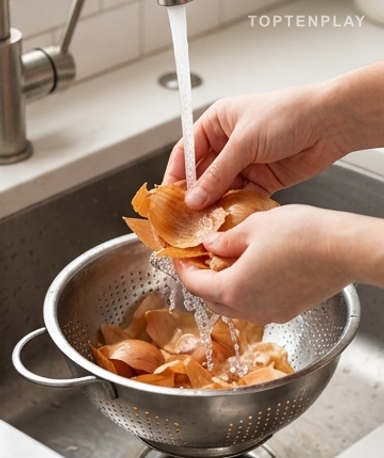
Start by rinsing the skins under cold water. Not for thirty seconds quickly — really rub them gently between your hands to remove dirt and impurities. Onion skin is light, almost like dry tissue paper under the fingers, and it tends to stick to everything. Use a fine strainer. Once rinsed, they are ready. That’s really all there is to prepare.
Wait until it’s really boiling before adding the skins
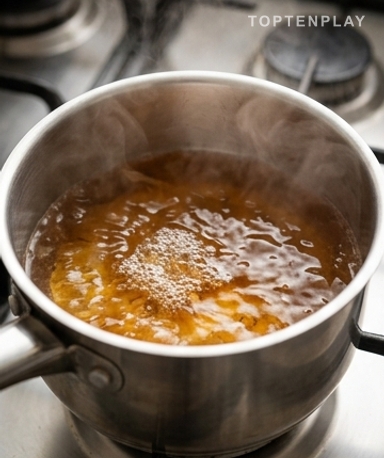
Bring the water to a boil in a small saucepan. When it’s really boiling — not just a few shy bubbles at the bottom, but a vigorous boil — add the skins all at once. The sound is immediate: a little hiss, then the skins relaxing and darkening slightly upon contact with the heat. Lower the heat immediately to a gentle simmer. You want it to simmer, not roll at a full boil.
Ten to fifteen minutes, no need to watch it
Let it simmer over low heat. The liquid changes progressively: very clear at first, it gradually takes on a copper amber tint, exactly like a very light caramel before it browns. The aroma that rises is sweet, slightly vegetal, without being invasive. After ten minutes, you already have a good tea. At fifteen minutes, the color is deeper and the taste more pronounced. Up to you according to your preferences.
Filter, add honey while it’s hot
Pour the contents into a cup through a fine strainer. The skins stay behind, neatly. In the cup, the liquid is clear, a beautiful copper gold. Add the honey now while it’s still hot — it dissolves in seconds without even needing to stir. Then the lemon juice if you like. Taste before adjusting. This is a drink that should make you feel good, not make you grimace.
Tips & Tricks
- Keep a small box by the sink to accumulate skins throughout the week — they keep for two to three days at room temperature with no problem, and you’ll always have some on hand without having to peel an onion on purpose.
- Drink it in the evening, an hour before sleeping. Not because it’s a rule set in stone, but because it’s the moment when a simple hot drink really does good — and when we think about hydrating without thinking too much about it.
- If the taste seems too strong the first time, reduce to a single skin and increase progressively. The intensity varies a lot according to the size and variety of the onion.

Are organic onions absolutely necessary?
Yes, really. Since we are infusing the skin directly in the water, pesticide residues present on the surface end up in the tea. For the flesh, it’s less critical — but for the skins, organic is not a detail.
Can I use red or white onion skins?
Yes, all three varieties work. Yellow onions remain the best choice: their skins are thick and concentrated in quercetin. Red onions give a slightly darker tea with a slightly sharper taste. White onions are milder but less intense.
Can I prepare the tea in advance and keep it for the next day?
Yes, it keeps for up to 24 hours in the refrigerator in a closed jar. Reheat it gently in a saucepan — not in the microwave which denatures the aromas — and add fresh honey and lemon when serving.
How long should I drink this tea to feel an effect?
Most traditional approaches recommend regular consumption over at least 3 to 4 weeks, at a rate of one cup per day. It’s a daily comfort tea, not an express remedy — regularity matters more than quantity.
Is this tea suitable if I take medication?
The quercetin present in onion skins can interact with certain blood thinners or medications metabolized by the liver at high doses. In moderate consumption (one cup per day), the risk is minimal for most people, but if you are under treatment, it’s better to talk to your doctor.
Onion Skin Tea
World Cuisine
Hot drink
A traditional homemade herbal tea made with organic yellow onion skins, rich in antioxidants and gentle to drink with a drizzle of honey and lemon.
Ingredients
- 15g (skins from 1 to 2 onions) organic yellow onion skins
- 500ml water
- 2 tsp (optional) acacia or flower honey
- juice of 1/4 (optional) pressed lemon
Instructions
- 1Rinse the skins thoroughly under cold water in a strainer by rubbing them between your hands.
- 2Bring 500ml of water to a vigorous boil in a small saucepan.
- 3Add the skins to the boiling water, then lower the heat immediately.
- 4Let simmer over low heat for 10 to 15 minutes until the liquid takes on a copper amber hue.
- 5Filter into two cups through a fine strainer.
- 6Add the honey while it’s still hot, then the lemon juice. Serve immediately.
Notes
• Use only organic onions: since the skin is directly infused in the water, pesticide residues would end up in the drink.
• The tea keeps for 24h in the refrigerator in an airtight jar. Reheat gently in a saucepan before drinking.
• For a lighter infusion, stop cooking at 10 minutes. For a more pronounced taste and a deeper color, extend to 15 minutes.
Nutrition Facts (per serving, estimated)
| 20 kcalCalories | 0gProtein | 5gCarbs | 0gFat |