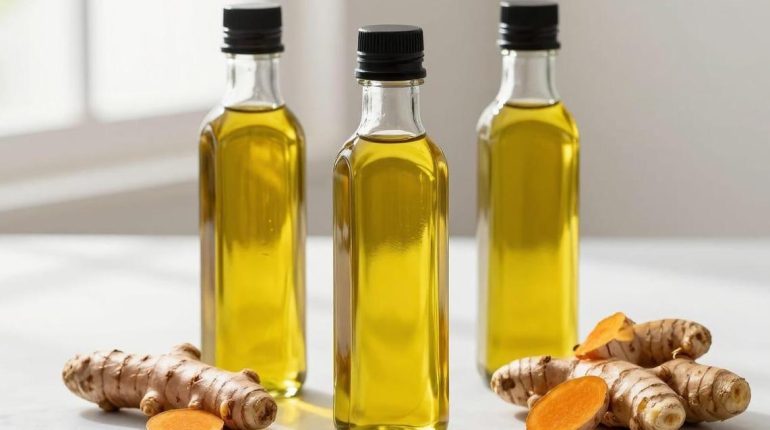
📌 Olive oil, turmeric, and ginger: this homemade preparation concentrates three powerful natural anti-inflammatories
Posted 6 March 2026 by: Admin
Anti-Inflammatory Oil: Three Ingredients With Scientifically Documented Virtues
Modern nutritional research is closely interested in ancestral culinary traditions. The combination of extra virgin olive oil, turmeric, and ginger perfectly illustrates this convergence between traditional wisdom and scientific validation.
Extra virgin olive oil forms the foundation of this preparation. Rich in monounsaturated fatty acids and polyphenols, it protects cells against oxidative stress. Studies on the Mediterranean diet have demonstrated its links to better cardiovascular health and optimized metabolic balance. Its lipid composition promotes the absorption of fat-soluble compounds from the other ingredients.
Turmeric provides curcumin, a curcuminoid with widely documented antioxidant and anti-inflammatory properties. This bioactive molecule, used for centuries in traditional wellness systems, is now the subject of hundreds of scientific studies exploring its cellular action mechanisms.
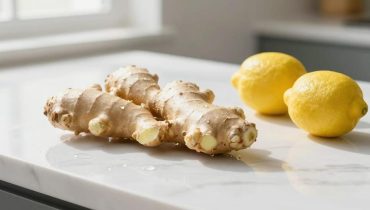
Fresh ginger completes this synergy with its gingerols and shogaols. These natural compounds, recognized for their antioxidant activity, also offer appreciated digestive support. Their molecular profile gives this root its characteristic warming properties.
Combining these three ingredients creates a functional oil concentrating polyphenols, curcuminoids, and gingerols. This infusion allows the healthy fats in olive oil to effectively carry the plant bioactive compounds, thus optimizing their bioavailability in the body.
The Traditional Recipe Revisited: Preparation And Infusion Technique
This infusion relies on a simple preparation that preserves the integrity of the bioactive compounds. The method requires precision and patience to extract the active molecules without degrading them.
The necessary ingredients are limited to the essentials: 250 ml of extra virgin olive oil, 2 tablespoons of turmeric powder, and 1 tablespoon of grated fresh ginger. The quality of the oil directly conditions the final effectiveness: prioritize a first cold pressing, stored in an opaque bottle.
The infusion process begins with very gentle heating of the oil. The temperature must never reach the boiling point, as excessive heat destroys fragile polyphenols and alters curcuminoids. Once the oil is lukewarm, stir in the turmeric and grated ginger continuously for 5 minutes. This constant agitation promotes the homogeneous dispersion of aromatic compounds.
After cooling completely, transfer the preparation to a dark glass bottle. This packaging protects photosensitive molecules from light oxidation. The infusion then requires 48 hours of rest, during which the oil gradually absorbs the gingerols, shogaols, and curcuminoids.
Final filtration removes solid residues while retaining the active principles now dissolved in the lipid matrix. This gentle extraction technique guarantees an optimal concentration of antioxidants without resorting to aggressive industrial processes.
Culinary Uses And Optimal Consumption Modes
This enriched oil reveals its full value when used cold or at low temperatures. Unlike ordinary cooking oils, its interest lies in preserving its heat-sensitive compounds rather than its heat resistance.
Salad dressing is the most direct use: a few drops are enough to bring a spicy and warm note to raw vegetables. Finishing soups represents another judicious application: add the oil after cooking, in the plate, to enrich legume or root vegetable soups without altering the active molecules.
Vinaigrettes and cold sauces particularly benefit from this preparation. Mixed with lemon or apple cider vinegar, it creates functional accompaniments for whole grains, roasted vegetables, or grilled fish. Incorporation into Mediterranean preparations like hummus or eggplant caviar reinforces their nutritional profile while remaining faithful to original culinary traditions.
Imperatively avoid frying or high-temperature cooking. Above 180°C, curcuminoids degrade rapidly and olive oil polyphenols lose their antioxidant properties. This oil is not designed to withstand thermal stress, but to provide intact nutrients to already prepared foods.
Integration into a Mediterranean-style diet maximizes its potential effects: varied vegetables, whole grains, legumes, and lean proteins form the optimal framework where this preparation fully plays its role as a functional supplement.
Potential Benefits And Essential Usage Precautions
The properties of this oil are part of a body of research documenting the effects of the Mediterranean diet. Epidemiological studies associate regular consumption of quality olive oil with reduced inflammatory markers and better cardiovascular protection. The addition of turmeric and ginger theoretically strengthens this antioxidant potential thanks to the synergy between curcuminoids, gingerols, and polyphenols.
Possible benefits include metabolic support, cellular protection against oxidative stress, and a contribution to cognitive health, as suggested by work on Mediterranean populations. However, these effects appear gradually and only in a global context: a diet rich in plants, regular physical activity, restorative sleep, and stress management.
This preparation remains a culinary resource, not a medicine. It does not replace any treatment prescribed for gout, arthritis, anxiety, or any chronic pathology. People on anticoagulants should consult their doctor before use: turmeric and ginger can interfere with blood clotting.
The quality of ingredients directly conditions the nutritional interest. Prioritize cold-pressed extra virgin olive oil, stored away from light, and turmeric free of contaminants. Effectiveness depends less on the quantity consumed than on the regularity of integration into a balanced diet.
Expectations must remain realistic: no single food generates rapid transformation. Health results from a set of coherent factors, where each element — including this functional oil — plays a modest but cumulative role.