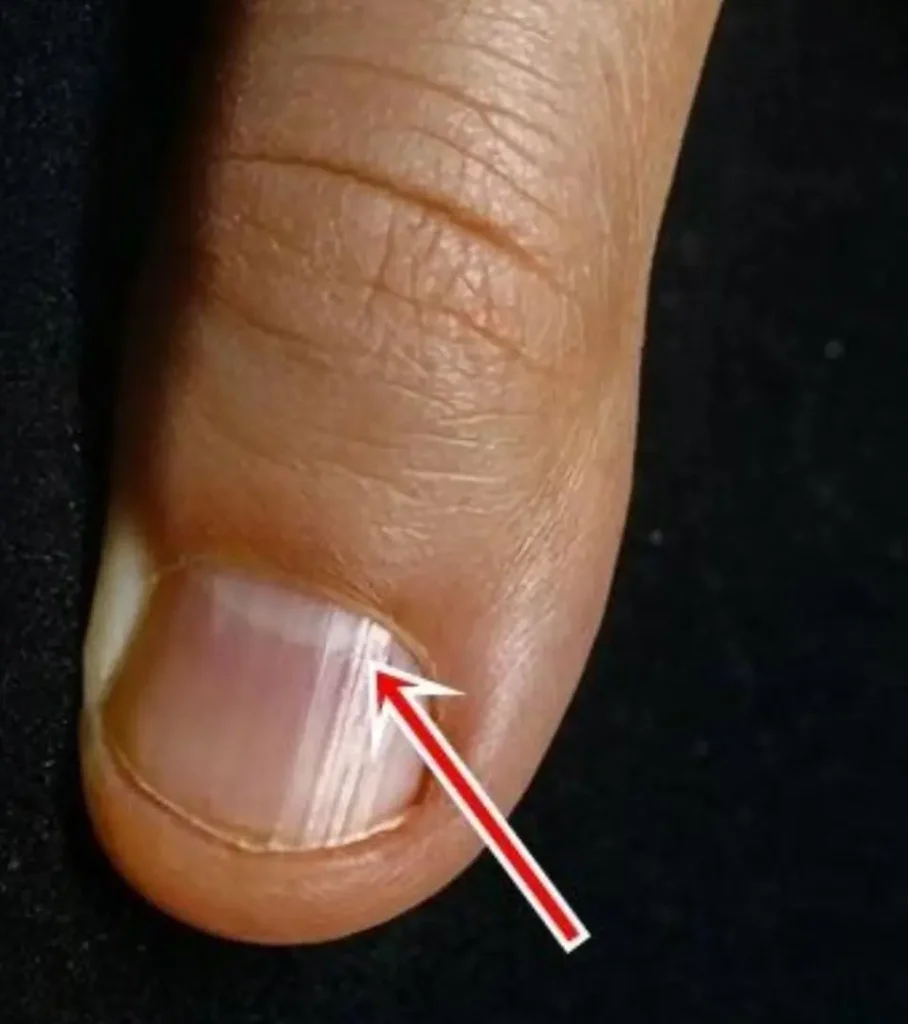
A widely shared social media claim warns that nail lines appearing after age 40 are a "clear sign" of serious disease. In reality, the most common explanation is far less alarming: most nail ridges and changes are a normal part of aging. That said, certain specific changes can occasionally point to an underlying health issue worth investigating.
In brief
- —Most nail ridges after 40 are a normal sign of aging
- —Beau’s lines can follow illness, fever or major stress
- —White spots are usually caused by minor trauma, not calcium deficiency
Viral claim vs. reality: why most nail ridges are harmless
Social media posts have been circulating with the claim that nail lines developing after age 40 are a "clear sign" of a serious disease. That framing overstates the risk considerably.

As the body ages, nails naturally undergo a range of changes: vertical ridges, increased brittleness, slight thickening and slower growth are all documented, normal developments. Many adults begin noticing these changes in their 40s and 50s.
Nail changes alone cannot confirm a diagnosis. They may occasionally offer clues about what is happening elsewhere in the body, but they are rarely definitive on their own.
Why nails change with age
Nail growth slows progressively after early adulthood, and the nail plate becomes thinner or more brittle over time. These structural changes are driven by reduced circulation, hormonal shifts and cumulative environmental exposure — not by disease. This biological backdrop explains why age-related nail changes are so common and so frequently misread.
Beau’s lines: when illness or stress interrupts nail growth
The horizontal grooves that sometimes alarm people have a specific name: Beau’s lines. These are depressions that form across the nail when growth temporarily slows or stops entirely.

Documented triggers include severe illness, high fever, major surgery, significant stress and physical trauma to the nail. Once growth resumes, the groove gradually migrates toward the nail tip and eventually grows out.
White spots and marks are a separate, and even more mundane, phenomenon. Despite a persistent belief that they signal calcium deficiency, minor nail trauma — pressure injuries, nail biting or everyday bumps — is a far more common explanation.
Nutritional deficiencies and medical conditions: a possible but limited link
In some individuals, nail abnormalities are associated with nutritional deficiencies — specifically iron, zinc, protein or certain vitamins. However, nail appearance alone is not sufficient to diagnose a deficiency; blood testing is required for confirmation.
Certain medical conditions are also occasionally reflected in nail changes: thyroid disorders, diabetes, kidney disease, circulatory disorders and autoimmune conditions are among those documented. The key qualifier is that most people with nail ridges do not have a serious underlying disease.
Nail findings can be one piece of a clinical picture, but they are not a standalone diagnostic tool.
Seven warning signs that do justify a medical consultation
While most nail changes are benign, specific combinations of symptoms are worth bringing to a doctor. These include: sudden onset of changes, multiple nails affected at the same time, pain, nail separation from the nail bed, significant discoloration, thickening or crumbling, and other unexplained symptoms appearing alongside the nail changes.

Protective habits can also support nail health over time: a balanced diet adequate in protein, iron and vitamins; wearing gloves during heavy work or cleaning; regular moisturizing to prevent brittleness; and limiting exposure to harsh chemicals.
The broader takeaway is that persistent or multi-symptom nail changes deserve professional assessment — but a single ridge or white spot, in the absence of other signs, is unlikely to indicate anything serious.
The persistence of viral health claims linking nail lines to serious disease means the misconception is unlikely to disappear quickly. For anyone noticing new or changing nail symptoms, the documented checklist of warning signs — sudden onset, multiple nails, pain, discoloration or crumbling — remains the clearest guide to deciding whether a medical evaluation is warranted. No further studies or official guidance are cited in the available material, leaving open the question of how health authorities may choose to address nail-related misinformation directly.