📌 Mold on walls: white vinegar and baking soda eliminate humidity without chemicals
Posted 23 January 2026 by: Admin
White Vinegar: The Acidic Weapon Against Mold
Distilled white vinegar stands out as the first line of defense against wall mold. This economical solution draws its power from its natural acidic properties, capable of destroying the microscopic fungi responsible for unsightly stains.
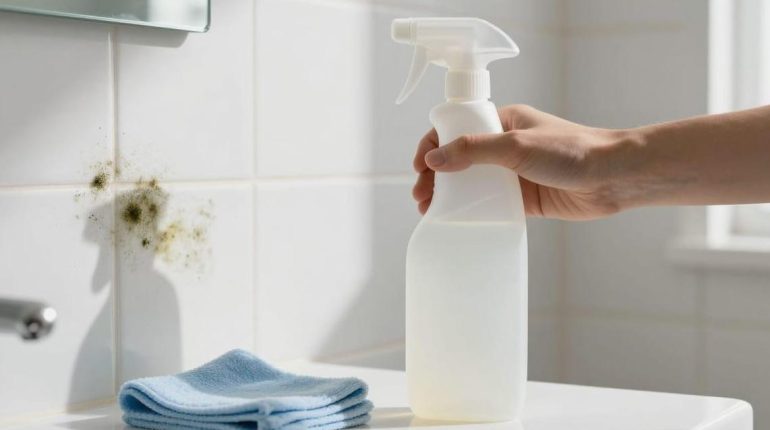
The application protocol is disconcertingly simple: just spray a mixture of water and white vinegar directly onto the contaminated areas. The acetic acid then penetrates the fungal structure, eliminating visible mold while neutralizing its invisible roots.
But the major asset of this method lies in its double preventive action. Unlike conventional cleaners that settle for a superficial treatment, white vinegar permanently modifies the surface pH. This chemical transformation creates a hostile environment for fungal spores, preventing their re-establishment for several weeks.
This natural approach presents an undeniable financial advantage: a bottle of white vinegar costs a few dollars and allows for the treatment of an entire home. Without toxic fumes or risks to occupants, this ancestral solution is regaining its legitimacy today against industrial products. The effectiveness of this acid treatment nevertheless raises the question of reinforced protection against residual humidity.
Baking Soda: Double Protection
Where white vinegar acts through acidity, baking soda deploys a different strategy: it combines mold elimination with moisture absorption. This white powder, present in every kitchen, transforms into a formidable antifungal treatment when used in precise dosages.
The effective formula relies on an established ratio: one teaspoon of baking soda for two cups of water. This optimal concentration guarantees targeted action without excessive residue. The application protocol follows four decisive steps: generous spraying on moldy areas, energetic brushing to detach fungal colonies, rinsing with clean water, and then a new spray to create a protective barrier.
This second application is the secret of this method. As it dries, the baking soda forms an absorbent film that captures ambient humidity before it can feed new spores. Unlike purely curative treatments, this approach tackles the root cause: excess water in porous materials.
Treated surfaces thus benefit from a double defense: immediate destruction of existing fungi and active prevention of their reappearance. This hygroscopic capacity of baking soda transforms treated walls into unfavorable zones for any fungal colonization. There remains, however, a third option to complete this natural arsenal.
Hydrogen Peroxide: The Alternative Solution
Beyond the vinegar-baking soda duo, hydrogen peroxide stands out as a third ally in this battle against mold. This substance, known as hydrogen peroxide in pharmacies, completes the natural arsenal of accessible domestic treatments.
Its mode of action differs from the two previous methods: peroxide releases active oxygen upon contact with fungi, causing their cellular destruction without resorting to aggressive chemical agents. This oxidative reaction directly targets fungal structures while preserving the integrity of the treated surfaces.
The interest of this third option lies in its versatility of use. Some molds are more resistant to the acidity of vinegar or the mechanical action of baking soda. Hydrogen peroxide then offers a complementary approach, particularly effective on stubborn stains or recalcitrant infestations.
This multiplicity of natural solutions reveals a reassuring reality: kitchen cupboards hide credible alternatives to industrial detergents. Three common products are now enough to constitute a complete strategy against domestic humidity and its unwanted manifestations.
Complete Natural Protocol: Three Allies Against Humidity
These three solutions now constitute an integral defense system against wall mold. White vinegar, baking soda, and hydrogen peroxide together form a coherent strategy, accessible to any homeowner faced with unsightly black spots.
The decisive advantage of this approach lies in its immediate applicability. No trips to specialized stores, no significant budget to plan for: kitchen cupboards and the home pharmacy already contain the entire necessary arsenal. This immediate availability transforms the fight against humidity into a quick intervention rather than a postponed project.
Beyond practical effectiveness, these natural methods eliminate the health risks associated with industrial chemicals. No toxic fumes, no harmful residues on treated surfaces, no drastic precautions during application. Families with children or pets thus benefit from peace of mind impossible with conventional detergents.
This triple natural approach finally reveals a simple truth: the most effective solutions against domestic mold pre-existed complex commercial formulas. Three common products are enough to treat humidity problems sustainably, provided they are applied methodically and regularly.