The sauce starts with a warm, almost buttery shrimp aroma, then the chili gently hits the back of the nose. The mezzati catch the bisque, hold it in their hollows, and that’s exactly what we want here: a classic dish, but without unnecessary complication.
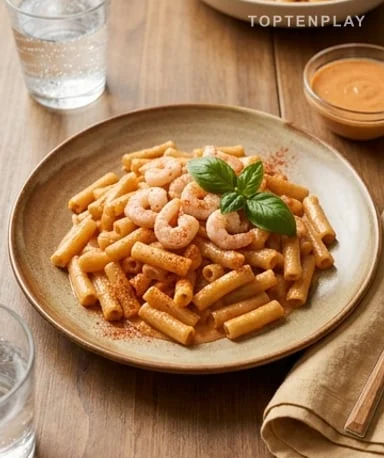
In the pan, the bisque takes on a bright orange-pink color, with small red specks that hint at spiciness. The pasta makes a muffled sound when stirred, heavier than a simple broth, a sign that the sauce truly coats. When tasting, the texture should be creamy without being pasty, briny without being too salty. The right balance comes at the end, with a bit of pasta water to loosen and a squeeze of lemon to wake it up.
Why you’ll love this recipe
Ingredient Notes

The base is simple: short pasta, shrimp bisque, shrimp, garlic, chili, herbs, and a well-spiced turkey alternative.
- Mezzati : These short pasta trap the bisque in their hollows, making each bite more generous than with spaghetti. Choose a brand that holds up well during cooking and stop them a minute before the indicated time, as they will finish cooking in the sauce.
- Shrimp bisque : It provides the main flavor: briny, rich, slightly sweet. If buying ready-made, choose an alcohol-free bisque, or replace it with a reduced shrimp broth with a bit of cream and tomato paste.
- Shrimp : They reinforce the marine flavor and add a firm texture amid the creamy sauce. Raw shrimp give the best result, but pre-cooked shrimp can work if added only at the end to avoid becoming rubbery.
- Spicy nduja alternative : It brings the fat, chili, and depth expected from the original recipe, without using pork. Mix finely chopped turkey bacon, smoked paprika, chili, tomato paste, and olive oil until you get a red, fragrant paste.
- Garlic : It provides the aromatic start to the sauce, with a warm smell that pairs well with shrimp. Sauté it gently: if it browns too much, it becomes bitter and breaks the bisque’s sweetness.
- Lemon : It should not dominate, but it balances the sauce at the end. A small squeeze is enough to cut the richness and make the dish cleaner on the palate.
The fragrant base
Start by heating a drizzle of olive oil in a wide pan, then add the garlic and the spicy nduja alternative. The mixture should melt gently, turn dark red, and smell of warm paprika, not burnt. This step is important because it awakens the chili and spreads the fragrant fat throughout the pan. If it sticks too quickly, lower the heat and add a spoonful of water: you want a soft, shiny paste, not a dry crust on the bottom.

The coating bisque
Pour the bisque into the pan and stir to pick up all the red juices stuck to the bottom. At this point, the sauce changes: it becomes smoother, more orange, with a shrimp smell that rises clearly. Let it simmer, not boil vigorously, because too rapid a reduction can concentrate the salt and make the sauce thick and heavy. If it seems too intense, loosen it with a bit of pasta water rather than cold water, because the starch helps keep a cohesive texture.
Pasta in the sauce
Cook the mezzati in a large pot of salted water, then drain them when still slightly firm to the bite. They must finish in the pan, where the bisque can enter the hollows and stick to the surface. Stir patiently, adding the pasta water little by little, until the pasta becomes shiny and the sauce makes a slight thick sound when sliding off the spoon. It’s this finishing that transforms a sauce placed on pasta into a true cohesive dish.
Shrimp at the right time
Add the shrimp when the sauce is already well formed, especially if they are small or pre-cooked. They should remain juicy, with a firm but not dry texture, and their fragrance should reinforce the bisque without becoming rubbery. If raw, let them cook a few minutes until pink and opaque. If cooked, one minute is enough: the goal is to warm them, not to punish them.
Clean finish
Off the heat, add a small squeeze of lemon and, if desired, a bit of finely chopped parsley. The lemon should feel like a discreet freshness, not an acidic sauce. Taste before salting, because the bisque and spicy alternative already bring a lot of character. On the plate, the sauce should remain creamy, form a shiny veil around the mezzati, and have a few visible red specks.

Tips & Tricks
- Reserve a cup of pasta cooking water before draining: its starch helps the bisque cling to the mezzati instead of pooling at the bottom of the plate.
- Don’t boil the bisque too hard: the sauce quickly becomes too salty and loses its velvety quality, while a gentle simmer is enough to concentrate flavors.
- Add the lemon only at the end: gentle heat preserves its fresh fragrance, while long cooking can make the acidity flat and a bit harsh.
- Adjust the chili gradually: shrimp have a delicate taste, and too much heat masks the marine notes instead of supporting them.

Can I replace the mezzati with other pasta?
Yes, choose short, hollow pasta like rigatoni, mezze maniche, or cut paccheri. The important thing is that they hold the bisque instead of letting the sauce slide off.
How to replace nduja without pork?
Prepare a spicy paste with chopped turkey bacon, smoked paprika, chili, tomato paste, and olive oil. You get the red, fatty, and spicy profile without using pork charcuterie.
Can I use pre-cooked shrimp?
Yes, but add them at the very end. They should just warm through in the sauce, otherwise they become dry and rubbery.
Is store-bought shrimp bisque suitable?
Yes, as long as you choose an alcohol-free bisque that is not too salty. Taste before adding salt, as some bisques are already highly concentrated.
How to get a really creamy sauce?
Reserve some pasta cooking water and add it little by little to the pan. The starch helps the bisque coat the mezzati instead of staying liquid at the bottom.
Mezzati with Shrimp Bisque and Spicy Nduja Alternative
Italian revisited
Main course
Short pasta coated in a creamy shrimp bisque, spiced up with a paste of turkey, smoked paprika, and chili. A simple, generous, pork-free version of the classic Italian revisited.
Ingredients
- 200g mezzati
- 250ml alcohol-free shrimp bisque
- 150g peeled shrimp
- 60g finely chopped turkey bacon
- 1 tbsp tomato paste
- 1 tsp smoked paprika
- 1/2 tsp chili powder
- 1 garlic clove, minced
- 2 tbsp olive oil
- 1 tbsp lemon juice
- 1 tbsp chopped parsley
- to taste salt and pepper
Instructions
- 1Cook the mezzati in a large pot of salted water, keeping them slightly firm. Reserve a cup of pasta water before draining.
- 2In a wide pan, heat the olive oil and sauté the garlic over low heat for 30 seconds, just until fragrant without browning.
- 3Add the chopped turkey bacon, tomato paste, smoked paprika, and chili. Mix until you get a red, shiny, fragrant paste.
- 4Pour the alcohol-free shrimp bisque into the pan and let it simmer gently for a few minutes to bind the sauce.
- 5Add the shrimp. If raw, cook until pink and opaque; if pre-cooked, just warm for one minute.
- 6Add the drained mezzati to the sauce and toss over low heat. Add a little pasta water if needed to achieve a creamy, coating sauce.
- 7Off the heat, add the lemon juice, parsley, then adjust salt and pepper. Serve immediately while the sauce is glossy.
Notes
• Choose an alcohol-free bisque and taste before salting, as it may already be quite concentrated.
• The turkey bacon must be finely chopped to blend into the sauce like a spicy paste.
• For a milder version, reduce the chili by half and keep only the smoked paprika.
• Pre-cooked shrimp should not boil for long, or they lose their texture.
Nutrition Facts (per serving, estimated)
| 620 kcalCalories | 34gProtein | 74gCarbs | 22gFat |