Once removed, that key can be used to manually unlock the driver’s side door, bypassing the electronic system entirely. It is a fail-safe design built into the fob from the start, though many drivers are unaware it is there.
How key fobs work
Modern key fobs communicate with a vehicle via short-range radio frequency signals. Most also contain an RFID chip for push-to-start systems, which operates passively without requiring any battery power. A physical mechanical key is included in the majority of fob designs as a backup access method.
The chin trick: using your body to boost a weak signal
When a key fob battery is running low, its radio signal may not be strong enough to reach the car’s receiver from a normal distance. One workaround relies on a basic property of human biology: the body is composed largely of water, which conducts radio frequencies.

By holding the key fob directly under the chin — buttons facing outward — and pressing the desired button, the head is said to act as an antenna, amplifying the signal just enough to trigger the car’s receiver. The technique is described as effective for borderline-weak batteries, though it is not a permanent fix.
Push-to-start cars: the RFID override that skips the battery
For drivers who manage to get inside the vehicle but find the engine will not start, there is a separate solution specific to push-to-start models. Most of these vehicles embed an RFID chip inside the fob — a chip that does not depend on battery power to function.
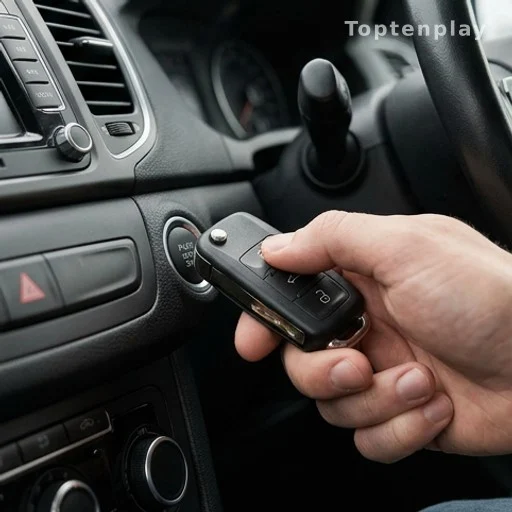
Pressing the key fob directly against the start button, or against the steering column depending on the vehicle model, allows the car’s system to read the chip and authorize the ignition. Consulting the car’s manual is recommended to confirm the exact placement for a specific model.
Why a dead battery is usually the first thing to check
A weak or depleted battery is identified as one of the most common reasons a key fob stops sending a reliable signal. The three techniques above — the mechanical key, the chin method, and the RFID override — are each designed to work around that specific failure point.
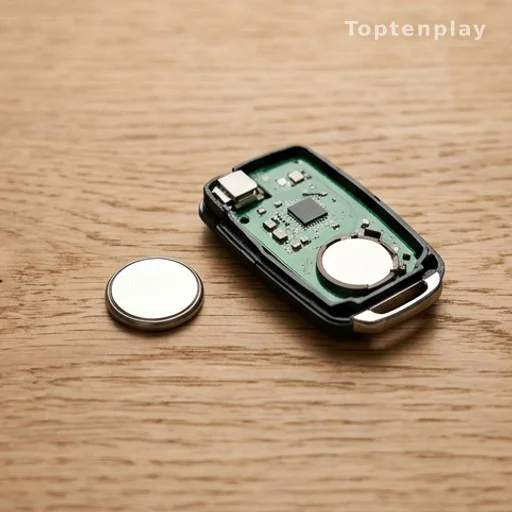
None of them, however, replace the underlying fix: swapping out the battery. Key fob batteries are typically small, inexpensive coin cells available at most hardware or electronics retailers, and replacing one is generally a straightforward task that restores full functionality.
Suggested Posts

Egg yolk color doesn’t reveal what you think about your chicken
A deep orange egg yolk is widely taken as a sign of a healthier chicken and a more nutritious egg. That assumption is largely…