📌 Hugo Desnoyer reveals his chicken pastilla recipe: 30 minutes of preparation for an authentic Moroccan dish
Posted 28 February 2026 by: Admin
Hugo Desnoyer’s Pastilla: An Exceptional Accessible Recipe
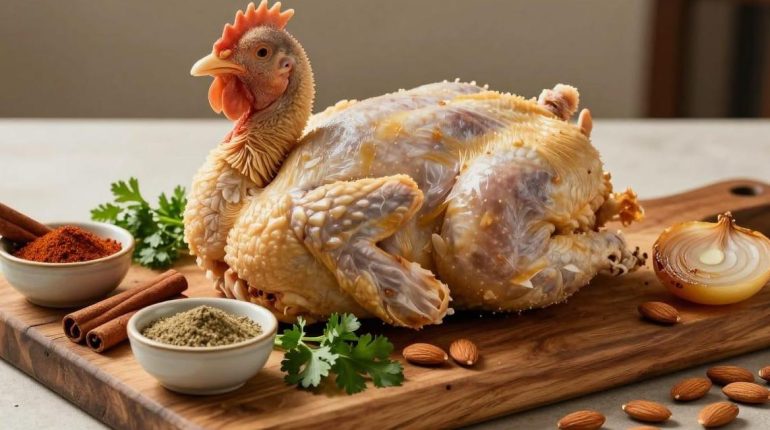
Hugo Desnoyer reveals his chicken pastilla, a creation that reconciles haute gastronomy and family cooking. This master butcher, a reference in French craftsmanship, delivers a precise recipe where every gram counts: a 2 kg farm chicken, seven carefully measured spices, four generous portions.
The originality lies in the approach. Where Moroccan tradition imposes approximate dosages transmitted orally, Desnoyer sets the proportions with the rigor of a goldsmith. 20 grams of cinnamon powder, 10 grams of ras el-hanout, 20 grams of allspice: this method transforms an intimidating dish into a manageable culinary project.
The choice of farm chicken is not accidental. This superior quality poultry, the centerpiece cut into pieces, absorbs the alchemy of aromatics during 40 minutes of simmered cooking. The festive dimension asserts itself without ostentation: 30 minutes of preparation are enough to build a pastilla worthy of exceptional tables.
Desnoyer sacrifices nothing to authenticity. The 1.5 kg of sliced onions melt into a candied base, the 250 grams of chopped almonds bring their signature texture, the 25 centiliters of orange blossom water sign the Maghreb fragrance. This recipe proves that artisanal know-how can be taught with precision, without losing its soul. The announced result: a professional pastilla made in a domestic kitchen, accessible to anyone who respects the dosages and the method.
The Alchemy of Spices: A Skillfully Dosed Blend
Pastilla draws its complexity from an aromatic assembly that defies intuition. Hugo Desnoyer orchestrates seven different spices and aromatics according to a millimetric score where each ingredient occupies a precise register.
Cinnamon dominates as absolute mistress: 20 grams in powdered form deliver a soft and immediate warmth, while three whole sticks release their woody notes during the simmered cooking. This double use creates a multi-layered depth impossible to reproduce with a single form.
The trio of allspice, ras el-hanout, and grated nutmeg builds the aromatic body. 20 grams of the first bring their suave spicy touch, 10 grams of the second sign the Moroccan identity with its echoes of coriander and cumin, the third injects its peppery roundness. Together, these powders merge into an olfactory signature recognizable among a thousand.
The sweet-savory balance stands as a structural pillar. 100 grams of powdered sugar dialogue with 15 grams of coarse salt and 25 grams of initial sugar, creating that typical contrast of North African cuisine where sweetness and salinity reinforce each other. The ground pepper, dosed at 3 grams, discreetly recalls its presence without ever dominating.
The bouquet garni of parsley-coriander-laurel introduces the necessary herbaceous freshness. This green note tempers the power of the dried spices, avoiding any heaviness. Each aromatic fulfills a calculated function in this gustatory architecture where nothing is left to chance, a promise of harmony that only precision of dosage guarantees.
Fundamental Preparation: Cooking and Assembly
The success of this pastilla relies on a sequence of precise operations that transform raw ingredients into a gastronomic creation. 1.5 kilograms of sliced onions constitute the essential candied base, playing the role of an aromatic bed where the chicken will simmer.
In a large pot, the poultry pieces directly join this mass of onions accompanied by all the spices: cinnamon powder and sticks, nutmeg, pepper, allspice, ras el-hanout, salt, and initial sugar. This simultaneous cooking guarantees the complete infusion of flavors during the necessary 40 minutes, with the bouquet garni of parsley-coriander-laurel diffusing its fresh notes at the heart of the preparation.
Once the chicken is tender and fragrant, the decisive step occurs: the incorporation of five beaten eggs that will bind the preparation, followed by 250 grams of chopped almonds bringing their crunchy texture and richness. These elements merge with the simmered garnish to create the characteristic creamy filling.
The final assembly uses two packets of brick pastry sheets, arranged in successive layers. 25 centiliters of orange blossom water delicately scent each layer, an olfactory signature that distinguishes authentic pastilla. Thirty minutes of active preparation are enough to orchestrate this apparently complex mechanics, whose precision of gestures conditions the final balance between crispy and melting, between aromatic power and subtlety.
The Detail That Makes the Difference: Finishes and Presentation
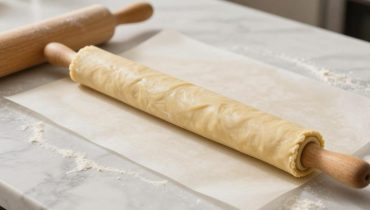
The excellence of this pastilla crystallizes in the final phase, where 150 grams of melted butter transform the two packets of brick pastry sheets into a golden and crispy envelope. Each layer must be generously brushed before and after depositing the filling, guaranteeing that irresistibly crunchy puff pastry that contrasts with the soft heart.
The technique of assembly in successive layers requires rigor and delicacy: arrange the first sheets in the mold letting them overflow, distribute the almond and chicken garnish evenly, then fold back the edges before covering with new buttered sheets. This mille-feuille architecture ensures structural integrity while multiplying textures with each bite.
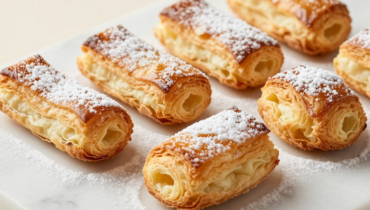
Baking in the oven at a controlled temperature develops that characteristic amber coat, a visual signal of technical success. The sweet-savory contrast reaches its peak when, out of the oven, a veil of icing sugar powders the hot surface. This optional final touch, accompanied by a few fresh mint leaves, is not just decoration: it materializes the emblematic gustatory balance of savory Moroccan pastry.
These finishing gestures, apparently trivial, constitute the signature that distinguishes a domestic pastilla from a creation worthy of a gastronomic table. The alliance of butter-brick-icing sugar transcends the traditional recipe to reveal its festive dimension, which Hugo Desnoyer has preserved while making this culinary marvel accessible to demanding amateur cooks.