📌 Homemade tomato sauce: why grated carrot is the secret to an acidity-free recipe
Posted 22 January 2026 by: Admin
The Secrets Of An Authentic Tomato Sauce That Surpasses Industrial Ones
Industrial sauces accumulate flaws: excessive acidity, excessive added sugar, disproportionate salt. These standardized formulations sacrifice authenticity on the altar of preservation and profitability. Faced with this drift, homemade tomato sauce stands out as the true soul of Mediterranean cuisine, respecting three immutable principles: quality tomatoes, slow cooking that develops aromas, and meticulously selected aromatics.
This traditional approach produces a sauce with incomparable qualities. Gustatory depth emerges naturally, without artificial enhancers. Sweetness appears without added sugar, carried by the concentration of natural juices. Smoothness forms progressively, creating a silky texture impossible to reproduce industrially. Fragrances unfold in successive layers, revealing the complexity of authentic ingredients. This versatility allows it to accompany pasta, meat, vegetables, or pizzas with equal relevance.
“Once you’ve made it homemade, it’s impossible to go back to store-bought sauces“. This statement reflects a sensory reality: the palate, once educated to authentic flavors, instinctively rejects industrial approximations. Artisanal preparation requires neither extraordinary skills nor sophisticated equipment, just time and good basic products. This accessibility makes the dominance of commercial versions in our kitchens all the more incomprehensible.
Rigorous Ingredient Selection: The Foundation Of An Exceptional Sauce
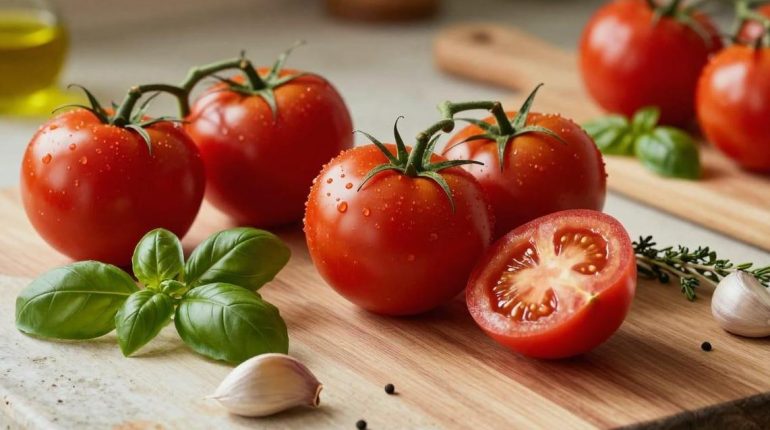
This accessibility begins with the choice of tomatoes. 2.5 kg of Roma, San Marzano, or well-ripened vine varieties constitute the ideal base: their dense flesh, low water content, and balanced acidity naturally create this sought-after concentration. Out of season, three cans of quality peeled tomatoes offer an honorable alternative, far superior to tasteless greenhouse-grown fresh tomatoes. This fundamental distinction escapes industrial manufacturers who prioritize yield over maturity.
The Mediterranean aromatic base rests on two medium onions, finely chopped, and five cloves of garlic. These generous proportions release their natural sugars during slow cooking, developing that depth absent from commercial sauces rushed by industrial rhythms. The onion caramelizes gently, the garlic blends into the texture, creating a complex gustatory foundation.
The true professional secret lies elsewhere: a finely grated carrot neutralizes the natural acidity of tomatoes without resorting to added sugar. This little-known chef’s trick explains why homemade sauces achieve this perfect balance between sweetness and freshness. Industrialists, ignoring or neglecting this technique, compensate brutally with granulated sugar, creating that characteristic artificial sweetness. The carrot, by dissolving, brings its natural carbohydrates and fibers, enriching the texture while correcting the pH.
The Aromatic Arsenal That Transforms The Sauce
This gustatory foundation is enriched by Mediterranean herbs. The trio of fresh chopped parsley, dried oregano, and fresh basil constitutes the aromatic signature: parsley brings its herbaceous freshness, oregano its characteristic earthy note, basil its delicate anise scent. This combination creates those layers of flavors absent from industrial sauces that limit themselves to a single, standardized aroma. The bay leaf, an often-neglected structural element, diffuses its bitter complexity during prolonged cooking, unifying the whole.
The fat determines the final texture. Five tablespoons of extra virgin olive oil naturally emulsify with the tomato juice, creating that velvety smoothness impossible to reproduce industrially. Manufacturers use neutral refined oils, depriving their products of this characteristic roundness and those subtle fruity notes that distinguish an authentic preparation.
Seasoning reveals the main philosophical difference: salt, freshly ground black pepper, and a pinch of sugar that is generally unnecessary. The slow cooking of the onions, the natural sweetness of ripe tomatoes, and the correction provided by the carrot make the addition of sugar superfluous. Commercial versions systematically contain several grams per serving, masking the mediocrity of the base ingredients and creating this artificial taste dependency. A correctly executed homemade sauce reaches its balance naturally, without chemical compensation.
The Objective Superiority Of Homemade Preparation
This qualitative autonomy translates first into yield: about 2 liters of authentic sauce from a single preparation, an amount sufficient to feed a family for several meals or to constitute a strategic stock. This generous volume is obtained without compromise, each milliliter respecting the standards of Italian tradition. Industrial sauces display similar volumes at competitive prices but hide their true cost: degraded ingredients, stabilizing additives, synthetic aromas compensating for the absence of noble raw materials.
Total control of the components eliminates the characteristic opacity of commercial labels. No E330, E412, or yeast extracts: only identifiable and controlled products. This transparency guarantees the absence of chemical preservatives, artificial acidity regulators, or flavor enhancers masking mediocrity. Homemade sauce is naturally preserved by freezing in individual portions, keeping its organoleptic qualities intact without industrial intervention.
This approach rehabilitates the know-how passed down for generations in Italian kitchens, where salsa di pomodoro was the foundation of the daily diet. Neapolitan grandmothers used neither laboratories nor additives: only time, attention, and authentic products. Reproducing this ancestral method today represents an act of resistance against taste standardization, a reconquest of culinary autonomy that definitively transforms the perception of this universal condiment.