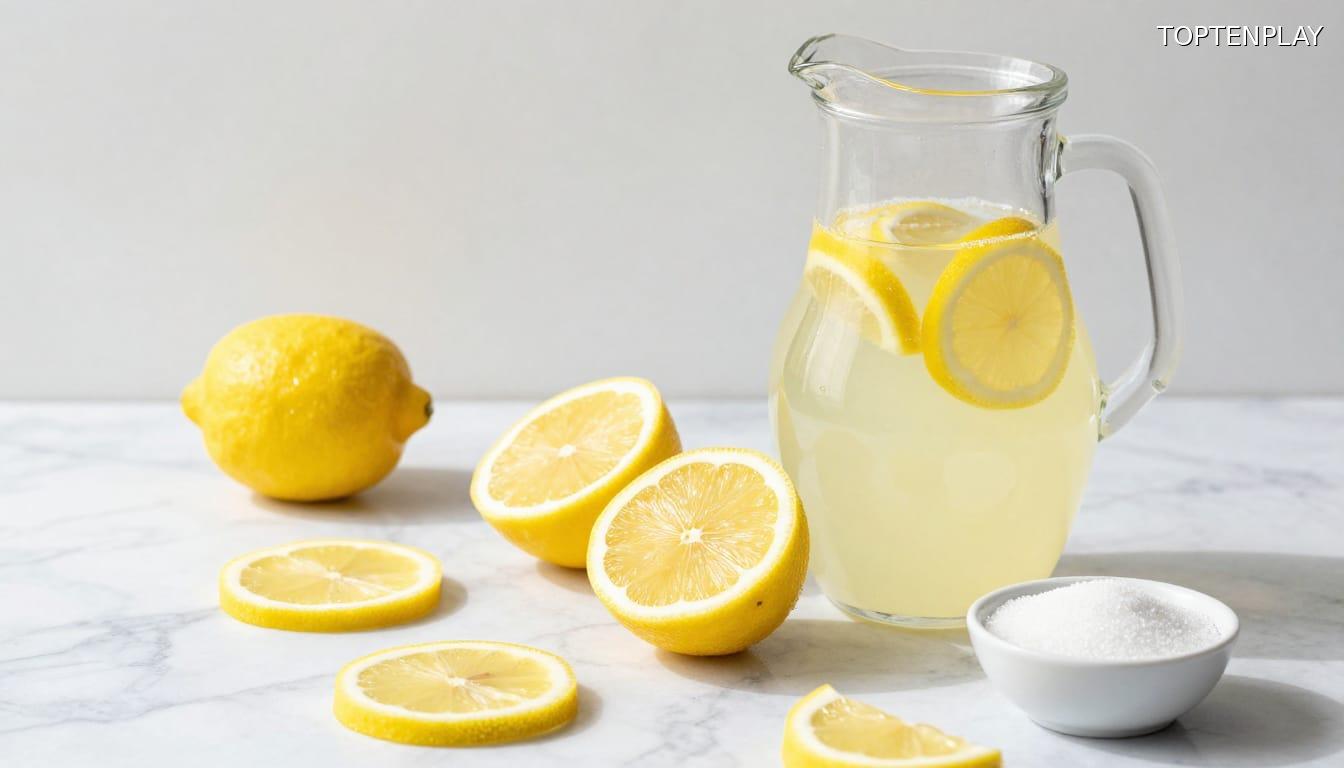
Homemade Lemonade: Why It Surpasses All Others
Behind every glass of industrial lemonade lies a truth that labels carefully conceal: artificial flavors, preservatives, and added sugars systematically replace the real fruit. The homemade version breaks radically from this logic.
First fundamental difference: the taste. Lemons squeezed at the last minute release essential oils and a vivid acidity that no industrial formulation can reproduce. The result is immediate — a frank, lively, authentically citrusy flavor.
Second advantage, often underestimated: total control over the composition. Sugar dosed according to preference, acid balance adjusted on the fly, flavors chosen freely — the homemade recipe adapts to every palate, whereas the commercial product imposes a fixed formula.
Finally, the nutritional aspect clearly argues in favor of homemade. Fresh lemon juice provides vitamin C and natural antioxidants, nutrients that evaporate in industrial pasteurization and long-term preservation processes.
This triptych — authenticity of taste, freedom of composition, and real nutritional value — makes homemade lemonade not just a simple substitute, but an experience in its own right. And this experience begins, as is often the case, with the quality of the chosen ingredients.
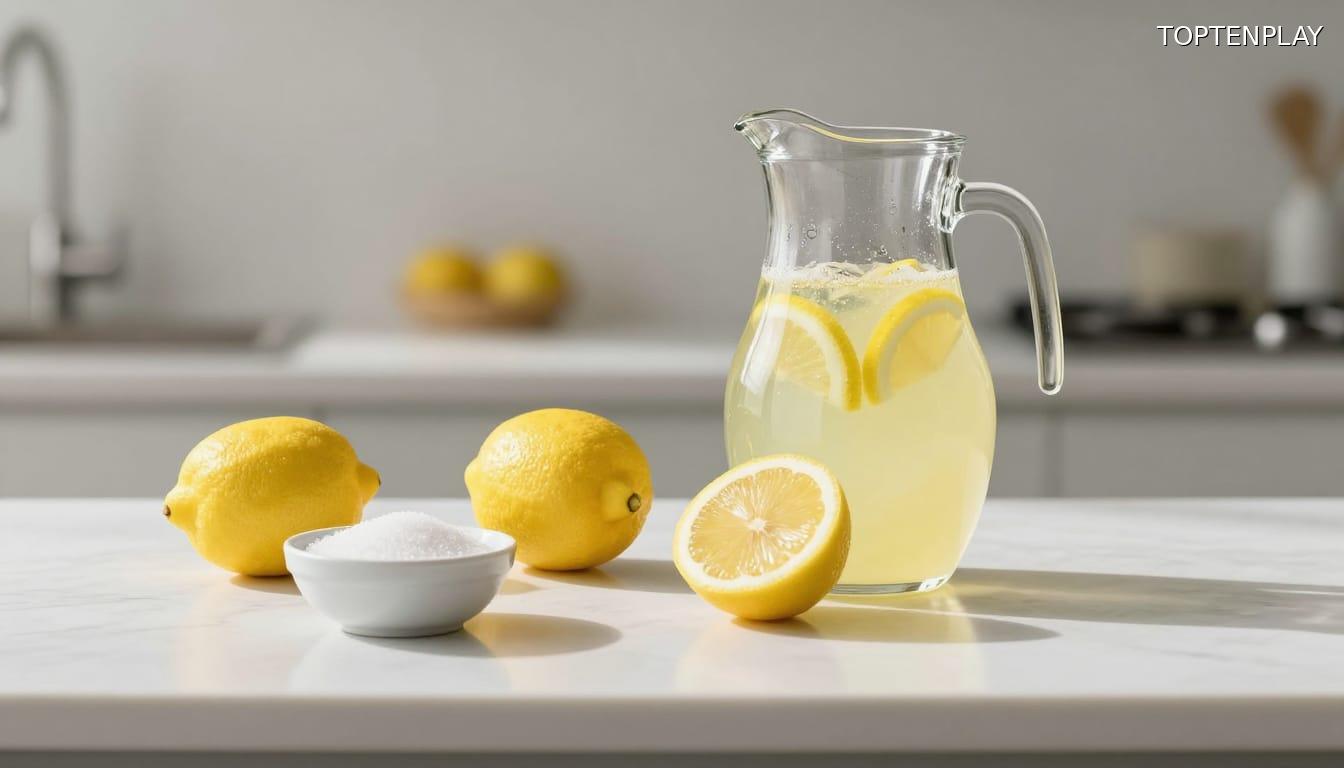
Essential Ingredients: Everything You Need for a Perfect Result
This experience indeed begins with the choice of ingredients — and the good news is their disconcerting simplicity. Four elements are enough to compose a lemonade worthy of the name.
First pillar: lemons. Count on 4 to 6 fresh lemons, depending on your taste for acidity or sweetness. No need to overcomplicate things — the size matters less than the freshness of the fruit, the guarantor of that vivid juice mentioned earlier.
Next comes the powdered sugar, the quantity of which guides the entire aromatic balance. One cup is the recommended starting point, adjustable according to preferences. The fine granulation of ordinary sugar facilitates its dissolution, a determining step for a homogeneous texture.
Water, the third ingredient, deserves more attention than it is generally given. Preferably filtered, it offers a neutral base that allows the lemon aromas to express themselves fully, without interference from limescale or chlorine in tap water.
Finally, ice cubes — not an accessory, but a component in their own right. Lemonade only truly exists when very cold, served immediately after preparation to preserve the aromatic intensity of the fresh-squeezed lemon.
Four ingredients, probably already present in your kitchen. A list as short as it is effective — and open enough to welcome a few additions that transform the classic into a personal creation.

Optional Additions: Personalizing Your Lemonade to Your Liking
It is precisely this openness — this recipe simple enough to welcome improvisation — that makes homemade lemonade a culinary playground in its own right. Three families of additions are enough to transform it radically.
Aromatic herbs lead the way. A few leaves of fresh mint, added directly to the pitcher or lightly crushed to release their essential oils, breathe extra freshness that pairs perfectly with the summer heat.
Red fruits constitute the second path of personalization. Strawberries or raspberries, blended or simply crushed, bring a fruity dimension and a natural pink tint that visually transforms the glass as much as it enriches the palate. A handful of strawberries is enough to turn an ordinary lemonade into a signature drink.
Third option: complementary citrus fruits. A dash of lime or orange juice does not compete with the lemon — it completes it, rounding out the acidity or adding sweeter, floral notes depending on the fruit chosen.
These additions require neither special technique nor hard-to-find ingredients. Lemonade naturally lends itself to creativity, each variant remaining faithful to the original spirit while carrying a personal touch. A solid base, a few well-chosen ingredients — all that’s missing is the method to assemble it all with precision.
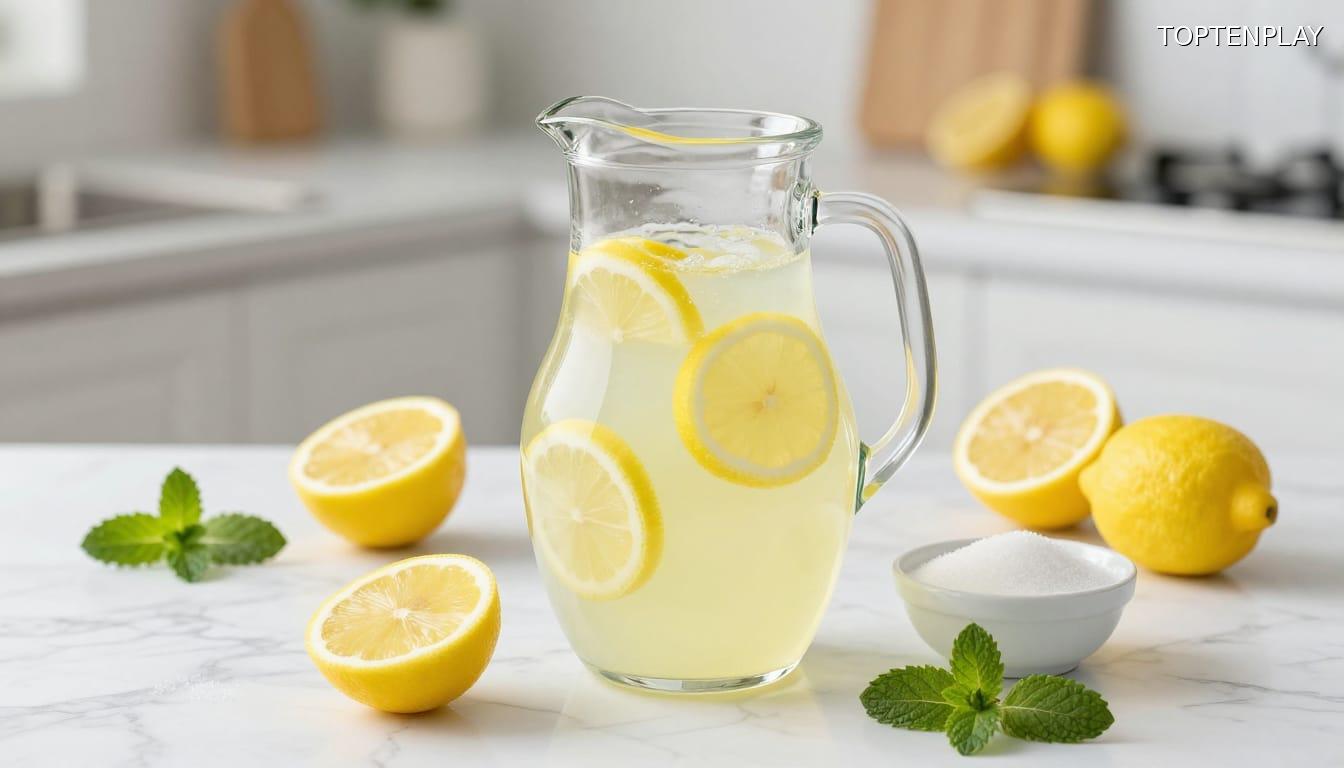
Step-by-Step Preparation: Succeeding with Your Homemade Lemonade Every Time
A solid base, well-measured ingredients — all that’s left is to assemble them in the right order to obtain an irreproachable result.
Start by preparing a simple syrup: dissolve the sugar in a small amount of hot water, stirring until completely dissolved. This step guarantees a homogeneous sweetness, without grains that would settle at the bottom of the glass.
Then squeeze your 4 to 6 fresh lemons. Filter the juice to remove seeds and excess pulp, then pour it into a large pitcher. Add the cooled syrup, then top up with cold filtered water. The final dosage is adjusted to taste: more juice for a sharp acidity, more water for a lighter version.
Mix vigorously, taste, correct if necessary. Add ice cubes directly to the pitcher or individually to each glass according to preference.
For serving, a few details make the difference: a lemon slice on the rim of the glass, a few mint leaves placed on the surface, or a glass straw for a polished presentation. The visual aspect prolongs the pleasure as much as it anticipates the freshness.
Accessible from the first attempt, this recipe transforms any summer barbecue into a memorable moment — provided you choose quality lemons and respect the balance between acidity and sweetness.