Cinnamon tea is often the drink people imagine to be complicated—like you need rare sticks imported from Asia, a precise ritual, and kitchen scales. The truth? Two sticks, some water, twenty minutes. That’s it. And that’s exactly why it’s perfect for a Saturday morning.
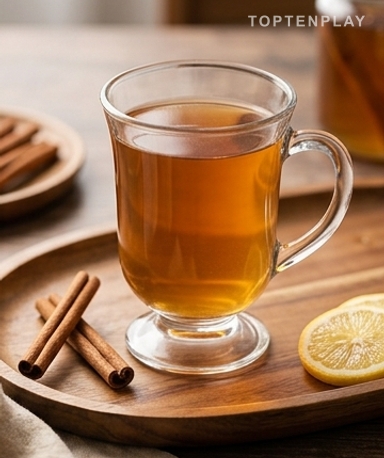
In the cup, the liquid takes on a deep amber color, almost copper, with that warm spicy scent that fills the whole room long before you even touch it. The first sip is slightly astringent, with an underlying sweetness vaguely reminiscent of gingerbread without the sugar. No heaviness. Just that little heating effect in the throat that settles in slowly, like a hand placed on your shoulders.
Why you’ll love this recipe
Ingredient Notes
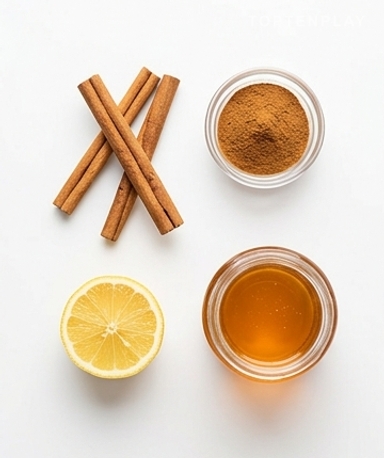
The strict minimum for a tea that actually does something: cinnamon, water, and two or three options depending on your taste.
- Ceylon Cinnamon sticks : There are two types of cinnamon: Ceylon, known as ‘true cinnamon,’ and Cassia, the cheaper version found everywhere. Cassia is stronger in taste but contains much more coumarin—a compound that is not ideal if consumed daily. For this daily tea, use Ceylon. It is milder, more delicate, with an almost floral scent that holds up better during cooking. Find it in organic stores or Asian groceries.
- Filtered or spring water : Very hard tap water will slightly squash the delicate aromas of the cinnamon. It’s not a dealbreaker, but if you have a filter pitcher, now is the time to use it.
- Raw honey (optional) : If you want to sweeten it, use raw honey—the opaque, grainy kind, not the translucent liquid in plastic bottles. It melts slower in hot tea, so add it when it’s slightly less boiling. And avoid it if you’re watching your blood sugar, as it would somewhat defeat the purpose.
- Lemon (optional) : A quarter squeezed just before drinking, but not in the pot. Citric acid doesn’t handle prolonged heat well and turns slightly bitter. Add it directly to the cup.
Starting slowly
Pour your 350 ml of water into a small saucepan—not a large one, otherwise the water evaporates too much and you’re left with three sips at the bottom. Bring to a boil, then lower the heat immediately. Drop in the sticks. At this exact moment, the smell changes. It’s no longer just hot water—it becomes something spicy, rounded, almost comforting. It’s the sign that the essential oils are starting to release.
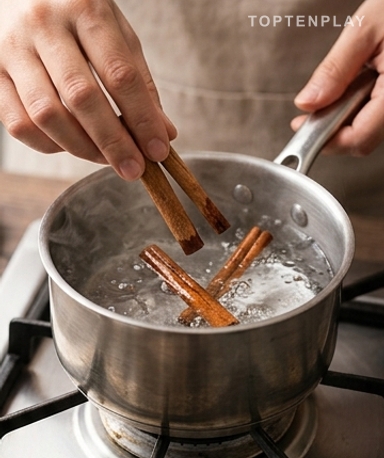
The moment where there is no rush
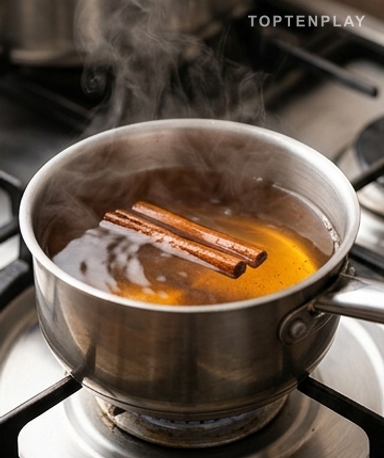
Let it simmer over low heat for 10 to 15 minutes. Not at a rolling boil—a tiny simmer is enough, those little bubbles rising lazily to the surface. The water color will change from transparent to beige, then to an increasingly pronounced amber, like a very steeped tea but with that characteristic orange tint of cinnamon. Turn off the heat. Let it sit for another 5 minutes. The cinnamon continues to infuse in the hot water and the aroma becomes deeper, less volatile, and smoother.
Filtration—the step we always rush
Use a fine-mesh strainer. Cinnamon sticks leave particles in the water—not huge ones, but enough to make the tea grainy in the mouth if you don’t filter. Pour slowly into your cup. You can rinse the sticks and reuse them a second time—they provide a lighter but still very decent infusion with that lingering woody scent.
Tips & Tricks
- Do not boil the sticks at a rolling boil for 15 minutes: this releases bitter compounds and destroys some of the aromas. A simple simmer is truly enough.
- Keep your tea in a thermos if you want to drink one cup in the morning and another during the day—it stays good for 8 to 10 hours without losing much.
- If you only have ground cinnamon, it works (1 teaspoon), but put it in a tea filter or an infusion ball. Otherwise, you’ll be drinking suspended powder, which is much less pleasant.

Can I use ground cinnamon instead of sticks?
Yes, 1 teaspoon of ground cinnamon replaces 1-2 sticks. Put it in an infusion ball or a tea filter before dipping it in the water—otherwise, you won’t filter it well and the tea will be grainy. The result is a bit stronger in taste and slightly less refined.
How many cups per day, and for how long?
1 to 2 cups per day maximum. Cassia cinnamon (the most common variety) contains coumarin, which can affect the liver in large quantities over the long term. With Ceylon, the risks are much lower. Take one-week breaks after a month of regular consumption.
What is the difference between Ceylon and Cassia cinnamon?
Ceylon is ‘true’ cinnamon: milder, more floral, with very little coumarin. Cassia is the industrial variety, spicier and much richer in coumarin. For occasional use, Cassia is fine. For daily consumption, only Ceylon—found in organic stores or Asian groceries.
Can I drink it cold or prepare it in advance?
Yes. Prepare a batch, let it cool, and store it in a thermos or the refrigerator for up to 24h. Cold over ice with a squeeze of lemon, it’s also very good in summer. The active properties remain intact.
Can I reuse the cinnamon sticks?
A second use, yes. Rinse them under cold water, dry them, and make another infusion—it will be lighter but still fragrant. Beyond twice, the sticks are spent and won’t contribute much.
What time of day is best to drink it?
In the morning on an empty stomach to kickstart metabolism before the first meal, or 30 minutes before dinner to limit late-day blood sugar spikes. Avoid drinking it too late in the evening if you are sensitive to heat—cinnamon has a slight stimulating effect.
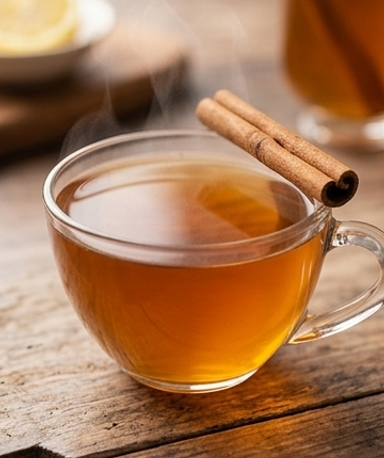
Homemade Cinnamon Tea
International
Beverage
A simple and effective infusion made with Ceylon cinnamon sticks, ready in 20 minutes. Drink in the morning on an empty stomach to stabilize blood sugar and boost metabolism.
Ingredients
- 1 to 2 Ceylon cinnamon sticks (or 1 tsp Ceylon ground cinnamon)
- 350 ml filtered or spring water
- 1 tsp raw honey (optional)
- ¼ lemon, freshly squeezed juice (optional)
Instructions
- 1Pour 350 ml of water into a small saucepan and bring to a boil.
- 2Lower the heat immediately and add the cinnamon sticks (or ground cinnamon in a tea filter).
- 3Simmer over low heat, with a simple simmer, for 10 to 15 minutes.
- 4Turn off the heat and let infuse for another 5 minutes, covered.
- 5Filter into a cup using a fine-mesh strainer.
- 6Add honey when the tea is slightly less hot, and/or lemon juice. Enjoy hot.
Notes
• Storage: pour into a thermos to keep for up to 10h. In the refrigerator, the tea keeps for 24h and can be enjoyed cold over ice.
• Reusing sticks: rinse and dry them after use. A second infusion is still good; beyond that, the sticks are exhausted.
• Dosage: do not exceed 2 cups per day, especially with Cassia cinnamon. Prefer Ceylon for regular daily consumption.
Nutrition Facts (per serving, estimated)
| 10 kcalCalories | 0gProtein | 2gCarbs | 0gFat |