Most vegetable juices are boring. Bland, way too green, with that “punishment” taste that nobody wants to admit to. Carrot-beet juice, however, is in a different league: a color that stops conversations and a taste that truly surprises.
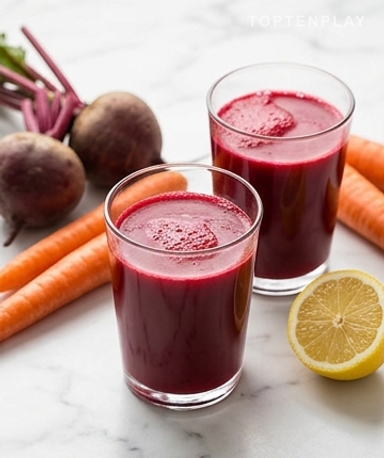
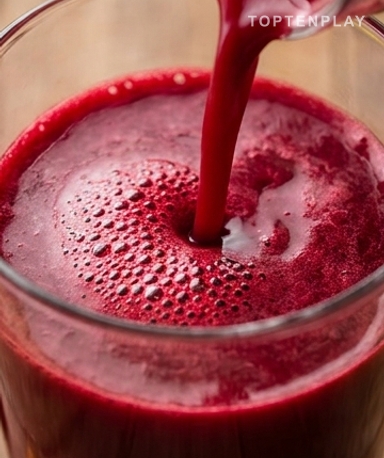
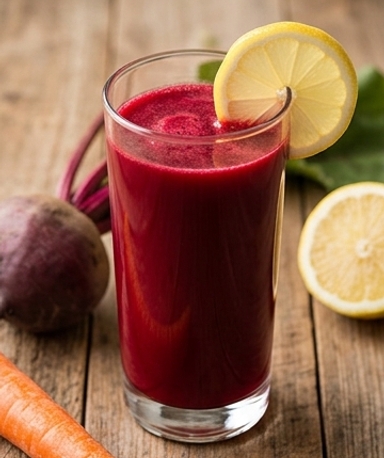
In the glass, it’s a deep, almost purple red, as rich as a garnet. The scent is earthy and sweet at the same time — the beet asserts its character, but the carrot softens everything without a fight. The texture isn’t watery: there’s a light body, a pleasant slight viscosity against the tongue. And that natural sweetness, almost like roasted beet, lingers in the mouth for a few seconds after drinking.
Why you’ll love this recipe
Ingredient Notes
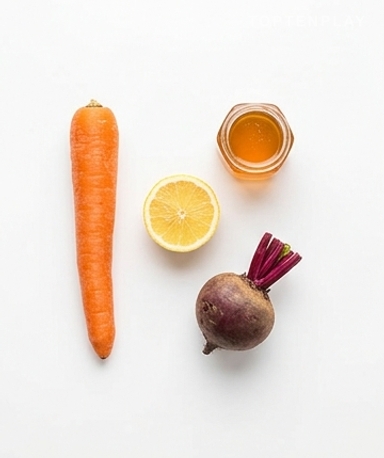
A beet, a carrot, a lemon — three ingredients are enough to make this juice.
- The beet : Get it raw — not the jarred kind with that vinegar taste that overpowers everything. A small raw beet, firm to the touch, with the skin still slightly earthy. The smaller it is, the sweeter it will be. For a large glass, one is more than enough.
- The carrot : A real carrot, not those tasteless mini-sticks from the snack aisle. If you can find sand-grown carrots — the dark orange, slightly bumpy ones — the taste will be significantly more intense. One medium carrot is all it takes.
- The lemon (optional, but don’t skip it) : The juice of half a lemon really changes the result. It cuts through the very earthy side of the beet and provides a freshness that makes the drink much more pleasant to finish right to the bottom of the glass. If you don’t have lemon, a small piece of grated fresh ginger does a similar job.
- Water : One glass is enough to get the right consistency. Less water and you have a thick, almost full-bodied juice. More water and it’s lighter, easier to drink quickly. Adjust according to your preference.
Why raw beet changes everything
Many people are afraid of raw beets — they’ve only known the soft, vinegary ones from a jar. Raw, it’s completely different. It’s firm, almost crunchy when you cut it, with an aroma of wet earth that hits your nose from the first slice. That earthy taste is exactly what gives this juice its character. Cooking softens it, vinegar water kills it. Here, we keep everything — the natural sugar, the depth, that unmistakable garnet color.
The part everyone gets wrong: the right balance
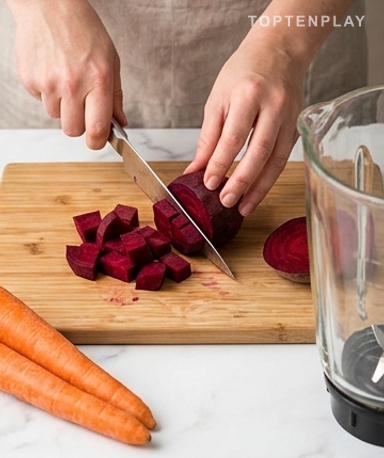
The problem with most beet-carrot juice recipes is using too much beet. It becomes overwhelming, too earthy, and hard to drink. One small beet to one carrot is the right ratio. The carrot doesn’t disappear — it softens, rounds things out, and brings a slightly sugary sweetness reminiscent of a roasted carrot but without the heat. Add the lemon last, taste, and adjust. If it’s still too earthy for your taste, you need lemon, not more water.
Blending or straining — what it really changes
With an immersion blender or a classic blender, you get a thick, somewhat full-bodied juice with some fiber still in it. Run it through a strainer and you get something smoother, cleaner in the mouth, that goes down effortlessly. A juicer, on the other hand, gives a completely clear juice — beautiful color, almost watery texture, but you lose the slight thickness that gives it body. For guests, the blended-and-strained version is the best compromise: great presentation, great taste, and no special equipment required.
Serving this juice like you know exactly what you’re doing
A clear glass or a small glass carafe is essential — this color deserves to be seen, not hidden in an opaque mug. Slide a lemon slice onto the rim; it takes two seconds and the effect is immediate. Serve it very chilled, straight from the fridge or with two ice cubes. If you’re hosting, you can prepare it up to two hours in advance and keep it in the refrigerator in a closed jar — it might settle slightly, but a quick stir will put it right back in order. No one will know you made it ahead of time.
Tips & Tricks
- Wear gloves to peel the beet. It really stains hands — a stubborn purple color that sticks around for an hour even with soap.
- If the juice is too thick after blending, strain it with a classic mesh sieve by pressing with the back of a spoon. No special equipment needed, it works perfectly.
- A splash of honey instead of lemon if you’re serving children — it softens the earthiness of the beet and is generally much better accepted by more sensitive palates.
Is a blender or a juicer absolutely necessary?
A classic blender or even an immersion blender is more than enough. A juicer gives a clearer juice, but a blender with a strainer gives a very decent result and retains a bit more fiber. It’s mostly a matter of preferred texture.
How long does this juice keep?
Ideally, drink it within 30 minutes of preparation to enjoy all the nutrients and the color at its peak. If you must make it ahead, it keeps for 24 hours in the refrigerator in an airtight jar — it will be slightly less vibrant in color but still good.
Can I use cooked beets instead of raw?
You can, but the result isn’t the same at all. Cooked beets result in a milder, less intense juice, and the color will be less deep. If you really want that characteristic garnet red and bold taste, raw beet is essential — and definitely not the vinegary jarred kind.
My juice is too earthy, what should I do?
Lemon juice is what you need. A few drops are enough to cut through the dominant earthy side of the beet and balance the whole thing. You can also slightly reduce the amount of beet next time and compensate with more carrot.
Can I add other fruits or vegetables?
Yes, and some combinations work very well. A Golden Delicious apple softens it and makes the juice more approachable. A small piece of fresh ginger adds zing and warmth. An orange instead of lemon gives something fruitier and sweeter — worth trying if you want variety.
Why does the juice stain hands and surfaces so much?
Betalain, the red pigment in beets, is powerful. Wear gloves to peel and cut the beet, and place paper towels or a dedicated board underneath. On porous surfaces like wood, a damp sponge immediately after usually prevents staining.
Homemade Carrot-Beet Juice
International
Drink
An intense garnet-red juice ready in 10 minutes, with a perfect balance between the sweetness of the carrot and the earthy character of raw beet. Ideal for impressing with zero effort.
Ingredients
- 150g (1 small) raw beet
- 130g (1 medium) carrot
- 200ml (1 glass) water
- 15ml (juice of ½) lemon
- 1 tsp honey (optional)
Instructions
- 1Wash and peel the beet and carrot, then cut them into pieces of about 2 cm.
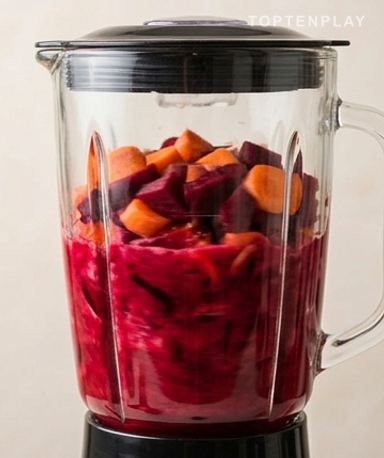
- 2Put the pieces in the blender with the water and blend for 30 to 40 seconds at full power until smooth.
- 3Filter through a fine mesh strainer, pressing with the back of a spoon to extract as much liquid as possible.
- 4Add the lemon juice and honey if desired, mix and taste to adjust.
- 5Serve immediately in a clear glass, well chilled.
Notes
• Storage: the juice keeps for up to 24h in the refrigerator in an airtight jar, but it is best enjoyed fresh.
• Milder variation: add half a Golden Delicious apple before blending to soften the earthy intensity of the beet and make the juice more accessible.
• Gloves recommended: beets permanently stain hands and surfaces — anticipate before peeling.
Nutrition Facts (per serving, estimated)
| 95 kcalCalories | 3gProtein | 21gCarbs | 0.4gFat |