That steady, low thrum of a simmering sauce, the scent of garlic starting to caramelize in hot oil — bolognese announces itself before you even lift the lid. It’s an everyday recipe. Nothing complicated, nothing intimidating, just a sauce that deserves nothing more than time.
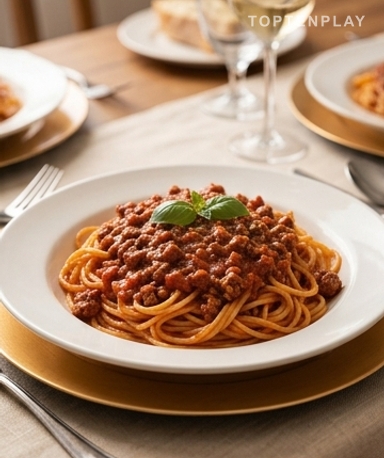
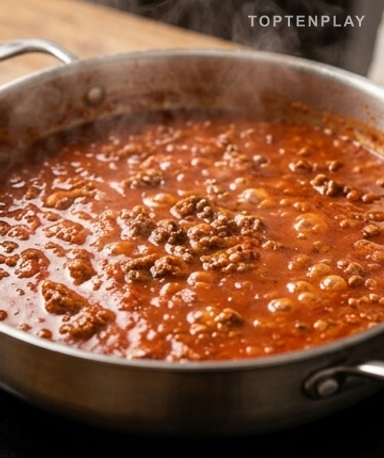
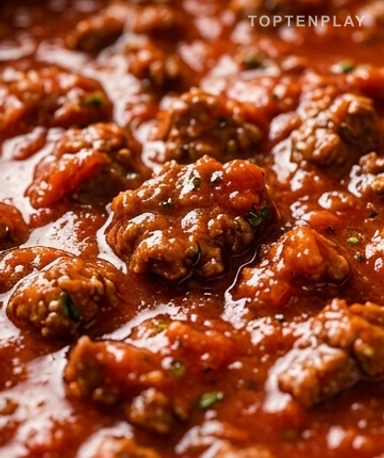
A deep, nearly brick red, the sauce shines softly in the pot. The small bits of meat have finally melted into the tomatoes after an hour of slow cooking — they have become one with the coulis. It smells of bay leaf and oregano, with that subtle sweet undertone that the carrot provides without you even realizing it. The pasta simply disappears into it.
Why you’ll love this recipe
Ingredient Notes
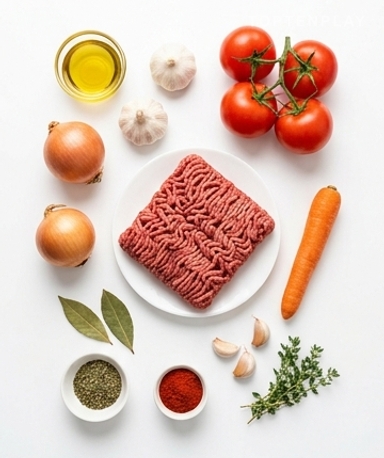
All the ragù ingredients: ground beef, fresh tomatoes, onions, garlic, carrot, and aromatic herbs.
- Ground beef : Choose beef with at least 15% fat. 5% lean beef is too dry — it cooks like sand and the sauce remains thin, without body. With a little fat, the meat truly browns and adds depth.
- Fresh tomatoes + coulis : The double dose of tomato is what makes the difference. Fresh ones bring water and freshness, while the coulis provides concentration. No fresh tomatoes? Just double the amount of coulis.
- Carrot : Many recipes skip it. A mistake. It melts during cooking, visually disappearing, but it mellows the acidity of the tomatoes and brings that slight sweetness you can’t quite name but notice immediately.
- Veal stock : Optional on paper, decisive in practice. A teaspoon in the sauce adds that deep, almost meaty umami side — as if the sauce had simmered twice as long.
Start with the onions — don’t burn them
Heat the olive oil over medium heat in a large pot. Add the chopped onions and let them soften until translucent. This takes 4 to 5 minutes. The smell shifts gradually from sharp to slightly sweet — that’s the sign you can add the crushed garlic and finely diced carrot. Stir often. This aromatic base is the foundation of the whole sauce: if it catches, the sauce keeps that burnt taste.
Don’t stir the meat right away
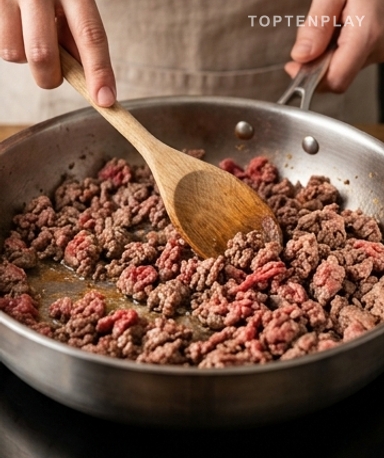
Add the ground beef and resist the urge to mix it immediately. Leave it for a good 2 minutes on the bottom of the pot — it will develop a light brown crust that smells roasted, almost like seared steak. Only then, break it into small pieces with a wooden spoon. Properly browned meat has a firm texture and a much deeper taste than meat that is just grey and boiled.
Add the tomatoes and let the heat do its job
Stir in the diced fresh tomatoes and the coulis. Mix well to coat the meat. Add the bay leaves, herbs, salt, pepper — and the veal stock if using. Lower the heat to a minimum: the sauce should barely simmer, not boil. Cover, leaving a small gap for steam, and let it simmer for 45 minutes to 1 hour. You can walk away. It’s patience that makes the sauce, not you.
Taste and adjust before serving
Before plating, dip your spoon in and really taste it. Too acidic? A pinch of sugar fixes that in thirty seconds. Too thick? A splash of water or broth, and two more minutes on the heat. Too thin? Remove the lid and let it reduce. Perfect bolognese coats the spoon without running off — a velvet-like consistency that clings well to the pasta.
Tips & Tricks
- Make it the day before: bolognese reheated the next day is significantly better than that served immediately. A night in the fridge lets the flavors settle.
- A pinch of sugar is enough to correct acidity — not a teaspoon. Too much sugar and the sauce takes on a strange taste that is hard to fix.
- Freeze in individual portions in flat bags: it thaws in 20 minutes in hot water and saves any weeknight.
- Avoid high heat once the tomatoes are added. Violent boiling makes the meat rubbery and causes the tomatoes to lose their roundness.
How long can homemade bolognese sauce be kept?
In the refrigerator in an airtight container, it keeps for 4 to 5 days without any problem. In the freezer, it lasts up to 3 months — freeze it in individual portions to thaw only what you need.
Why is my bolognese sauce too watery?
Simply let it reduce longer uncovered. Remove the lid at the end of cooking and slightly increase the heat — 10 to 15 minutes is usually enough to thicken it. Also check that your heat wasn’t too high at the start, causing water to evaporate too fast without concentrating flavors.
Can I make bolognese sauce without fresh tomatoes?
Yes, absolutely. Replace the 3 fresh tomatoes with an additional 200ml of coulis, or use a can of crushed tomatoes. The coulis-only version is even easier to balance in terms of acidity.
Does it really need to simmer that long?
For a decent sauce, 30 minutes is enough. For a truly great sauce, you need 45 minutes to 1 hour. This is when the flavors concentrate and the meat becomes tender — you can’t skip this step without notice.
How do I fix a sauce that is too acidic?
A small pinch of sugar at the end of cooking — not a teaspoon, just a pinch. Carrot also plays this role naturally if cooked well. You can also add a tablespoon of heavy cream to mellow it without adding sugar.
Can I prepare bolognese in advance?
It is actually recommended. Made the day before, the sauce is much better: the flavors have time to meld overnight. Reheat gently in a pot with a splash of water if it has thickened too much.
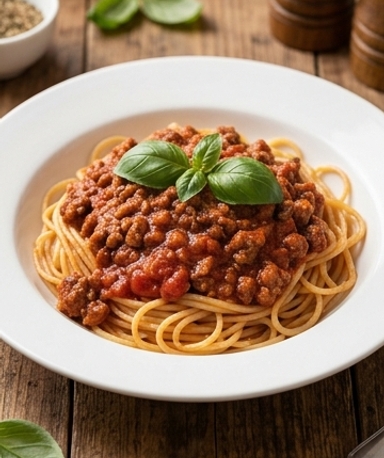
Homemade Bolognese Sauce
Italian
Main course
An Italian-style ragù slow-cooked with ground beef, tomatoes, and aromatic vegetables. Simple, hearty, perfect over any pasta.
Ingredients
- 300g ground beef (15% fat)
- 2 onions, finely chopped
- 3 fresh tomatoes, peeled and diced
- 2 garlic cloves, crushed
- 1 carrot, finely diced
- 200ml tomato coulis
- 2 bay leaves
- 2 tablespoons olive oil
- 1 teaspoon dried oregano
- 1 teaspoon veal stock (optional)
- to taste salt, pepper, fresh basil or parsley
Instructions
- 1Chop the onions, crush the garlic, and finely dice the carrot. Peel the tomatoes and cut them into pieces.
- 2Heat olive oil over medium heat in a large pot. Sauté the onions for 4 to 5 minutes until translucent.
- 3Add the garlic and carrot. Cook for 3 minutes, stirring regularly.
- 4Add the ground beef. Leave for 2 minutes without stirring to brown, then break into small pieces with a wooden spoon.
- 5Stir in fresh tomatoes, coulis, bay leaves, oregano, salt, pepper, and veal stock if using. Mix well.
- 6Reduce to low heat, cover leaving a small vent, and simmer for 45 minutes to 1 hour, stirring occasionally.
- 7Taste at the end of cooking and adjust salt, pepper, and herbs to your liking before serving.
Notes
• Storage: 4 to 5 days in the refrigerator in an airtight container, or up to 3 months in the freezer in portions.
• Make ahead: the sauce is better prepared the day before — reheat gently with a splash of water if it becomes too thick.
• Vegetarian variation: replace the beef with 200g of cooked green lentils — same cooking time, savory result.
Nutrition Facts (per serving, estimated)
| 265 kcalCalories | 18gProtein | 12gCarbs | 16gFat |