📌 Here’s what doctors never told you about those bumps on your skin
Posted 29 November 2025 by: Admin
Understanding Warts: The Viral Culprit Behind These Common Skin Growths
Spotting an unexpected bump on your hand or foot can be unsettling, but understanding what you’re dealing with is the first step toward effective treatment. At its core, a wart is a small skin growth caused by the human papillomavirus (HPV). This virus doesn’t magically appear—it enters your body through tiny breaks in your skin, such as minor cuts or scrapes you might not even notice.
Once inside, HPV triggers an unusual biological response. The virus causes skin cells on the surface to multiply rapidly, building up faster than your body can shed them naturally. This accelerated growth creates the characteristic bumpy, slightly raised appearance that defines a typical wart. The process isn’t instantaneous; it takes time for enough cells to accumulate and become visible.
The good news? Warts are remarkably common and generally harmless. Most people encounter them at some point in their lives, making them one of the most frequent skin concerns dermatologists address. They’re not a sign of poor hygiene or a serious health condition—they’re simply your body’s response to a viral infection.
That said, warts do vary significantly in their appearance, location, and potential complications. Some types are purely cosmetic concerns, while others—particularly those in sensitive areas or showing unusual characteristics—warrant closer attention. Understanding these distinctions becomes crucial for determining the best course of action and preventing complications or spread.
Six Distinct Types Of Warts: From Common To Concerning
That variation in appearance and location isn’t random—warts fall into distinct categories, each with unique characteristics and treatment considerations.
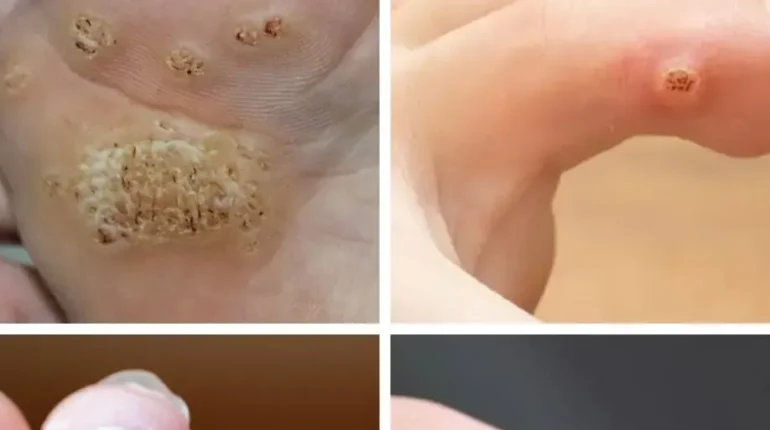
Common warts are the most recognizable type, typically appearing on hands and fingers with a rough, cauliflower-like texture. Plantar warts target the bottom of your feet, where constant pressure from walking forces them inward, creating that painful sensation of walking on a pebble. Flat warts live up to their name, presenting a smoother surface that frequently appears on the face, arms, or legs. Their facial location requires more delicate treatment approaches given skin sensitivity.
Filiform warts adopt an almost dramatic appearance with their distinctive thread-like growths, favoring vulnerable areas around the eyes, nose, and mouth. These too demand special consideration due to their location.
Then there are genital warts—a category warranting heightened awareness. These sexually transmitted growths appear on or around genital areas and can range from flat to raised, sometimes clustering into a cauliflower-like formation. Critically, they’re most commonly caused by HPV types 6 and 11, but type 16 carries a significantly higher cancer risk, making detection and professional monitoring essential.
Finally, age warts—sometimes called wisdom spots—emerge typically after age 40, progressing from yellowish patches to rough, brownish bumps on the upper back, forehead, and hand backs. Their benign nature is complicated by one troubling reality: they can closely resemble melanoma, demanding professional verification to rule out more serious conditions.
Transmission And Prevention: How Warts Spread
Understanding wart types is only half the battle—knowing how they spread is equally crucial for protecting yourself and others.
Contrary to popular belief, warts aren’t airborne invaders. They spread primarily through direct skin-to-skin contact, particularly when the skin is compromised by cuts or scrapes. The virus needs an entry point, making broken skin its primary gateway. This is why plantar warts are so easily transmitted in communal spaces: a small abrasion on your foot exposes you to HPV in locker rooms, public pools, or shared showers.
Contaminated surfaces pose a significant secondary risk. Sharing razors, towels, or nail clippers creates pathways for transmission. Walking barefoot in these vulnerable environments dramatically increases your exposure. Even indirect contact with infected skin cells can initiate infection.
Prevention relies on practical hygiene measures. Protect broken skin with bandages to block viral entry. Use your own towels and grooming tools, never sharing razors or nail clippers. In communal spaces, wear protective footwear and avoid direct contact with potentially infected individuals. For genital warts specifically, consistent protection during sexual contact and regular testing remain non-negotiable safeguards.
The encouraging truth: understanding transmission empowers you to interrupt the cycle. With awareness of how easily warts spread through vulnerable skin, you can implement preventive strategies that reduce both personal risk and community transmission.
Home Treatment Arsenal: Five Proven DIY Remedies
Understanding how warts spread is empowering, but the real relief comes from eliminating them. Fortunately, you don’t always need a dermatologist to fight back—several accessible home remedies have proven effective for many people.
Duct tape occlusion remains surprisingly popular. Cover the wart for several days, then remove the tape, soak the area in water, and scrub gently with a pumice stone. The logic is straightforward: starving the wart of oxygen disrupts its growth cycle. Apple cider vinegar works similarly to salicylic acid—dilute it with water, apply it to a cotton ball, and let it sit on the wart. Its acidic nature triggers peeling, gradually reducing the growth.
Aspirin paste offers another chemistry-based approach. Crush aspirin tablets with water to create a paste, apply it directly, and cover with a bandage overnight. The salicylic acid content acts as a peeling agent. Tea tree oil brings antimicrobial properties to the table, though it must be diluted with carrier oils like almond or castor oil to prevent skin irritation.
These remedies work because patience meets persistence. However, boundaries exist. If your wart appears on your face, genitals, or shows warning signs—bleeding, color changes, or pain—professional guidance becomes essential. Your doctor can access more powerful treatments and rule out serious skin conditions. Home remedies empower you to act, but medical expertise ensures you’re treating the right condition safely.