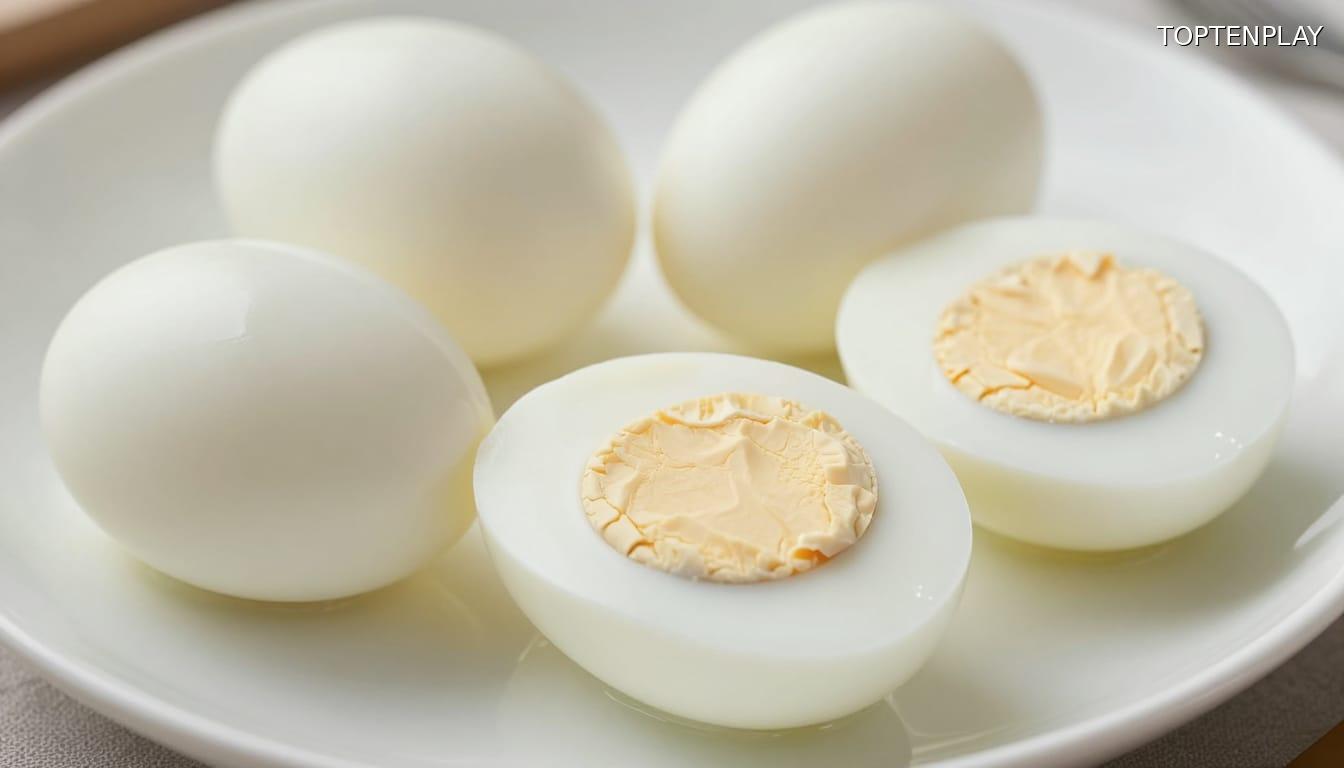
The Universal Problem Of Hard-To-Peel Hard-Boiled Eggs
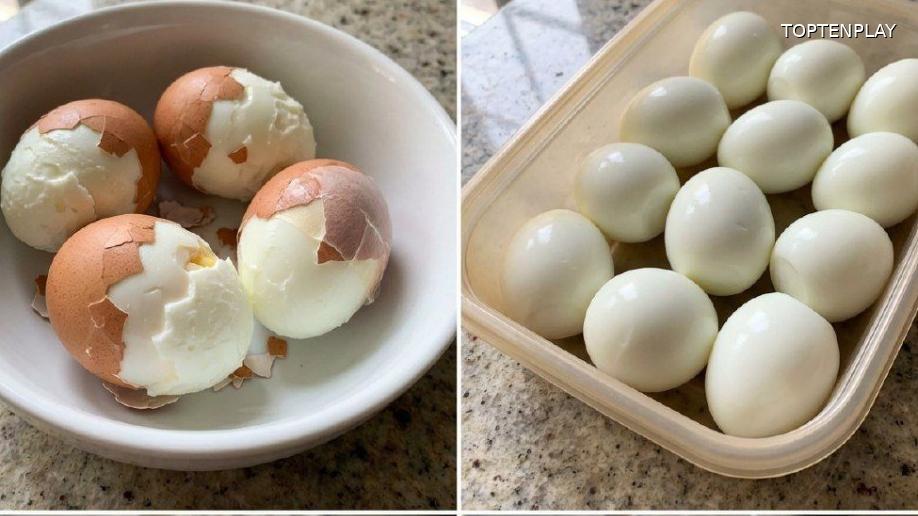
You know that frustration: a perfectly cooked hard-boiled egg, but impossible to peel without tearing off chunks of white. The result? A cratered, irregular surface, far from the aesthetic sought for your composed salads or appetizers.
The common mistake is not where you think it is. Most amateur cooks focus their efforts on the peeling technique: tapping gently, rolling the egg, peeling it under cold water. All gestures that only bring a random result. Professional chefs and food scientists have ruled: the true secret lies not in how to remove the shell, but in the cooking and cooling process.
This revelation changes everything. Instead of multiplying peeling tips, experts master two critical phases beforehand: cooking and thermal shock. These two steps determine the ease with which the internal membrane will detach from the white.
Professionals apply a proven method that guarantees smooth and immaculate eggs every time. A simple, reproducible protocol that transforms an unpredictable chore into a mastered technical gesture. This approach is based on three fundamental pillars, the first of which is surprising in its counter-intuitive nature.
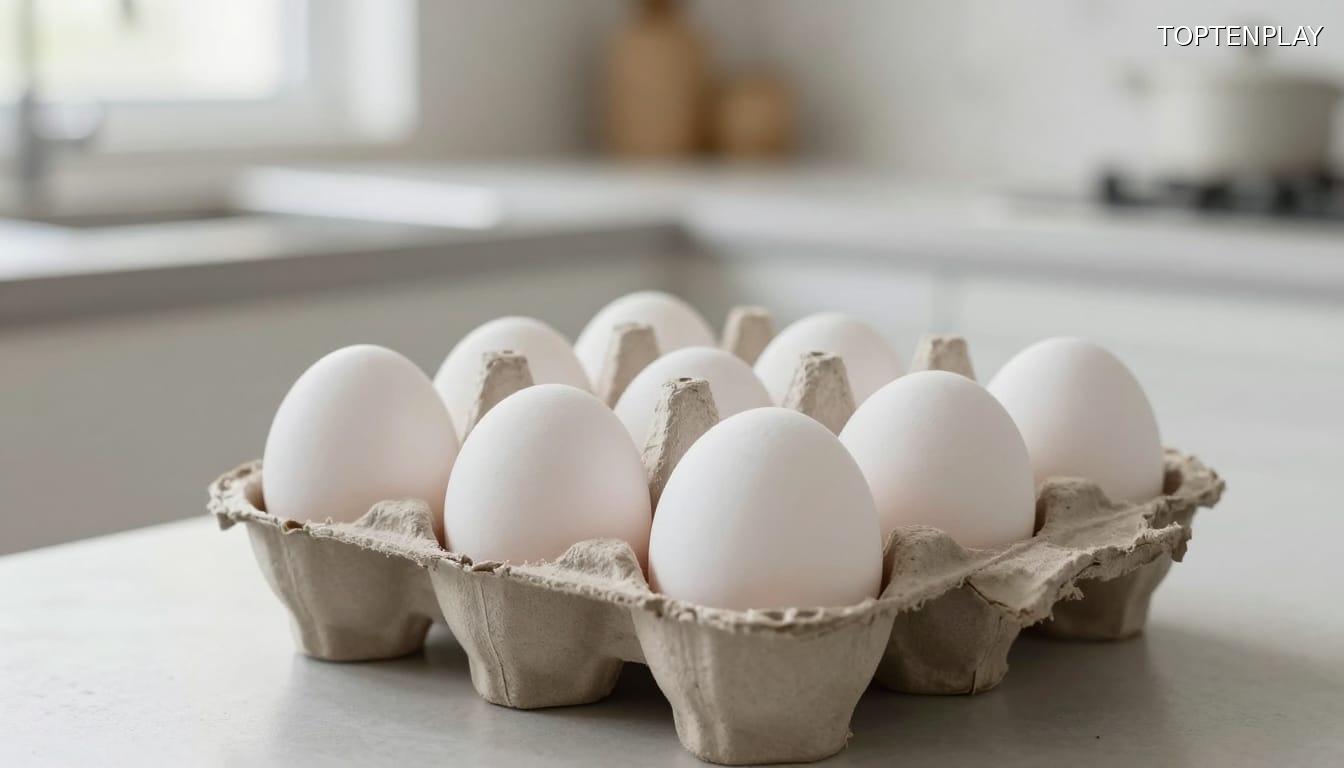
The Counter-Intuitive Rule: Favor “Expired” Eggs
The first pillar of this foolproof method defies all conventional culinary logic: forget extra-fresh eggs. Contrary to popular belief, freshness is a major handicap here.
The scientific explanation is clear. Freshly laid eggs have a lower pH which causes intense adhesion of the white to the internal membrane of the shell. This chemical bond turns peeling into a battle lost in advance. Conversely, over time, the pH gradually increases, releasing this grip and facilitating separation.
Professional chefs apply a precise recommendation: use eggs that are 7 to 10 days old. This time window offers the ideal compromise between acceptable preservation and optimal peeling properties. No need to wait weeks: ten days in the refrigerator is enough to achieve this result.
This culinary paradox disrupts our buying reflexes. For this specific preparation, the egg carton from last week far surpasses the one bought that same morning at the farmers’ market. A counter-intuitive truth based on chemical foundations verified in the laboratory.
But this temporal tip is only the first step. The cooking technique itself constitutes the true revolution that radically changes the results.
The Revolutionary Technique: Steaming
This 7 to 10-day window establishes favorable chemical conditions, but the true methodological breakthrough occurs at the time of cooking. Give up the pot of boiling water for good: professionals now prefer steaming.
This alternative radically transforms the final result. Unlike traditional boiling where eggs roll and bump against the sides, creating micro-cracks in the shell, steam keeps each egg stable and intact. The heat uniformly envelops the surface without violent contact, preserving the structural integrity of the membrane located between the white and the shell.
Chefs explicitly call this method a “game-changer.” The expression is not exaggerated: where boiling water causes uneven coagulation of the white depending on the areas of direct contact with the pot, steam ensures homogeneous cooking which then facilitates the clean separation between shell and flesh.
The process simply requires a steamer basket or a metal strainer placed over a pot of simmering water. The eggs cook suspended, benefiting from a constant temperature without undergoing the turbulence of boiling. This thermal stability guarantees firm but tender whites, never rubbery.
Yet, even with aged and steamed eggs, one last gesture determines the final ease of peeling.
The Complete 3-Step Protocol From Professionals
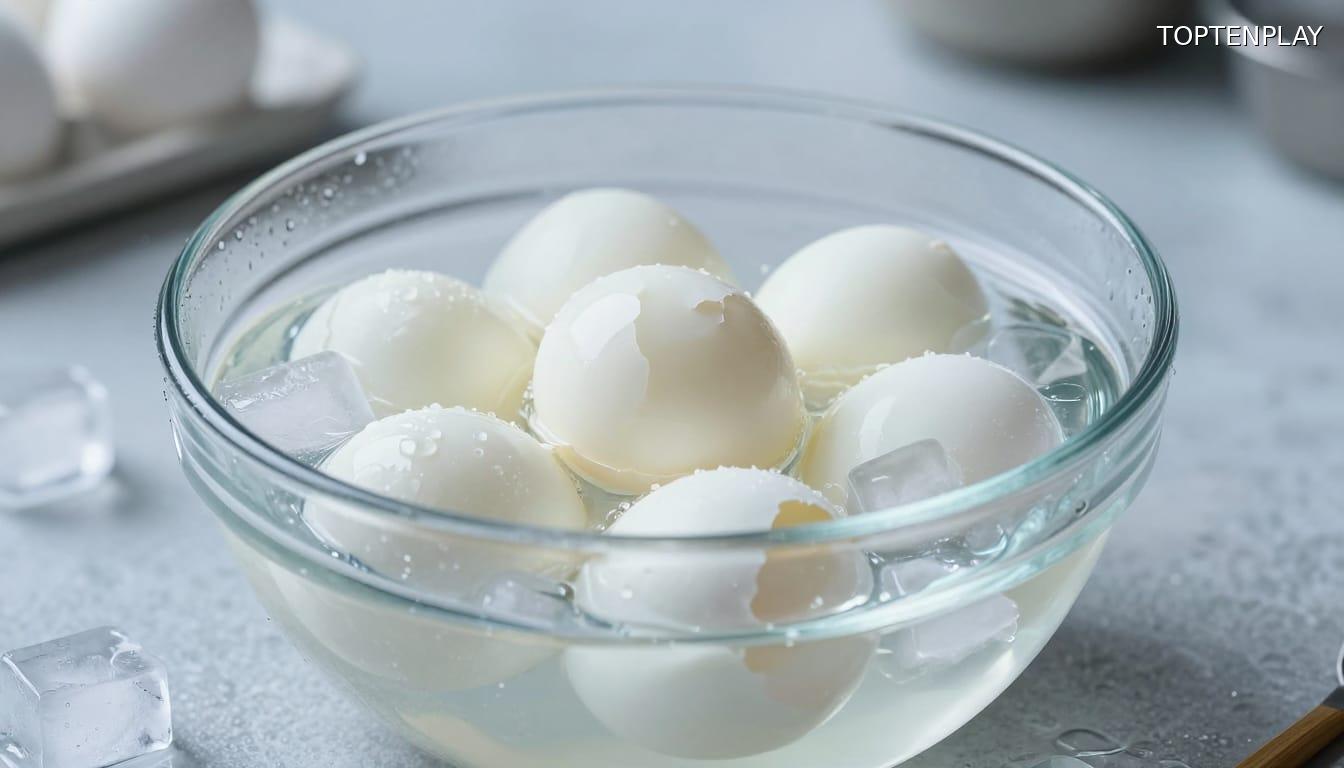
This decisive gesture constitutes the third step of the foolproof system applied by expert cooks: immediate thermal shock after cooking. As soon as the steaming time is over, plunge the eggs into an ice water bath for at least 5 minutes.
This brutal cooling causes a rapid contraction of the white which retracts slightly, creating a microscopic space between the flesh and the internal membrane. This physical separation transforms peeling from a fierce struggle into a fluid gesture where the shell detaches in large clean fragments.
The temperature of the water matters as much as its freshness: add ice cubes generously to keep the bath truly cold, not just cool. Professionals insist on this thermal rigor, because lukewarm cooling compromises the efficiency of the process despite following the first two steps.
The complete protocol is summarized as follows: select eggs from 7 to 10 days old, steam them for 12 minutes for full cooking, transfer them immediately to ice water. This reproducible sequence guarantees perfectly smooth eggs every time, definitively eliminating the frustration of cratered surfaces.
The adoption of this professional method transforms a hazardous task into a predictable result, making obsolete all the peeling tips developed to compensate for unsuitable cooking.