📌 Glass cooktops: why cast iron and abrasive cleaners can destroy them
Posted 25 January 2026 by: Admin
Cleaning Mistakes That Ruin Your Ceramic Hob
The elegance of ceramic hobs hides a vulnerability that most users discover too late. Unlike traditional stoves capable of withstanding decades of aggressive treatment, a single cleaning session with an unsuitable product is enough to permanently compromise the integrity of your cooking surface.
Rough or abrasive cleaners are the number one threat. Scouring sponges, scouring powders, classic multi-purpose products: these everyday allies become destructive weapons on glass. Each pass creates micro-scratches invisible to the naked eye that progressively accumulate, transforming a smooth surface into irregular terrain where dirt becomes embedded. This irreversible degradation requires the complete replacement of the hob.
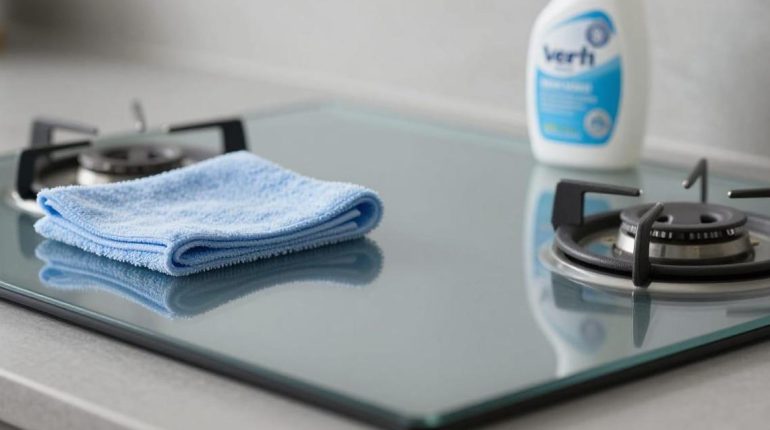
The solution requires strict discipline: only cleaners specifically formulated for ceramic glass and soft microfiber cloths. These specialized products remove food residues and burn marks without attacking the material. The initial investment in these suitable supplies remains negligible compared to the cost of a new installation.
This inherent fragility of glass is not the only challenge. The structural resistance of these modern hobs reveals other critical flaws when faced with the daily stresses of cooking.
Fatal Weight: Why Your Pots Threaten Your Hob
This vulnerability to scratches is accompanied by an even more concerning structural weakness. Ceramic hobs do not possess the robustness of traditional gas stoves mounted on reinforced metal structures. Glass, even tempered, remains intrinsically fragile under concentrated load.
Heavy utensils exert excessive point pressure on the surface. A filled cast iron pot, a massive casserole, a thick Dutch oven: all direct threats of cracking. The danger is amplified by irregular or rough bottoms that create localized stress points. A simple thermal shock combined with this weight can cause the immediate breakage of the glass during cooking.
Manufacturers formally recommend the exclusive use of lightweight utensils with a perfectly smooth and flat bottom. Anodized aluminum, quality stainless steel, and modern non-stick coatings distribute the load evenly. Cast iron, despite its recognized culinary qualities, becomes the enemy of these modern surfaces. Its excessive weight and often grainy texture multiply the risks.
This weight constraint requires a complete review of your cookware. But beyond the utensils themselves, it is your daily movements that hide the most insidious danger.
The Forbidden Technique That Silently Destroys Your Hob
This review of your utensils will not be enough if you perpetuate the most destructive gesture: sliding your pots instead of lifting them. This apparently harmless reflex generates cumulative micro-scratches that irremediably compromise the surface.
Each lateral movement, even slight, transforms the bottom of your pan into sandpaper on the tempered glass. Microscopic particles, food residues, the slightest roughness act as abrasives. The initial smooth surface gradually becomes covered with visible scratches that alter aesthetics and thermal conductivity.
The danger intensifies considerably with filled utensils. The weight of the contents increases the pressure exerted during movement, engraving each mark more deeply. A pot full of soup moved laterally inflicts more damage than a hundred vertical lifts.
Systematically lifting your pots and pans is the only effective protective gesture. This gestural discipline requires constant vigilance, particularly during quick preparations where the temptation to save a few seconds leads to error. However, the financial consequences of this apparent convenience far exceed the slight extra effort required.
The Financial and Safety Consequences of These Habits
This apparent time-saving quickly turns into a budget drain. Replacing a damaged ceramic hob ranges between 300 and 800 euros, including installation, depending on the model and brand. Partial repairs are rarely feasible: the slightest crack generally condemns the entire surface.
Beyond the financial cost, safety risks increase exponentially with degradation. A scratched or cracked hob can break suddenly under the effect of heat, projecting shards of tempered glass during cooking. Invisible micro-cracks weaken the structure to the point of catastrophic failure.
Energy efficiency degrades in parallel. Scratches disrupt the homogeneous distribution of heat, creating zones of overheating and underperformance. Your electricity consumption climbs while your cooking times lengthen, directly impacting your monthly energy bill.
Three preventive gestures are enough to preserve your investment: use exclusively specific non-abrasive cleaners, prioritize lightweight flat-bottomed utensils, and systematically lift your pots. This daily discipline guarantees an optimal lifespan of fifteen to twenty years, transforming your vigilance into substantial savings and lasting safety.