The Return of Ancestral Knowledge to the Modern Vegetable Garden
Long before the appearance of chemical fertilizers and industrial pesticides, our grandmothers practiced circular gardening where nothing was wasted. Every kitchen residue found its place in the vegetable garden: coffee grounds, eggshells, and above all, those garlic peels that were carefully kept in a jar. This domestic economy was not just a matter of frugality, but stemmed from empirical knowledge passed down from mother to daughter.
Garlic occupied a central position in this plant arsenal. Recognized for its virtues in the kitchen, it also served to protect crops from diseases and pests. The peels, far from being discarded, constituted the raw material for simple decoctions that were sprayed on weakened plants. This practice was based on observation: gardeners noted that their vegetables resisted attacks better after these natural treatments.
Today, this peasant know-how is regaining unexpected legitimacy. Faced with environmental concerns and growing mistrust of phytosanitary products, these gestures of yesteryear embody a credible alternative. Sustainable gardening ultimately requires no technological innovation: sometimes it is enough to relearn what our elders mastered perfectly. This rediscovery is accompanied by an essential question: why do these so common peels hold such potential for plant vitality?
Garlic, a Discreet Ally with Little-Known Properties
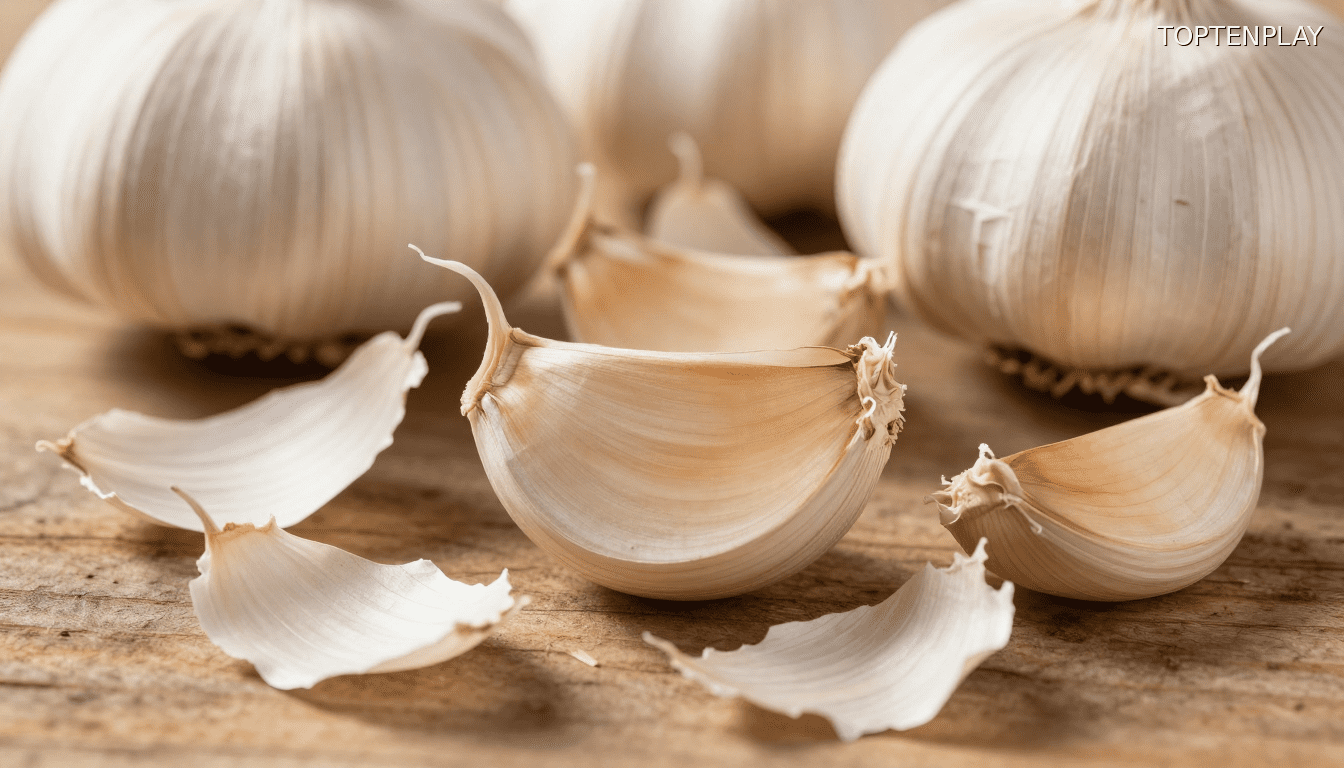
These peels that we mechanically throw away after preparing a dish hide a remarkable chemical composition. Garlic naturally concentrates sulfur compounds, including allicin, known for its antifungal and antibacterial properties. When using the cloves in cooking, these active substances remain present in the outer skins, often in significant quantities. It is precisely this molecular richness that explains the effectiveness of traditional decoctions.
In the garden, these peels act on several fronts simultaneously. They help strengthen the natural defenses of plants against common fungal diseases: mildew, powdery mildew, rot. Their characteristic odor also repels certain pests such as aphids and mites, without disturbing beneficial auxiliary insects. This natural selectivity represents a considerable advantage over non-targeted chemical treatments.
Preparing a spray from these residues requires no special skills. Simply infuse the peels in water, then filter and spray the resulting liquid onto the foliage. This simplicity of use contrasts with the observed effectiveness: gardeners regularly observe a visible improvement in plant vigor after a few applications. This discreet remedy thus transforms a daily waste into an accessible preventive solution, without investment or complex handling. It remains to be understood why this ancestral method corresponds so perfectly to the requirements of contemporary gardening.
When Sustainability Rhymes with Simplicity
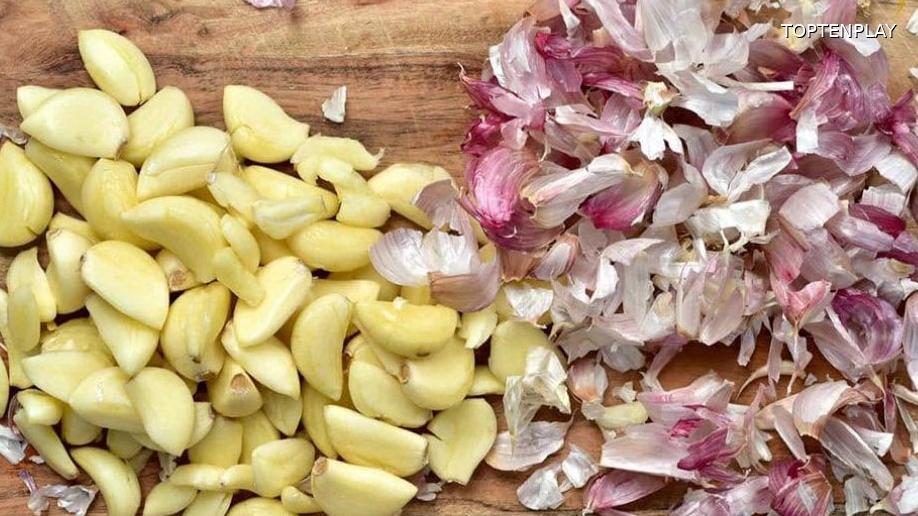
This recovery method fits naturally into a zero-waste approach even before the term became trendy. Every valued peel represents a resource removed from household waste, transformed into a useful input for the garden. This virtuous cycle responds precisely to current ecological concerns: reduction of organic waste, limitation of the carbon footprint linked to industrial products, elimination of polluting chemical substances.
Accessibility is the other major asset of this approach. Unlike commercial solutions that require a specific budget, this spray requires no financial investment. The peels come directly from daily cooking, tap water is sufficient for preparation, and a simple recovered spray bottle allows application. This economy of means removes barriers to entry: beginner gardeners, tight budgets, small spaces, everyone can adopt this practice without material constraints.
The convergence between ancestral wisdom and contemporary issues then appears obvious. Our grandmothers recycled out of necessity; we recycle out of environmental conviction. The gesture remains identical, but its meaning is enriched by a new ethical dimension. This temporal continuity proves that respectful gardening requires neither sophisticated technology nor specialized products. It relies on observation, common sense, and the ability to recognize the hidden potential in everyday resources. Now it remains to transform this theory into concrete practice to restore vigor to crops.
The Peel-Based Spray: Preparation and Applications
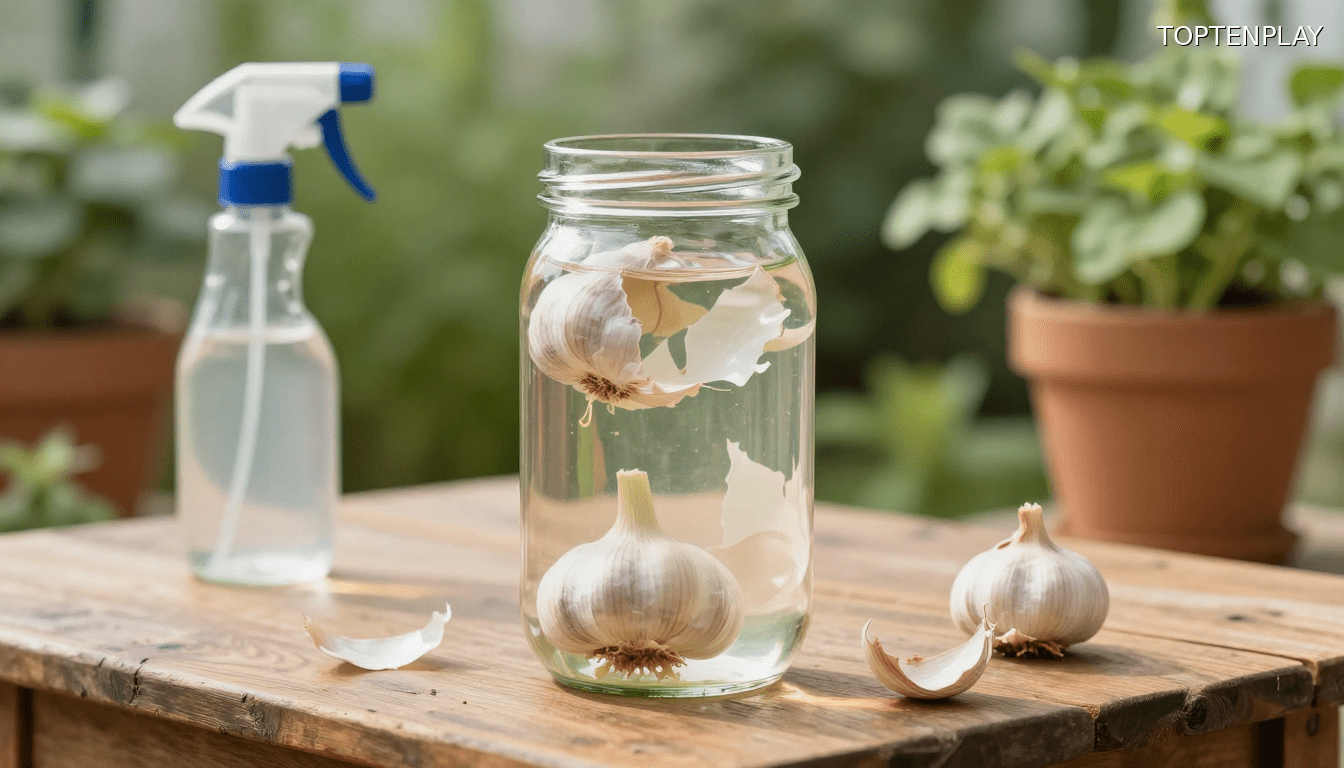
The recipe proves to be disarmingly simple. A handful of fresh garlic peels, a liter of water, a few hours of maceration: that’s the essentials. The peels infuse their active compounds into the water, creating a concentrated solution with protective properties. After filtration, the resulting liquid is transferred into an ordinary spray bottle, ready for use without further processing.
Applications touch on several aspects of gardening. Sprayed on the foliage, this spray forms a deterrent barrier against common pests: aphids, mites, caterpillars retreat from the sulfur compounds naturally present in garlic. The treatment is preferably carried out at the end of the day, when the sun is setting, to avoid any risk of leaf burn. The recommended frequency is a weekly application during sensitive periods, adjustable according to the intensity of the observed attacks.
Beyond the repellent function, this decoction also stimulates the general vigor of the plants. The micro-nutrients released by the peels strengthen the natural defenses of the plants, improving their resistance to environmental stresses. Vegetable gardens, ornamental plants, fruit shrubs: all benefit from this gentle revitalization without risk of overdose or toxic accumulation in the soil.
This technical accessibility sacrifices nothing in terms of effectiveness. Gardeners quickly notice visible results: healthier foliage, reduced parasitic colonization, boosted growth. Nature thus provides a complete, economical, and ecological solution that everyone can reproduce with the resources available in their own kitchen.