The butter melting in the pan, that soft sizzle when the batter hits the heat, then the sweet vanilla scent settling in the kitchen: that’s the real weekend signal. These crêpes are soft, thin without being fragile, and made for mornings when you’re not chasing the clock.

The first crêpe is often a golden draft, a bit thicker, but it already tells if the batter is good. The right texture flows like a ribbon, coats the ladle without sticking heavily, and leaves a satiny trace in the bowl. During cooking, the edges dry gently, lift like soft paper, while the center stays pale then develops blonde spots. The smell of hot butter and vanilla sugar instantly makes you want to put jam, honey, or fresh fruit on the table.
Why you’ll love this recipe
Ingredient Notes
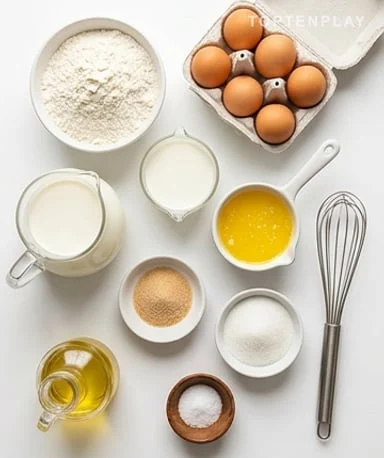
Flour, eggs, milk, a bit of melted butter and vanilla: the simple base, but you have to add it in the right order.
- Flour : It gives the crêpe its structure, but it must be incorporated gradually to avoid lumps. Standard wheat flour works well; if it’s a bit compacted in the package, sift it for a smoother batter.
- Eggs : They bind the batter and provide structure, especially when flipping the crêpe. Choose room-temperature eggs if possible: they blend more easily and give a more homogeneous batter.
- Milk : It thins the batter and allows thin crêpes. Add it little by little, whisking thoroughly, otherwise the flour forms dry pockets; a neutral plant milk like oat can substitute without changing the texture too much.
- Melted butter : It brings the round taste and softness you smell as soon as the crêpe heats. Let it cool slightly before adding, because too hot it can solidify in contact with cold milk or lightly cook the eggs.
- Vanilla sugar : It perfumes without turning the batter into an overly sweet dessert. Use aromatic vanilla sugar or replace with a few drops of vanilla extract, lemon zest, or a bit of orange blossom water.
- Salt : The pinch of salt awakens the taste of butter, milk, and vanilla. Without it, the crêpe tastes flat, even with a good filling; don’t omit it, just use it lightly.
The batter deserves gentle words
Start by mixing the flour, sugar, vanilla sugar, and salt in a large bowl, just enough to distribute the powders. Make a well in the center and add the eggs, then whisk, bringing a little flour toward the middle, as if thickening a cream. This method avoids the classic Sunday morning nuisance: lumps floating in a batter that’s too thin. At this point, the batter should be thick, almost elastic, with a sweet smell of fresh egg and vanilla. It’s not pretty yet, but that’s exactly what’s needed.
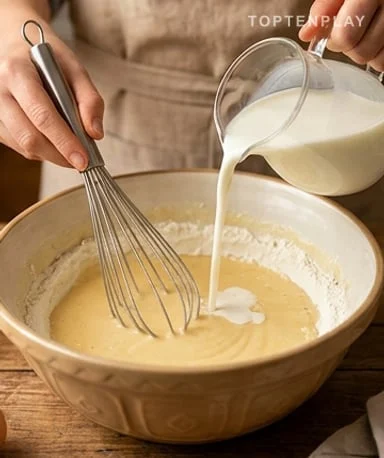
The milk is poured patiently, or it takes revenge
Add the milk in several batches, not all at once. After each addition, whisk until the batter becomes smooth, shiny, and slightly more fluid; you should hear the whisk slide against the bowl without catching dry clumps. If you pour it all at once, the flour blocks into small lumps and you’ll spend more time fixing than cooking. When the batter flows like a slightly coating liquid cream, add the warm melted butter and oil. The aroma becomes richer, more indulgent, and the surface takes on a slight satiny sheen.
Resting is non-negotiable on weekends
Cover the bowl and let the batter rest for about thirty minutes at room temperature. This rest isn’t just for show: it lets the flour absorb the liquid, giving crêpes that are softer and less likely to tear. During this time, the batter loses its nervous edge and becomes more regular, almost velvety when you dip the ladle in again. If it has thickened a bit, add a small splash of milk and mix gently. You’re aiming for a fluid batter, not a pancake batter.
The pan decides the final result
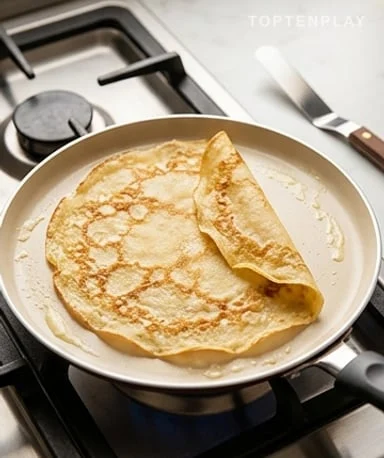
Heat a non-stick pan or crêpe pan with a thin layer of butter, not a puddle. When the butter lightly foams and smells nutty, pour a ladle of batter and immediately tilt the pan to cover the entire surface. The crêpe should cook quickly, with edges that dry and lift without becoming brittle. Flip it when the underside is golden, spotted, and the spatula slides easily underneath. If the crêpe stays pale and soft, increase the heat slightly; if it browns before releasing, lower it.
The warm stack is where it all comes together
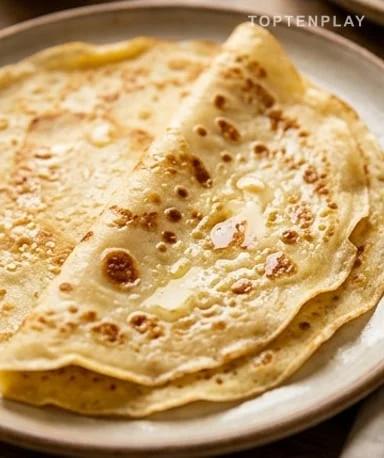
Stack the crêpes as you go on a plate, because the retained heat between them keeps them soft. You see the stack relax, the edges soften, and a slight sweet steam rises when you lift the last crêpe. Avoid leaving them alone on a rack: they cool quickly and lose that tender texture that makes the recipe special. Serve with simple toppings, because a good crêpe doesn’t need to be drowned. A bit of sugar, a spoonful of jam, honey, or fresh fruit are more than enough.
Tips & Tricks
- Sift the flour if it forms small lumps in the package, because lighter powder incorporates better and gives a smoother batter from the start.
- Use room-temperature milk when possible, because very cold milk can solidify the melted butter and create small greasy traces in the batter.
- Grease the pan very lightly only between a few crêpes, because too much butter makes the edges heavy and gives uneven cooking.
- Keep the heat at medium to medium-high and adjust after the first crêpe, because each pan reacts differently and the first one mainly serves to set the heat.
Why does the crêpe batter need to rest?
Resting allows the flour to fully absorb the milk. The batter becomes more pliable, the crêpes tear less, and the texture is noticeably softer.
How to avoid lumps in the batter?
Pour the milk gradually while whisking from the start, especially when the batter is still thick. If lumps remain despite that, use an immersion blender or strain the batter through a fine sieve.
Can I prepare the batter in advance?
Yes, you can prepare the batter a few hours ahead and keep it in the refrigerator. Mix it well before cooking, as it often thickens a bit while resting.
Why is my first crêpe often a failure?
It’s usually a matter of pan temperature or the amount of fat. The first crêpe serves to adjust the heat, check the batter’s fluidity, and refine your technique.
How to keep crêpes soft after cooking?
Stack them as you go on a plate and cover lightly with another plate or a clean cloth. The retained heat between the crêpes keeps them supple instead of letting them dry out.
Can I make a savory version with this recipe?
Yes, simply remove the sugar and vanilla sugar. You can then fill the crêpes with cheese, mushrooms, chicken, salmon, or sautéed vegetables.
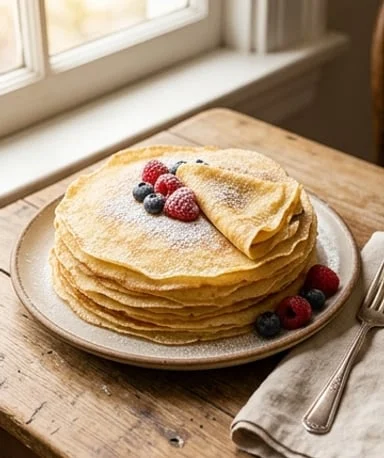
Foolproof Soft Crêpes
French
Dessert
Thin, golden, and supple crêpes, perfect for a weekend breakfast, snack, or relaxed brunch. The batter rests just enough to become light, smooth, and easy to cook.
Ingredients
- 250g wheat flour
- 3 eggs
- 500ml milk
- 1 packet vanilla sugar
- 2 tablespoons sugar
- 2 tablespoons melted butter
- 1 pinch salt
- 1 tablespoon neutral oil
- a few drops vanilla extract, optional
- 10g butter for cooking
Instructions
- 1Pour the flour, sugar, vanilla sugar, and salt into a large bowl, then mix quickly.
- 2Make a well in the center, add the eggs, and start whisking, gradually incorporating the flour.
- 3Add the milk little by little while whisking to obtain a smooth, fluid, lump-free batter.
- 4Add the lukewarm melted butter, oil, and vanilla extract if using, then mix again.
- 5Cover the bowl and let the batter rest for 30 minutes at room temperature.
- 6Heat a non-stick pan lightly buttered, then pour a ladle of batter.
- 7Tilt the pan to spread the batter into a thin layer and cook for about 1 minute, until the edges lift.
- 8Flip the crêpe and cook for 30 seconds to 1 minute more.
- 9Stack the crêpes as you go to keep them warm and soft.
Notes
• If the batter thickens after resting, add a small splash of milk and mix gently.
• For a savory version, remove the sugar and vanilla sugar.
• Don’t butter the pan too much: a thin layer is enough for even cooking.
• Crêpes keep for 2 days in the refrigerator, well covered.
Nutrition Facts (per serving, estimated)
| 220 kcalCalories | 7gProtein | 28gCarbs | 8gFat |