An Express Recipe That Revolutionizes Improvised Dinner
The pizza-style gratin baguette embodies this providential solution when time is short but the desire for a comforting meal persists. Halfway between traditional pizza and a hot sandwich, this hybrid dish appeals with a simple promise: authentic Italian flavors without the complexity of preparing dough. In less than twenty minutes, from preheating the oven to the last bite, this recipe transforms an ordinary baguette into an irresistible gratin creation.
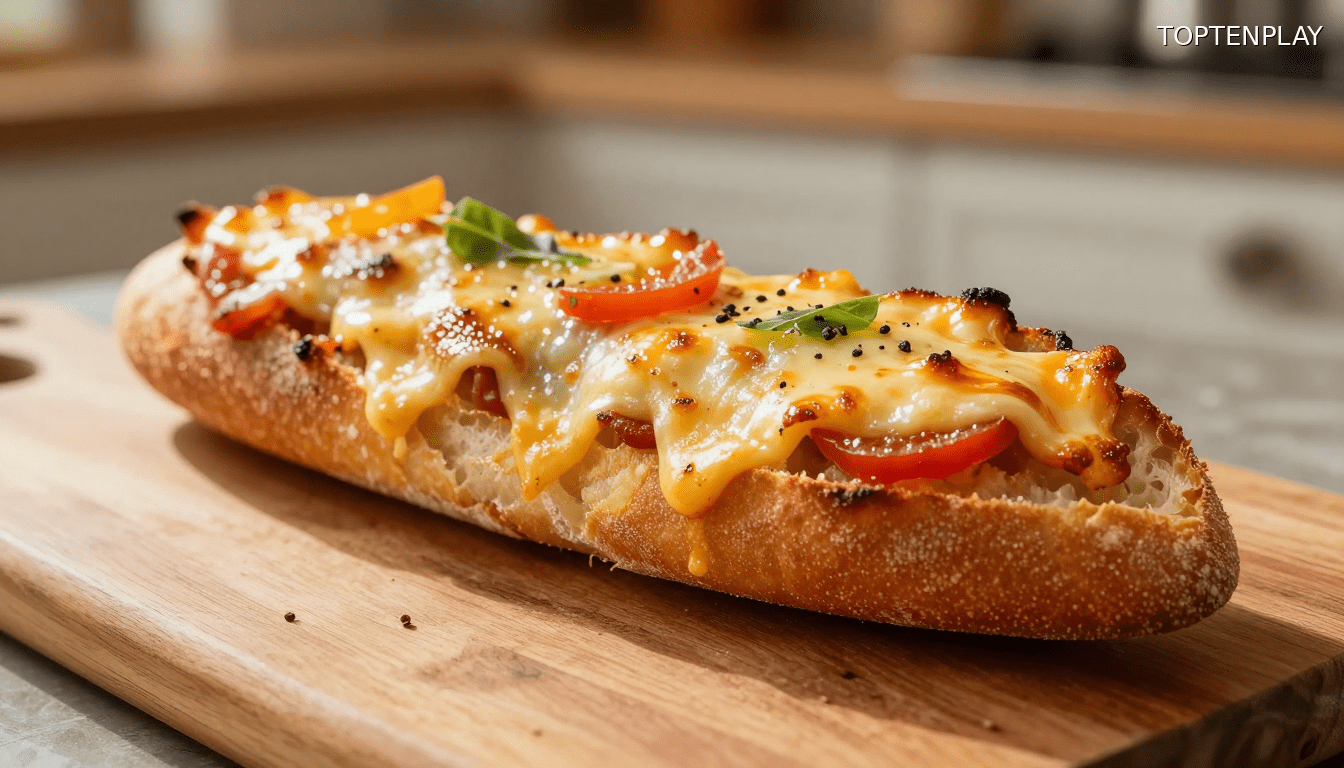
The genius of this preparation lies in its signature contrast of textures. While the cheese melts generously over the topping, the edges of the baguette crisp up in the oven, creating that duality between melting and crunchy that recalls the best artisanal pizzas. Each slice offers that tactile satisfaction of a crust that cracks under the tooth before revealing a creamy filling.
Adaptability is the other major asset: pepperoni for meat lovers, grilled vegetables for vegetarians, or even fridge leftovers for improvisational cooks. This culinary blank canvas accepts all inspirations of the moment, transforming a time constraint into a creative opportunity. Whether for an express weeknight dinner, a cozy TV tray, or a dinner aperitif with friends, this gratin baguette stands out as the ally of busy cooks who refuse to sacrifice taste pleasure.

The Secrets Of A Perfect Balance Between Ingredients
The success of this gratin baguette rests on a simple but rigorous architecture. The base starts with a strategic double cheese: mozzarella brings that characteristic stretch of Neapolitan pizzerias, while emmental or cheddar reinforces the taste and the golden color during gratinating. This combination of 100g of shredded mozzarella and 80g of complementary cheese creates that melting texture that keeps the whole thing coherent.
Traditional toppings complete this foundation with a proven Mediterranean logic. Eight slices of pepperoni or chorizo bring that savory fat that flavors the whole dish during cooking, while half a bell pepper in thin strips and sliced red onion introduce freshness and crunch. Sliced black olives visually punctuate the dish while adding that characteristic salty note.
The decisive technical move happens at the moment of the tomato sauce. “Spread about a tablespoon of sauce […] without overloading to prevent the bread from becoming soft,” the recipe rightly specifies. This moderation preserves the structural integrity of the baguette: too much sauce would turn the bread into a soggy sponge, ruining that contrast between a crispy base and creamy topping.
The final aromatic touches seal the dish’s Italian identity. Dried oregano instantly recalls authentic pizzerias, while a drizzle of olive oil enriches the flavors during cooking. These four tablespoons of Neapolitan sauce, combined with these aromatics, are enough to create that powerful taste evocation that distinguishes a simple gratin toast from a true culinary creation.

Mastering Cooking For A Professional Result
The transformation of these raw ingredients into a gratin creation requires precise thermal mastery. The oven preheated to 200°C in fan mode is the non-negotiable parameter: this temperature ensures optimal melting of the cheese while crystallizing the edges of the baguette without drying out the inner crumb. Fan heat guarantees a homogeneous distribution that avoids undercooked or burnt areas.
The preparation of the base also conditions the final success. The longitudinal cut of the baguette generously exposes the crumb to the toppings, creating that ideal receiving surface for the melted cheese. Busy cooks can cut each half into two individual portions, facilitating service and allowing everyone to manage their own cooking according to their crunchiness preferences.
Cooking timing oscillates between 10 and 12 minutes, but visual indicators surpass the clock. The cheese must display that appetizing golden color characteristic of successful gratinating, slightly bubbling in places. The edges of the baguette take on an amber hue while their texture becomes audibly crunchy. This active monitoring during cooking allows for adjustments according to oven variations and bread thickness.