📌 Egg roll flavor soup: how to get all the taste without frying or folding
Posted 1 March 2026 by: Admin
The Secrets Of A Recipe That Revolutionizes Comfort Food
The craving strikes without warning: that crispy texture, that savory filling, that little packet of sweet and sour sauce. But the idea of heating the oil, rolling dozens of cylinders, cleaning the fryer… the appetite evaporates instantly.
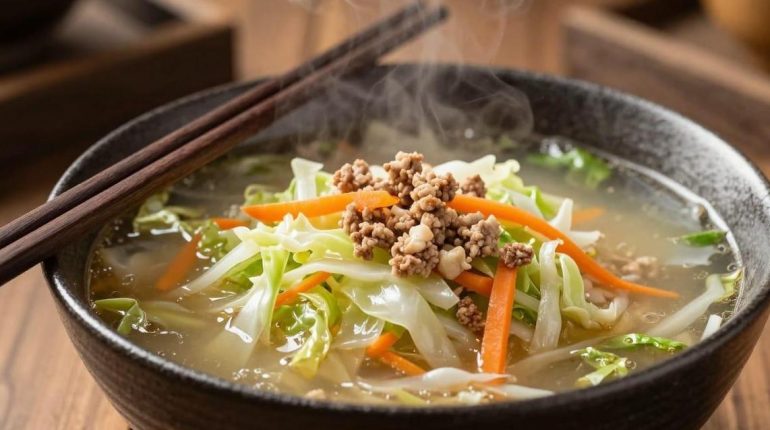
The Egg Roll Soup solves this universal dilemma by deconstructing the icon of Chinese-American cuisine. Same ground pork, same cabbage and carrots, same garlic-ginger duo that scents Asian kitchens. The only difference: the fried shell disappears in favor of a steaming broth.
This transformation is not a compromise. It amplifies the original qualities by concentrating flavors in a format that prioritizes comfort over presentation. The 450 grams of meat simmer directly with the vegetables, releasing their aromas into 1.5 liters of broth rather than trapping them under a golden layer.
The claim may seem bold, but it deserves reflection: this liquid version potentially surpasses the original. Without the crispy barrier, every spoonful instantly delivers the complexity of Asian seasonings. Grated ginger infuses the liquid, soy sauce lightly caramelizes the meat, sesame oil floats on the surface to scent every bite.
From a fried appetizer dish, the egg roll becomes a generous main meal, capable of feeding four to six people without technical constraints or specialized equipment.
Anatomy Of A Comforting Dish: The Ingredients Revealed
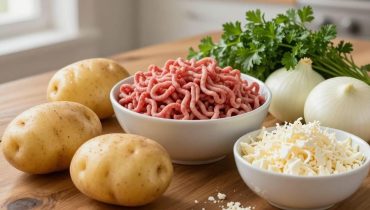
Unlike recipes that hide their complexity behind endless lists, this soup relies on a dozen accessible elements. Transparency begins with the protein base: 450 grams of ground pork, substitutable by poultry according to preferences or dietary restrictions.
The aromatic foundation follows the codes of Asian cuisine: one minced onion, three pressed garlic cloves, one tablespoon of freshly grated ginger. This trio releases its essential oils in a tablespoon of vegetable oil, creating the olfactory signature that differentiates an egg roll from ordinary sautéed cabbage.
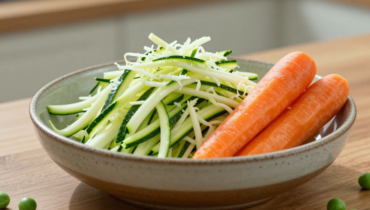
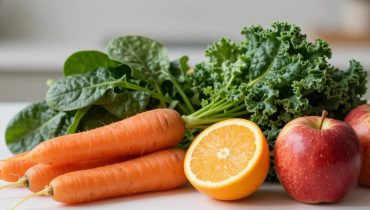
The volume of the dish comes from the vegetables: four cups of thinly sliced green cabbage—about half of a small head—and one cup of shredded carrots. These generous proportions guarantee a balanced ratio between protein and fiber, while respecting the DNA of the original dish.
The broth constitutes the vehicle for the flavors. 1.5 liters of chicken or vegetable stock dilutes the seasonings just enough to maintain intensity without overwhelming the palate. Two tablespoons of soy sauce provide the characteristic umami, while a tablespoon of sesame oil introduces that toasted note inseparable from Far Eastern cuisines.
White or black pepper depending on availability, optional red chili flakes: the final seasoning adjusts to individual tolerance levels. These precise measurements transform ordinary ingredients into liquid comfort for four to six guests.
The Taste Arsenal: Condiments And Flavor Amplifiers
The term “optional but recommended” takes on its full meaning in the toppings section. These finishes are not decorative superfluity: they transform a balanced broth into a multi-layered sensory experience.
Sliced green onions provide that crunchy vegetable contrast that wakes up every spoonful. Their slightly pungent freshness interrupts the fatty roundness of the sesame broth, creating a gustatory alternation that prevents palate saturation.
Extra sesame oil, drizzled just before serving, intensifies the aromatic signature without adding weight. A few drops are enough to coat the surface of the liquid with a fragrant film that hits the nostrils even before the first taste.
Crispy wonton strips or chow mein noodles reintroduce the textural element absent since the abandonment of the fried wrapper. This crunchy dimension does not seek to imitate the original shell—it compensates for its absence through a play of contrasts between the softness of the cooked cabbage and the resistance of the golden fragments.
Sriracha or chili crisp: the final spicy touch is adjusted according to individual thermal tolerance. These condiments do not mask the fundamental flavors—they reveal them by stimulating receptors that would otherwise remain dormant. Personalization thus becomes a gastronomic act, transforming each bowl into a unique creation without ever betraying the identity of the dish.
Culinary Philosophy: When Simplicity Surpasses Tradition
This orchestration of condiments reveals a truth that is unsettling for purists: the crispy wrapper was perhaps only a vehicle, not the very essence of the egg roll.
By eliminating the fried shell, the recipe exposes the aromatic core in its rawest form. Ground pork, cabbage, carrots, garlic, ginger: each component expresses itself without a filter, stripped of the textural barrier that once monopolized attention. What some perceive as a sacrifice becomes liberation—soy sauce and sesame oil dialogue directly with the taste buds, without crispy mediation.
The mutation from a fried appetizer to a comforting main dish operates a radical functional shift. The classic egg roll requires laborious preparation, monitored oil temperature, and precise timing to avoid sogginess. This simmered version tolerates improvisation, forgives cooking errors, and adapts to chaotic schedules.
The increased accessibility does not dilute the identity—it democratizes it. The taste markers remain intact: the same umami profile, the same sweet-salty balance, the same gingery heat. Only the format changes, prioritizing immediate comfort over technical performance.
This approach questions our attachment to traditional forms. If all the flavors survive deconstruction, what do we really worship in the original: the substance or the ritual? The answer simmers at the bottom of every steaming bowl.