The Observation: Consumption In Full Mutation
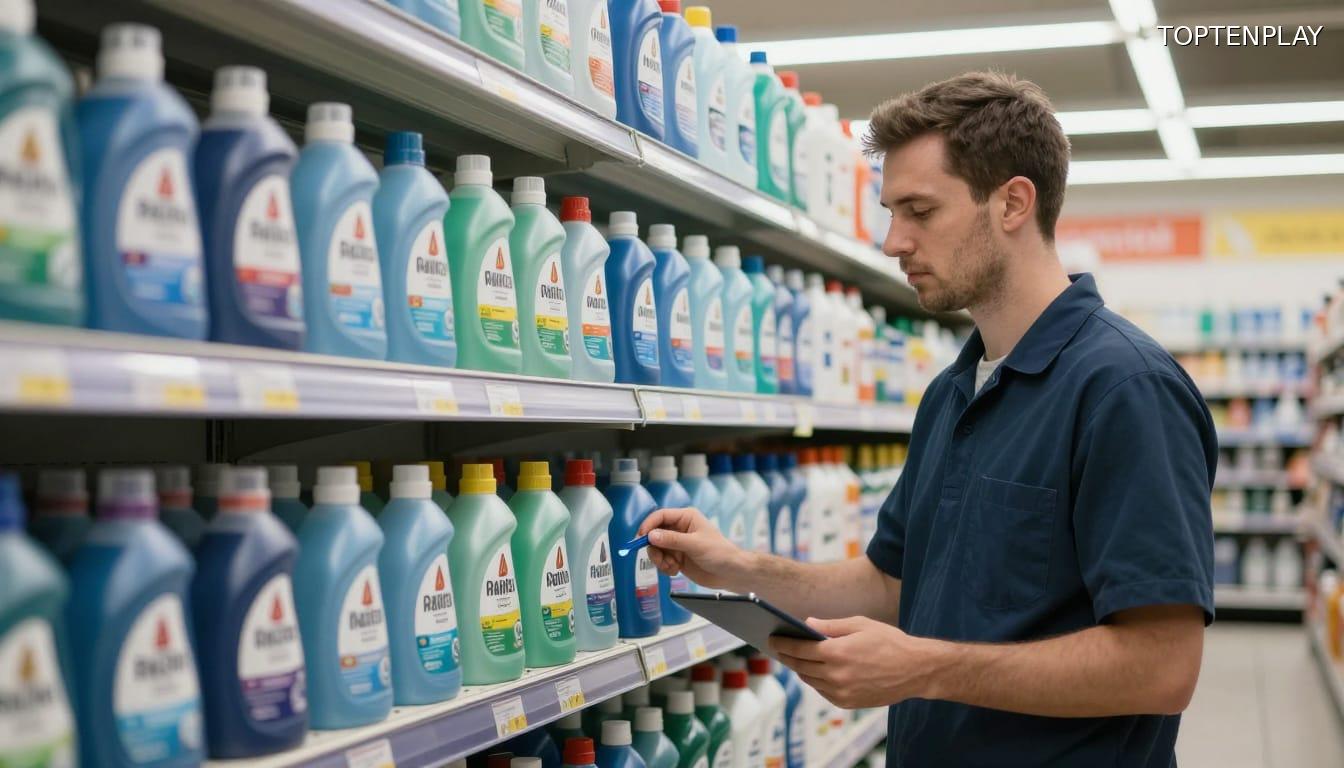
The household products industry is going through a pivotal period. While an average French household uses 80 liters of detergents per year, environmental awareness is accelerating. Shelves are overflowing with chemical solutions containing ammonia, chlorine, and phosphates, of which only 30% are filtered by treatment plants before contaminating aquatic ecosystems.
This proliferation is now worrying consumers. In 2025, 78% of French people declare they are acting in favor of sustainable consumption, while 65% believe that we must produce less rather than simply “producing differently.” The sector is responding timidly: ecological alternatives represent barely 5% of the consumer market, despite a 30% adoption rate in the professional sector.
This mutation goes beyond a simple trend. New 2025 European regulations impose restrictions on certain substances, while a rating system for health and environmental impacts is becoming widespread. Treatment facilities struggle to absorb chemical residues that cause oxygen depletion and excessive algae growth in waterways.
Faced with this observation, one question arises: how to reconcile cleaning efficiency and environmental responsibility without waiting for the industry to propose viable solutions on a large scale?

The Homemade Solution: An Economical And Ecological Alternative
Domestic manufacturing of detergents is emerging as a concrete response to this industrial impasse. Contrary to popular belief, producing your own floor cleaner requires neither special skills nor sophisticated equipment. A few natural ingredients are enough to obtain an efficiency comparable to conventional formulas, while eliminating controversial substances.
This DIY approach disrupts the economic equation. A liter of industrial detergent costs between 3 and 8 euros, compared to less than one euro for its homemade version. Over a year, the savings easily reach 100 euros per household, without compromising on cleanliness. Comparative tests show similar results in terms of degreasing and removing common dirt.
The environmental impact is immediately measurable. No toxic components enter the water circuits, containers are reused indefinitely, and local production eliminates transport-related emissions. The basic ingredients – white vinegar, baking soda, vegetable soap – degrade naturally without disrupting aquatic ecosystems.
More than just a saving, this method offers total control over the composition. No more incomprehensible labels listing thirty chemical molecules. The user knows exactly what they are applying to their surfaces and what is flowing into their pipes. This transparency directly addresses growing health concerns regarding daily exposure to synthetic substances.

The Advantages Of A Homemade Detergent
This control over components radically transforms domestic hygiene. Industrial detergents often leave a chemical residual film on floors, invisible but present. The homemade formula eliminates this problem: its natural ingredients create no harmful deposits. The result? Truly clean surfaces, not just apparently disinfected.
The budgetary impact goes beyond simple manufacturing. Reusable containers eliminate the recurring purchase of plastic jugs. Versatile ingredients – vinegar, baking soda – serve multiple domestic uses, optimizing every purchase. This rationalization transforms 200 to 300 euros spent annually on various household products into a single investment of less than 50 euros.