Follow us
7 June 2026

Cyril Lignac’s Gratin Dauphinois

Prep Time
20 minutes
Cook Time
1h15 to 1h30
Total Time
1h35 to 1h50
Servings
6 servings

There are recipes we pull out every autumn like a reflex, as soon as the temperatures drop and the craving for a hearty dish sets in. The gratin dauphinois is one of them — no revolution here, just the promise of a well-executed classic. This version is inspired by Cyril Lignac’s cooking, with two or three precise steps that really make the difference.
Advertisement
Final result
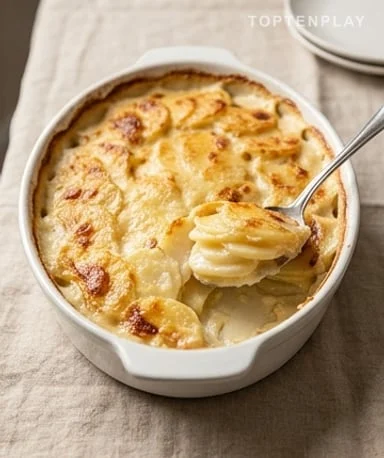
Cyril Lignac’s gratin dauphinois: melting layers, well-bound cream, and a beautifully golden top.

What you see when you take the dish out of the oven is that amber, slightly cracked top that gives way under the spoon, revealing creamy, translucent layers. The smell hits you before you even open the oven door: mild garlic, warm cream, a hint of nutmeg. The potatoes have absorbed almost all the cream during the slow cooking — they are melt-in-your-mouth without collapsing, each slice remains intact but crushes almost effortlessly. No cheese in this version, and that’s precisely what gives it that clean texture, without the elastic side found in gratin versions with Gruyère.
Why you’ll love this recipe

Five ingredients, nothing superfluous : No cheese, no bacon, no heavy cream. Traditional gratin dauphinois is self-sufficient — and that’s exactly what gives it that purity of flavor that no enriched variant can truly match.
Slow cooking does the work alone : Once the dish is in the oven, you have nothing else to do. At 160°C, the cream thickens gradually and soaks into each potato slice without supervision, without intervention.
Even better the next day : Gently reheated the next day, the gratin becomes even more melt-in-your-mouth: the flavors have stabilized, the cream has bound even better, and the texture is often more generous than on the first day.
Pairs with practically anything : Roast chicken, grilled veal, roasted vegetables — the dauphinois knows how to step back without overwhelming what it accompanies, making it one of the most versatile gratins in French cuisine.

Ingredient Notes

Ingredients

Only a few simple ingredients — the quality of the cream and the choice of potatoes make all the difference.

  • Melting potatoes (1.2 kg) : The choice of potatoes determines the entire final texture. A firm, dry variety will remain compact even after 1.5 hours in the oven, never reaching the desired meltiness. Opt for Charlotte or Monalisa: they become creamy at heart while keeping their slices intact. Floury varieties, on the other hand, collapse during cooking and make the gratin pasty.
  • Heavy cream (50 cl) : The cream provides the fat and natural binder of the gratin. Only heavy cream — a light version will curdle during cooking and make the base watery rather than silky. It is infused with garlic and nutmeg before being poured over the potatoes, then thickens gradually as it absorbs the starch during the long oven cooking.
  • Whole milk (30 cl) : The milk is not just to stretch the cream cheaply: it lightens its richness and gives a final result that is less heavy on the palate. It is precisely this milk-cream balance that distinguishes a melting gratin from a sickening one. Semi-skimmed can work in a pinch, but the result will be slightly less creamy.
  • Garlic (2 cloves) : Garlic is not used to strongly flavor the dish — it gently infuses into the heated cream and almost completely disappears once cooked. Crush the cloves without chopping them, with the flat of the blade, to obtain a subtle, even aroma. Also rub the bottom and sides of the gratin dish with half a clove before buttering it: this leaves a light aromatic trace over the entire surface.
  • Nutmeg (a pinch) : In a cream-milk gratin, nutmeg acts as a flavor enhancer rather than a main spice. A pinch is more than enough — beyond that, it overpowers everything else. Freshly grated, it is much more aromatic than pre-ground nutmeg that has been open for months.
  • Butter (30 g) : It serves two distinct roles. A good part is used to generously grease the dish so the potatoes don’t stick to the bottom during the long cooking. The rest, placed in small knobs on top before baking, promotes golden browning without needing to raise the oven temperature.

The potatoes: don’t make this mistake

Peel the potatoes and dry them carefully before cutting. The thickness of the slices is critical: 2 to 3 mm, no more. Too thick, they will remain firm in the center even after 1.5 hours in the oven, with that unpleasant resistance under the tooth that you don’t want in a gratin. Use a mandoline if you have one — it guarantees perfectly even thickness, ensuring uniform cooking throughout the dish. And above all: once sliced, do not rinse them under water. The starch that naturally releases on the surface of the cut potato is precisely what will bind the cream during cooking. Rinsing it means losing one of the gratin’s natural binding mechanisms.

The potatoes: don't make this mistake
Thin, even slices of 2-3 mm, especially do not rinse them after cutting: starch is your ally.

Infuse the cream before adding it

In a heavy-bottomed saucepan, pour the milk and cream together. Add the crushed garlic cloves — not minced, just pressed with the flat of the blade — then season with salt, black pepper, and the pinch of nutmeg. Heat over low heat until the mixture barely simmers, never letting it boil. A vigorous boil would curdle the cream and you would lose that sought-after silky texture. This infusion time is short — just eight to ten minutes — but it allows the garlic to diffuse its aromas throughout the preparation. The result is a cream already flavored that will evenly impregnate the potatoes from the precooking stage.

The pre-cooking in cream: the real secret

Add the potato slices directly to the simmering cream pot. Cook gently for about ten minutes, stirring delicately from time to time — with a spatula rather than a spoon, so as not to break the slices. You will see the potatoes start to soften: they lose their rigidity, their edges become slightly translucent, and the cream begins to thicken under the effect of the released starch. This is the step that many recipes skip, and it’s often where everything is decided. Potatoes pre-cooked in cream absorb the flavors much better and end up much more melt-in-the-mouth in the oven than raw, dry slices.

Assembly and slow cooking

Preheat the oven to 160°C. Generously butter a gratin dish, then rub the bottom and sides with half a garlic clove. Gently pour the potatoes with all the cream, spread the slices evenly so they are roughly level, then dot a few knobs of butter on top. Bake for 1 hour 15 minutes to 1 hour 30 minutes. The slow cooking at low temperature allows the cream to thicken gradually without violently bubbling: the potatoes absorb the liquids layer by layer, and the starch does its work gently. If the top colors too quickly — say before 50 minutes — lightly cover with a sheet of parchment paper. Around the 45-minute mark, a smell starts to emerge: lightly caramelized cream, mild garlic, nutmeg in the background. That’s a good sign.

Knowing when it’s really ready

Insert the blade of a thin knife into the center of the gratin. It should sink in without any resistance, like into soft butter. If you feel the slightest catch, extend the cooking by ten minutes and check again. The surface should be evenly golden, without burnt spots. The cream, on the other hand, should be absorbed — the gratin should not be swimming in liquid, but it should not appear dry either. Let it rest for five to ten minutes before serving: the gratin is burning hot when it comes out of the oven, and the layers need a moment to stabilize. It is this short rest that gives the beautiful slices that hold when cut, rather than collapsing in the dish.

Knowing when it's really ready
Slow cooking at 160°C is the secret. No rushing — the cream needs time to infiltrate and thicken.

Tips & Tricks
  • Never rinse the potato slices after cutting: the starch on the surface is the gratin’s natural binder. Rinsing deprives you of a mechanism that improves both the final texture and the binding of the cream.
  • Do not boil the cream during infusion: a gentle simmer is enough to extract the garlic’s aromas. At a heavy boil, the cream may curdle — the fats separate — and you get a grainy texture that is impossible to fix once poured over the potatoes.
  • If the top browns too quickly, cover with a sheet of parchment paper rather than aluminum foil: the paper allows steam to pass and prevents condensation from falling back onto the gratin, making it soggy on top.
  • Let the gratin rest for 10 minutes out of the oven before serving: the layers are unstable when it comes out, and slices collapse if cut too early. This short rest allows the cream to set and hold when cutting.
Close-up
Nearly creamy layers at the heart, a golden surface without being burnt: exactly what we’re looking for.
FAQs

Which variety of potatoes to choose for a gratin dauphinois?

Opt for melting-flesh potatoes like Charlotte or Monalisa. They become creamy at heart during slow cooking without collapsing or making the gratin pasty. Avoid floury varieties like Bintje: they crumble into layers and give an unpleasant texture.

Why not put cheese in a real gratin dauphinois?

In the traditional dauphinois recipe, it’s the natural starch from the potatoes that binds the cream — not cheese. Cheese gives an elastic crust and a taste that overpowers the dish’s finesse. If you’re looking for something closer to a Savoyard gratin, then yes, cheese has its place.

Can you prepare gratin dauphinois in advance?

Yes, and it’s even recommended. The reheated gratin the next day is often more melting than on the first day because the flavors have had time to stabilize and the cream has bound even better. Reheat it at 150°C for 20 to 25 minutes, covered with a sheet of parchment paper.

How to know if the gratin dauphinois is well cooked?

Insert the blade of a thin knife into the center of the dish: it should sink in without any resistance, like into soft butter. The surface should be evenly golden, and the cream absorbed — there should be no liquid left in the dish.

Can you freeze gratin dauphinois?

Technically yes, but the result is disappointing: the cream separates upon thawing and the potatoes lose their melting texture, becoming grainy. This dish keeps very well for 2 to 3 days in the refrigerator — that’s more than enough and much preferable to freezing.

Why cook the potatoes in the cream before baking?

This ten-minute pre-cooking in the simmering cream is what distinguishes a truly melting gratin from an ordinary one. The potatoes start to release their starch and absorb the flavors (garlic, nutmeg) even before going into the oven. The final result is much creamier than with raw slices.

Cyril Lignac's Gratin Dauphinois

Cyril Lignac’s Gratin Dauphinois

Easy
French
Side dish

Prep Time
20 minutes
Cook Time
1h15 to 1h30
Total Time
1h35 to 1h50
Servings
6 servings

The great classic of French cuisine in its purest version: melting potatoes slowly cooked in a cream-milk mixture flavored with garlic and nutmeg. No cheese, no excess — just technique and time.

Ingredients

  • 1.2 kg melting potatoes (Charlotte or Monalisa type)
  • 50 cl heavy cream
  • 30 cl whole milk
  • 2 garlic cloves
  • 30 g butter
  • 1 pinch freshly grated nutmeg
  • salt and ground black pepper

Instructions

  1. 1Peel the potatoes, rinse them quickly, then dry thoroughly. Slice them into thin, even rounds 2 to 3 mm thick — a mandoline is ideal. Do not rinse them after slicing: the starch on the surface is essential for binding the gratin.
  2. 2In a heavy-bottomed saucepan, pour the milk and cream. Crush the garlic cloves with the flat of the blade and add them. Season with salt, pepper, and the pinch of nutmeg. Heat over low heat until simmering, never letting it boil.
  3. 3Add the potato slices directly to the simmering cream. Cook gently for 10 minutes, stirring delicately with a spatula. The potatoes should soften slightly and the cream should begin to thicken.
  4. 4Preheat the oven to 160°C. Generously butter a gratin dish and rub the bottom and sides with half a garlic clove.
  5. 5Gently pour the potatoes with all the cream into the dish. Spread the slices evenly and dot a few knobs of butter on top.
  6. 6Bake for 1 hour 15 minutes to 1 hour 30 minutes. If the top colors too quickly before 50 minutes, lightly cover with a sheet of parchment paper. The gratin is ready when a knife inserts without resistance in the center.
  7. 7Let rest for 10 minutes out of the oven before serving so that the layers stabilize and hold when cut.

Notes

• Never rinse the potatoes after slicing: the natural starch on the surface is what binds the cream during cooking.

• The gratin is often even better reheated the next day. Store it in the refrigerator and reheat at 150°C for 20-25 minutes, covered with a sheet of parchment paper.

• For a stronger garlic flavor, rub the gratin dish with half a clove before buttering.

• Light variation: replace 15 cl of cream with an additional 15 cl of milk for a slightly less rich result.

Nutrition Facts (per serving, estimated)

385 kcalCalories 6 gProtein 34 gCarbs 25 gFat
Advertisement
Share on Facebook