It’s Wednesday night, the fridge is half empty, and you don’t want to overcomplicate things. There’s a slightly wrinkled lemon, some cream, and a shallot. That’s all you need.
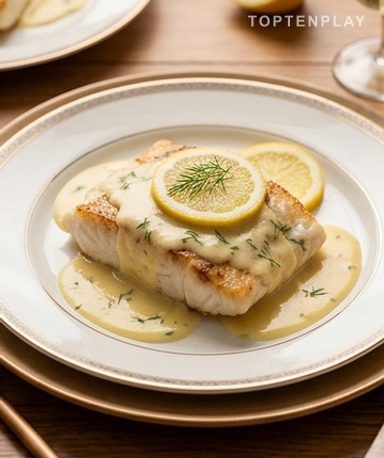
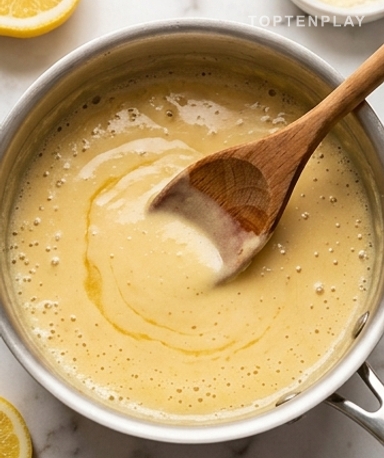
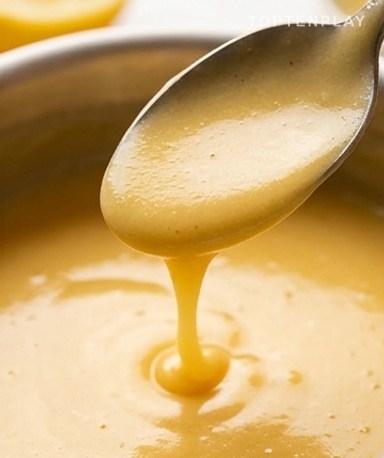
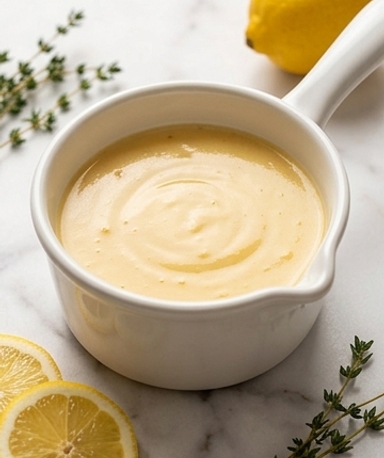
At the bottom of the saucepan, the sauce first takes on an ivory, almost translucent hue. As it reduces, it turns into a pearly white with pale yellow glints — and the aroma rising is that strange, delightful blend of warm butter and bright lemon acidity. Not aggressive. Just fresh. When you dip a spoon in, the sauce coats it, flows slowly, and clings to the surface. That is exactly the texture we are looking for.
Why you’ll love this recipe
Ingredient Notes
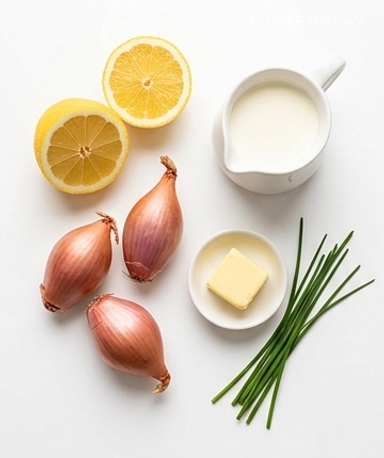
Four basic ingredients and a few minutes: that’s all it takes for this sauce.
- The shallot : It does a job that an onion wouldn’t do quite as well. An onion would be too strong in this sauce — it would take over. The shallot melts discreetly and provides depth without imposing. Mince it very finely, almost into a brunoise, so it completely disappears during cooking.
- The lemon : Fresh, absolutely required. Bottled juice has a flat, slightly bitter taste that doesn’t do this sauce justice. What we want here is also the zest — that’s where the essential oils and the bright, floral lemon scent live. Use an untreated lemon if you can, especially for the zest.
- The heavy cream : Full-fat. This is important, really. A light cream (15%) will split upon contact with the lemon’s acidity — you’ll end up with a grainy, disappointing sauce. Cream with at least 30% fat handles the heat and acidity without flinching. Thick or liquid heavy cream, both work well here.
- Dijon mustard (optional) : Just a small spoonful at the end of cooking. It gives a slight spicy note that balances out the fat in the cream and prevents the sauce from feeling too ‘flat’ in the mouth. Don’t use it if you are serving this sauce over a very delicate fish — the mustard would be too prominent.
- The butter : To melt the shallot. It brings a roundness and a slight nutty flavor that olive oil doesn’t quite provide. If you prefer a lighter version, olive oil works too — just a different flavor profile, a bit more Mediterranean.
Why this sauce has saved more than one failed dinner
There are recipes you learn once and never forget. This is one of them. The idea is simple: the lemon’s acidity wakes everything up, the cream softens it, and the shallot adds structure. These three ingredients together create something greater than the sum of their parts. The first time I made it, it was to rescue a bland cod fillet, cooked too quickly and without interest. Two spoonfuls of sauce over it, and the dish was saved. Since then, it’s been part of my permanent rotation — the kind you make without even thinking.
The part everyone messes up: adding the cream
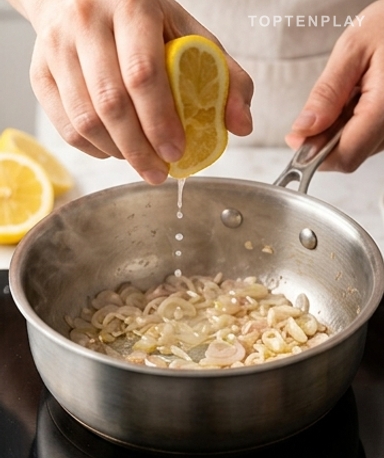
This is where it gets tricky. You have reduced your lemon juice with the shallot, the pan is hot, and the natural impulse is to pour the cream directly over high heat. Mistake. The acidity of the lemon combined with a temperature that’s too high will cause the cream to curdle — tiny lumps appear, the sauce seizes, and there’s no coming back. Lower the heat. Really low. A very gentle simmer, barely visible on the surface. Add the cold cream straight from the fridge, stir gently with a wooden spoon, and let it thicken at a low boil for 4 to 5 minutes. The sauce will slowly reach that napping texture. Patience.
Finding the balance between acidity and sweetness
Every lemon is different. Some are very acidic, others almost sweet. Always taste the sauce before taking it off the heat — it’s non-negotiable. If it’s too acidic, a small knob of cold butter or an extra spoonful of cream is often enough to rebalance it. If it lacks character, a little more grated zest works wonders. The touch of mustard serves to structure the sauce when it seems too flat. It’s not an exact science.
What to do with it: think beyond fish
The classic version is with salmon or cod. But this sauce also works great on a simple grilled chicken breast, on steamed asparagus that still has a bit of crunch, or even on fresh pasta with some garlic-sautéed shrimp. In a thicker version — reduced a bit longer until it really coats the spoon — it becomes a dipping sauce for roasted vegetables. Keep it in a small jar in the fridge if you made too much: it lasts 48 hours. Reheat over very low heat, stirring constantly.
Tips & Tricks
- Zest first, juice second — always. Once you’ve squeezed the lemon, you won’t get the zest off cleanly. Grate the zest onto a dry surface before even cutting the lemon in half.
- If your sauce splits anyway, remove the pan from the heat immediately and add a tablespoon of cold water while whisking vigorously. This often saves the day.
- Don’t salt too early. Salt on shallots makes them release water and prevents them from melting properly. Season only at the very end of cooking, once the sauce has its texture.
Can this sauce be prepared ahead of time?
Yes, it keeps for 48 hours in the refrigerator in an airtight jar. To reheat, place it in a small saucepan over very low heat while stirring constantly — never in the microwave, as the cream will split.
My sauce curdled, can it be fixed?
Often, yes. Immediately remove the pan from the heat and add a tablespoon of cold water while whisking vigorously. If that doesn’t work, give it a quick blitz with an immersion blender — the texture usually returns.
The sauce is too acidic, how can I balance it?
Add a small knob of cold butter off the heat, or an extra spoonful of heavy cream. Both absorb the acidity without changing the texture. Avoid sugar, as it would unbalance the sauce in the other direction.
Can I replace the heavy cream with something else?
Full-fat coconut cream works well for a lactose-free version — it gives a nice exotic note with fish. Avoid light plant-based creams like oat or soy, they split easily when in contact with lemon acidity.
What should I serve with this creamy lemon sauce?
It’s perfect over white fish (cod, sea bream, hake) or salmon. it also goes very well with grilled chicken, steamed asparagus, sautéed shrimp, and fresh pasta. Avoid red meats, as their powerful flavors would overpower it.
Can I add other herbs or spices?
Dill is the classic pairing for this sauce, especially for fish. Chives bring a fresh, slightly garlicky note. Flat-leaf parsley also works well. Always add herbs off the heat, at the very last minute, to preserve their fragrance and color.
Creamy Lemon Sauce
French
Sauce / Side Dish
A velvety and slightly tangy sauce, ready in 15 minutes. Perfect for coating fish, poultry, or steamed vegetables.
Ingredients
- 1 (approx. 40g) shallot, finely chopped
- 20g butter (or 1 tbsp olive oil)
- 1 untreated lemon (juice + zest)
- 150ml full-fat heavy cream (30% min)
- 1 pinch salt
- 1 pinch freshly ground black pepper
- 1 tsp Dijon mustard (optional)
- a few sprigs fresh chives or dill (optional)
Instructions
- 1Grate the lemon zest, then squeeze it for the juice. Mince the shallot very finely.
- 2In a small saucepan, melt the butter over medium heat. Add the shallot and sauté for 2 to 3 minutes until translucent, without browning.
- 3Pour in the lemon juice and add the zest. Let it reduce for 2 minutes over medium heat to concentrate the flavors.
- 4Lower the heat to the minimum. Add the cold heavy cream and stir gently.
- 5Simmer over very low heat for 4 to 5 minutes, stirring regularly, until the sauce coats the back of a spoon.
- 6Off the heat, season with salt and pepper. Stir in the mustard if desired. Add the chopped fresh herbs at the last moment.
Notes
• Storage: up to 48 hours in the refrigerator in an airtight container. Reheat over very low heat while stirring, never in the microwave.
• To prevent splitting: use full-fat cream (30% min) and keep the heat very low when adding it. Lemon acidity combined with excessive heat curdles light creams.
• Lactose-free variant: replace heavy cream with full-fat coconut cream. Avoid light plant-based creams that don’t hold up to cooking with lemon.
Nutrition Facts (per serving, estimated)
| 155 kcalCalories | 1gProtein | 3gCarbs | 16gFat |