The smell that settles in the house after two hours of cooking—heated herbs, melted fat, slightly toasted notes—is exactly what we think of when we say that cooking takes care of you. The confit milk-fed lamb shoulder is not a weekday recipe. It’s the one you pull out when you want people to remember the meal.
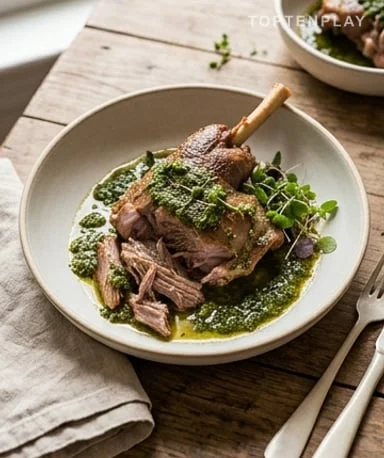
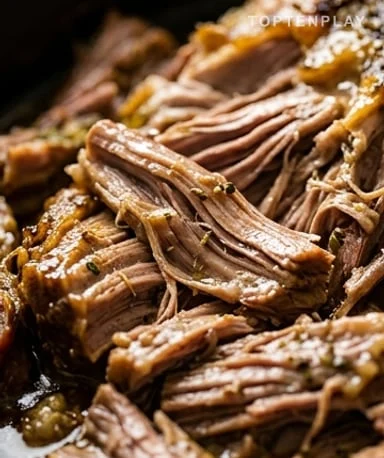
What you see here is meat that has had time to become what it was meant to be. The crackling golden skin on the outside contrasts with flesh that falls apart into large tender strands as soon as you approach a fork. Za’atar—that Middle Eastern herb blend with notes of thyme, sumac, and toasted sesame—coats each bite with a slightly tangy aroma that awakens the richness of the fat. A dish that impresses without the kitchen being a battlefield.
Why you’ll love this recipe
Ingredient Notes
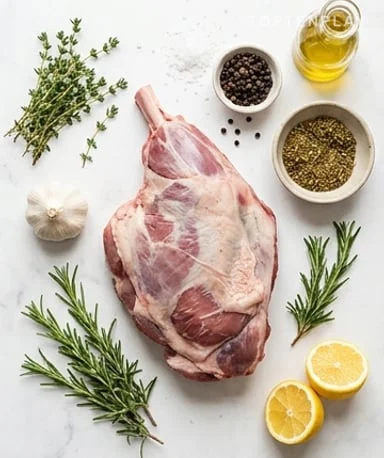
Za’atar, garlic, olive oil, fresh herbs—a short list for a result that is anything but.
- Milk-fed lamb shoulder : Milk-fed lamb—under 45 days, fed exclusively on mother’s milk—has very pale, almost pink flesh and fat of rare delicacy. It is this fat that, melting slowly during the confit cooking, will baste the meat from the inside without ever weighing it down. If you can’t find milk-fed lamb specifically, ask for a lamb shoulder under 4 kg: the younger the animal, the more tender the texture. Avoid mutton or adult lamb—the fat would be too present, the texture too firm.
- Za’atar : Za’atar is a dried blend of thyme, oregano, sumac, and toasted sesame seeds. Sumac provides a light, slightly fruity acidity that plays a precise role in the sauce: counterbalancing the richness of the lamb without overwhelming it. Buy it from a Middle Eastern grocery—European blends are often too heavy on thyme alone and lack the depth of real Lebanese or Palestinian za’atar.
- Coarse salt for the brine : Brine works by osmosis: salt gradually penetrates muscle fibers and allows them to retain more moisture during long cooking. Use non-iodized coarse salt—iodized salt can leave a slightly metallic aftertaste during long marinating. Use about 30 g salt per 1 liter water, enough that the brine tastes distinctly salty on the tongue.
- Garlic cloves in their skins : Unpeeled garlic cloves release their aromas slowly over the seven hours of cooking, without ever making the base bitter—which happens systematically with finely chopped garlic at high heat. They melt into the cooking juices and can be retrieved at the end of cooking, mashed with a fork and incorporated into the za’atar sauce for a more robust version.
- Olive oil : It is the base of the za’atar sauce, but also the lubricant for the bottom of the dish. For the sauce, a decent fruity oil is enough—no need to bring out an exceptional bottle whose nuances would disappear in contact with dried herbs. For the bottom of the dish, its role is to create an initial layer of fat that prevents the meat from sticking before its own juices start to release.
- Fresh herbs (thyme, rosemary) : Placed under the shoulder in the bottom of the dish, they perfume the juices that will surround the meat for seven hours. Their role is discreet and gradual—they should not dominate—but they anchor the cooking in a Mediterranean register that naturally prepares the ground for the za’atar of the final sauce.
The brine: twelve hours that go unseen
Everything starts the day before, and that’s where many people skip a crucial step. Prepare a cold brine by dissolving coarse salt in room temperature water—the liquid should be salty enough that you clearly taste it on your tongue, without being undrinkable. Add a few crushed garlic cloves and a few sprigs of fresh herbs, submerge the whole shoulder, and refrigerate for at least 12 hours. What happens during this time is invisible but decisive: salt migrates into the muscle fibers, reorganizes them, and helps them retain moisture during cooking. Result when serving—meat seasoned to the bone, uniform, requiring no adjustment. Without this step, even seven hours in the oven can’t make up for seasoning that remained on the surface.
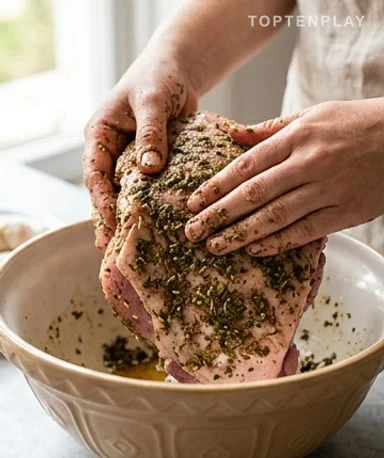
Preparing the dish, taking the meat out of the cold
On the day, take the shoulder out of the brine at least one hour before putting it in the oven. Meat that is too cold at the start takes longer to come up to temperature, creating uneven cooking between the center and the outside. Dry it thoroughly with paper towels—residual surface moisture would delay browning and deprive you of that mahogany crust that forms in the final hours. In a high-sided roasting dish, place the garlic cloves in their skins and the fresh herbs, drizzle with olive oil, and lay the shoulder on top. It should fit comfortably in the dish without being cramped, so that heat circulates around it. Cover tightly with a lid or several layers of tightly sealed aluminum foil—this seal creates the moist microenvironment typical of confit cooking.
Seven hours in the oven: letting go
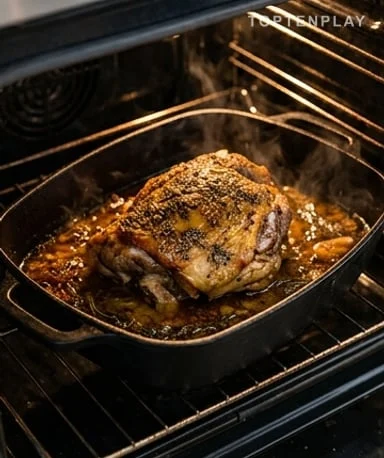
Bake at 150°C fan-forced, and resist the urge to lift the lid every hour. For the first two hours, the temperature rises slowly, the fat begins to melt, and the first aromas of lamb and warm garlic filter under the foil. Around the third hour, if you peek under the lid, you’ll see the bottom of the dish covered in a golden, slightly gelatinous juice—that’s exactly what you want. Do not increase the temperature to speed things up: at 150°C, collagen gradually turns into gelatin and gives that melt-in-the-mouth texture characteristic of confit. At 200°C, you’d have cooked lamb, but not confit. For the final two hours, remove the foil and let the surface brown—the skin should turn mahogany, slightly crispy on the edges, with a caramelized aroma starting to fill the room.
The za’atar sauce: vibrant, herbaceous, fuss-free
While the shoulder finishes cooking, prepare the sauce. Mix za’atar with olive oil until you get a thick but flowing paste—use about 2 to 3 tablespoons of za’atar for 4 tablespoons of oil, and adjust depending on the consistency of your za’atar blend, which varies. Taste, and if you want to enhance the sumac’s acidity, add a few drops of lemon juice. The sauce should remain fresh, herbaceous, slightly grainy under the teeth from the sesame seeds. Do not heat it: the volatile aromas of za’atar evaporate quickly with heat, and you’d lose in seconds all the complexity the blend provides when cold.
Resting, then serving
When out of the oven, let the shoulder rest for 10 to 15 minutes under a loose sheet of aluminum foil. The muscle fibers, contracted by heat, need this time to relax and redistribute juices—cutting immediately means watching all that liquid run onto the plate instead of staying in the meat. To test doneness, grab the bone and pull gently: if it slides out without resistance, it’s perfect. Serve with a large spoon, in large pieces that fall apart naturally, generously coated with za’atar sauce at the last moment. The cooking juices recovered from the dish, deglazed with a little hot water, give a remarkably good secondary sauce—do not discard it.
Tips & Tricks
- Cover tightly with several layers of aluminum foil if you don’t have a suitable lid: any steam leak during cooking dries out the bottom of the dish, the meat will shrink instead of melting, and you’ll lose most of the collagen that should have turned to gelatin.
- Do not salt the surface before putting in the oven if you used a brine—the meat is already seasoned to the core, and added salt would burn on the surface during cooking rather than dissolving into the juices.
- Prepare the za’atar sauce at the last moment, never in advance: the essential oils in the blend are volatile, and a sauce made 30 minutes too early already loses a good part of its herbaceous freshness.
- If the shoulder cools too much before serving, put it back in the oven uncovered for 5 minutes at 200°C to revive the crust—no longer, or the fibers will contract and the tenderness earned over seven hours will begin to disappear.
Can you replace milk-fed lamb with ordinary lamb shoulder?
Yes, provided you choose a young lamb shoulder under 4 kg. The texture will be slightly less fine and the fat a little more present, but the low-temperature confit technique largely compensates. Avoid mutton or adult lamb—the meat would remain too firm even after seven hours.
Is the 12-hour brine really essential?
It’s not mandatory, but it noticeably changes the result. Without brine, the meat is only seasoned on the surface, and the interior remains bland even after long cooking. If you’re short on time, aim for at least 4 hours—any less, and the effect is too limited to be worth it.
How do you know when the cooking is done?
The simplest test: grab the bone end and pull gently. If it slides out without any resistance, it’s perfect. Visually, the skin should be mahogany on the edges, and the meat fibers visible at the bone joint should separate easily with a fork.
Can this dish be prepared in advance?
It’s even recommended. The confit shoulder keeps well in the fridge for 2 to 3 days in its cooking juices, and it’s often even better reheated—the flavors have had time to meld. To reheat, cover the dish and bake for 45 minutes at 160°C. The za’atar sauce should always be made fresh at the last moment.
Can za’atar be homemade?
Absolutely: mix 2 tablespoons dried thyme, 1 tablespoon sumac powder, 1 tablespoon toasted sesame seeds, and a pinch of oregano. Sumac is the key—without it, the blend lacks acidity and falls flat. It’s easily found in Middle Eastern grocery stores or online.
What to do with the cooking juices recovered from the dish?
Do not discard them under any circumstances. Deglaze the dish with a little hot water, scrape up the caramelized bits at the bottom, and serve this juice as a separate accompaniment sauce. If you let it cool, it will set like jelly—a sign of good collagen content—and can be reused as a sauce base for other preparations.
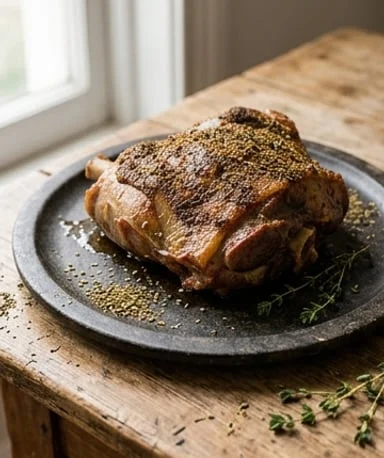
Confit Milk-Fed Lamb Shoulder with Za’atar Sauce
Middle Eastern
Main course
A milk-fed lamb shoulder confit for seven hours at low temperature, preceded by an overnight brine for deep seasoning. Served with a herbaceous and tangy za’atar sauce that cuts through the richness of the confit. Simple technique, impressive result.
Ingredients
- 1 milk-fed lamb shoulder (about 1.2 kg)
- 1.5 L cold water (for the brine)
- 45 g non-iodized coarse salt (for the brine)
- 6 garlic cloves in their skins, divided between brine and cooking
- 4 sprigs of fresh thyme
- 2 sprigs of fresh rosemary
- 2 tbsp olive oil (for the bottom of the dish)
- 3 tbsp za’atar (thyme, sumac, sesame blend)
- 4 tbsp olive oil (for the za’atar sauce)
- 1/2 lemon (juice), optional for the sauce
- salt, black pepper from the mill
Instructions
- 1Prepare the brine: dissolve the coarse salt in the cold water, add 3 crushed garlic cloves, 2 sprigs of thyme, and 1 sprig of rosemary. Submerge the shoulder completely in the brine and refrigerate for at least 12 hours.
- 2Take the shoulder out of the brine 1 hour before cooking. Dry it thoroughly with paper towels to promote browning.
- 3Preheat the oven to 150°C fan-forced. In a high-sided roasting dish, place the remaining 3 garlic cloves in their skins, the thyme, and the rosemary. Pour in 2 tablespoons of olive oil.
- 4Lay the shoulder in the dish. Cover tightly with a lid or several layers of tightly sealed aluminum foil.
- 5Bake for 5 hours without opening. Then remove the lid or foil and continue for an additional 2 hours to brown the surface to mahogany.
- 6Prepare the za’atar sauce just before serving: mix the za’atar with the olive oil until you get a flowing paste. Adjust with a few drops of lemon juice to taste.
- 7Remove the shoulder from the oven and let it rest for 15 minutes under a loose sheet of aluminum foil. Check doneness by pulling on the bone—it should slide out without resistance.
- 8Serve with a large spoon in large portions, generously coated with za’atar sauce at the moment of plating.
Notes
• Za’atar varies greatly by brand and origin. Taste it before adjusting the sauce proportions—some blends are saltier or more acidic than others.
• The cooking juices recovered from the dish can be deglazed with a little hot water and served as a separate accompaniment sauce. It gels when cold, a sign of good collagen concentration.
• The shoulder keeps for 2 to 3 days in the fridge in its juices. Reheat covered at 160°C for 45 minutes. It is often better the next day.
• For a more robust za’atar sauce, mash one or two of the confit garlic cloves recovered from the bottom of the dish with a fork and incorporate them into the oil-za’atar mixture.
Nutrition Facts (per serving, estimated)
| 545 kcalCalories | 47 gProtein | 4 gCarbs | 37 gFat |