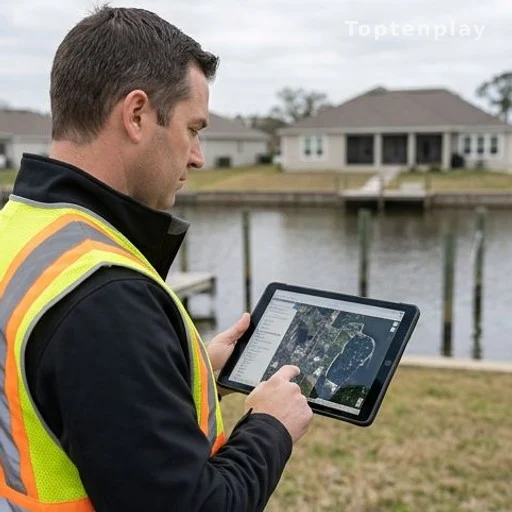
The St. Petersburg, Florida-based company uses AI-powered underwriting that integrates satellite imagery and forward-looking climate data. Its core premise: accurately pricing climate risk can restore insurability rather than signal an exit from vulnerable markets.
During Hurricane Helene, Neptune posted an 18% loss ratio — dramatically outperforming the federal National Flood Insurance Program — while offering premiums 30% to 40% lower than competing alternatives. CEO Trevor Burgess attributes this to a direct link between adaptation and insurability: «What we’re seeing in real time is that properties once considered uninsurable become insurable again when they’re rebuilt to modern codes and elevated. That’s climate adaptation in practice.»
A $9 trillion market by 2050, according to GIC and Bain
The scale of the opportunity is documented in a 2025 report by GIC, the Singapore sovereign wealth fund, conducted with consultancy Bain. The global investment opportunity for climate adaptation solutions is projected to grow from $2 trillion today to $9 trillion by 2050.
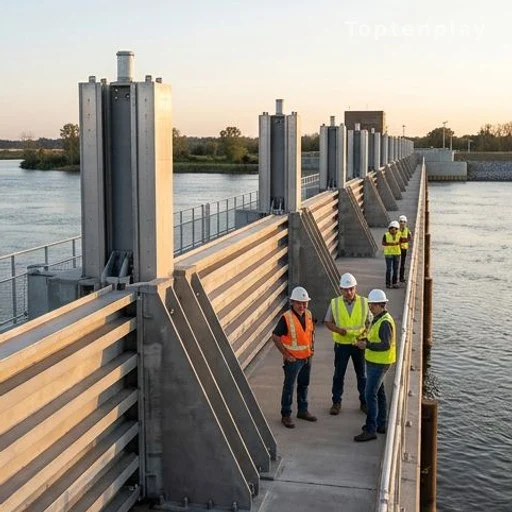
Annual revenues from adaptation solutions — spanning weather intelligence systems, wind-resistant building components, flood protection infrastructure, and water conservation technologies — are forecast to rise from approximately $1 trillion today to $4 trillion by 2050.
Major insurers are already moving. Adil Ilyas, who heads the insurance group at professional services firm Genpact, notes that the shift in mindset among property and casualty carriers is greater than he has ever observed, with AXA, Zurich, and Allianz among those that have launched parametric insurance solutions designed to give organizations fast-acting liquidity and cash flow following a disruptive event.
Why insurability is becoming the new financial frontier
Climate-related losses have accelerated the withdrawal of private insurers from high-risk markets, leaving homeowners and businesses in flood- and wildfire-prone areas without affordable coverage. This retreat has created both a protection gap and, increasingly, a market signal: companies that can accurately price and manage climate risk stand to capture demand that legacy models are abandoning. The shift from reactive insurance to proactive adaptation finance is now being tracked by sovereign wealth funds, central banks, and major asset managers.
Allianz models a 40% real estate correction under aggressive climate policy
The urgency behind these investments is sharpened by what happens if they are delayed. Allianz board member Günther Thallinger wrote on LinkedIn in March 2025 that the world is «fast approaching temperature levels — 1.5°C, 2°C, 3°C — where insurers will no longer be able to offer coverage for many of these risks. The math breaks down; the premiums required exceed what people or companies can pay. This is already happening. Entire regions are becoming uninsurable.»

Allianz’s 2025 report, Climate Risk and Corporate Valuations, modeled the financial impact of climate scenarios across 10 sectors in the US and Europe using discounted cash flow models and interest coverage ratios. Under the Net Zero 2050 scenario — aggressive climate policy with ambitious carbon-reduction targets — European real estate faces a 40% correction in valuations. US healthcare and consumer discretionary sectors would each drop by roughly 16%, while energy and basic resources face smaller declines of 6% to 7%, partly reflecting adaptation through renewables.
Suggested Posts

Kids’ meals for adults: the restaurant debate over portions and price
A simple question — "Is that for a child?" — has sparked a genuine debate in the restaurant world. When adults want to order…