Lead Investment Strategist and co-author Jordi Basco Carrera warns that the alternative is worse: «A delayed transition is not a soft landing. It’s storing up energy for a much more violent adjustment later. The sectors that look like they’re benefiting in the short term are accumulating hidden risks.» For CFOs, he argues, traditional insurance cannot protect against the systematic repricing of entire portfolios as carbon-intensive business models become economically unviable.
Allianz’s methodology drew on data from the Network for Greening the Financial System (NGFS), a voluntary international group of central banks launched in 2017. The report also introduced the concept of Climate Elasticity of Demand, measuring how global warming reshapes demand for goods and services — a tool Basco Carrera says gives CFOs the granularity needed for capital allocation decisions.
WRI documents 27% average returns across 320 resilience projects
The investment case is further supported by research from the World Resources Institute (WRI), a Washington, DC-based global research nonprofit. Its analysis of 320 adaptation and resilience projects across agriculture, water, health, and infrastructure found that the investments collectively cost over $133 billion and were expected to generate $1.4 trillion in benefits over 10 years, with individual investments generating an average return of 27%.
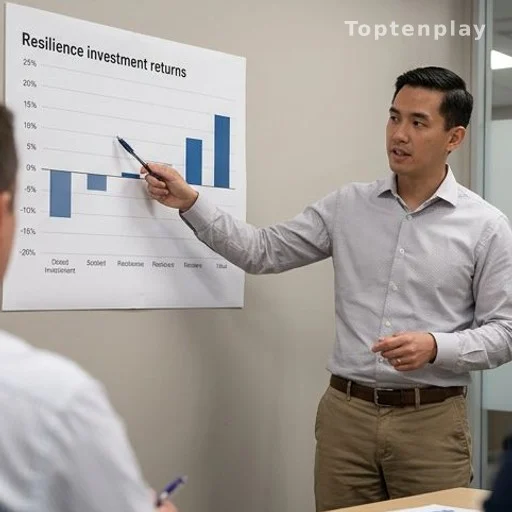
WRI senior fellow Carter Brandon believes even these figures are conservative: «We found that only 8% of investment appraisals estimated the full monetized values of these dividends, suggesting that the $1.4 trillion and the average rate of return are likely substantial underestimates.»
Brandon and colleagues have proposed a Triple Dividend of Resilience framework that accounts for avoided losses from climate events, induced economic development, and additional co-benefits. «By positioning portfolios to respond swiftly to emerging climate policies and market dynamics, investors not only limit potential losses but also capitalize on opportunities presented by the growing green economy,» Brandon contends.
On the ground, tools already exist to act on this intelligence. Munich Re’s Location Risk Intelligence platform, described by product marketing manager Thomas Walter, helped a US-based real estate investment company evaluate a multimillion-dollar building purchase. The tool identified the property as sitting in a highly flood-prone area; the company walked away. Within months, a severe flood hit the building. «They avoided both losses and depreciation,» Walter says.
The next stress test for adaptation finance will come as parametric insurance products scale beyond early adopters and as NGFS climate scenarios are more widely integrated into standard financial reporting frameworks. Whether the repricing Allianz describes unfolds in an orderly or disorderly fashion depends in large part on how quickly CFOs and institutional investors incorporate forward-looking climate data into capital allocation — a question that annual earnings cycles and upcoming regulatory disclosures will begin to answer.
Suggested Posts

Kids’ meals for adults: the restaurant debate over portions and price
A simple question — "Is that for a child?" — has sparked a genuine debate in the restaurant world. When adults want to order…