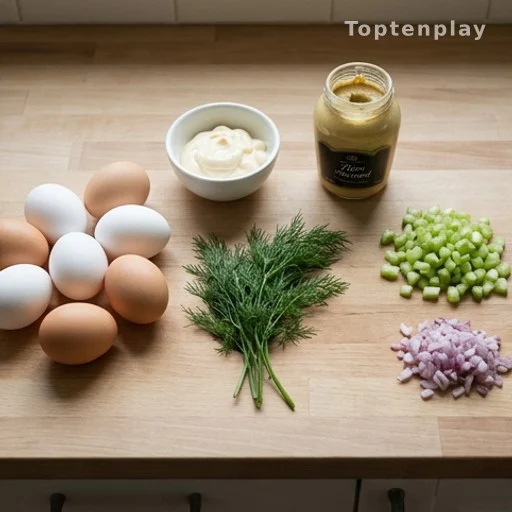
1 tablespoon of Dijon mustard (yellow mustard also works) adds a gentle sharpness that cuts through the richness of the yolks. Fresh herbs — either dill or parsley, finely chopped — bring brightness, while 2 tablespoons of finely diced celery introduce the crunch that keeps every bite from feeling heavy.
Rounding out the base is 1 tablespoon of finely minced red onion or shallot, which adds a mild bite without overpowering the other flavors. Salt and black pepper are adjusted to taste. For those who want a little more complexity, optional additions include a dash of paprika, a pinch of cayenne, or half a teaspoon of lemon juice — none of them required, all of them worthwhile.
The recipe is naturally nut-free, gluten-free, and vegetarian, which makes it a reliable option for a range of dietary needs without any adaptation required.
Boiling and chopping: the two steps that determine the final texture
The quality of the egg salad depends heavily on how the eggs are prepared before anything else is mixed. Eggs should be boiled for 10 to 12 minutes to reach a fully set yolk — the kind that crumbles cleanly rather than remaining soft or chalky. Immediately after boiling, transferring them to ice water stops the cooking process and makes peeling significantly easier.

Once cooled and peeled, the eggs should be chopped by hand. This is the single most important technique note in the recipe: using a food processor, even briefly, breaks down the egg whites into a paste and makes the entire mixture gummy. A knife and a cutting board give full control over the size of each piece — fine enough to bind well with the dressing, but with enough texture to feel substantial.
The goal is a chop that is thorough without being uniform. Some slightly larger pieces of white alongside finer crumbles of yolk create a more interesting texture in the finished salad, whether it ends up on bread, in a lettuce wrap, or served on its own as a light lunch.
A recipe built for practicality
Egg salad is one of the most enduring examples of budget cooking: high in protein, fast to prepare, and adaptable to multiple formats. This version keeps the ingredient list tight at six core items, all of which are widely available and shelf-stable or refrigerator staples. The substitution of Greek yogurt for mayonnaise reflects a broader shift toward lighter, higher-protein alternatives in everyday home cooking.
Mixing and seasoning: one bowl, no fuss, full flavor
With the eggs chopped, the method is straightforward: combine all ingredients in a single bowl and fold gently until everything is evenly coated. The one-bowl approach keeps cleanup minimal — a genuine advantage for a recipe that is meant to be quick and low-effort.