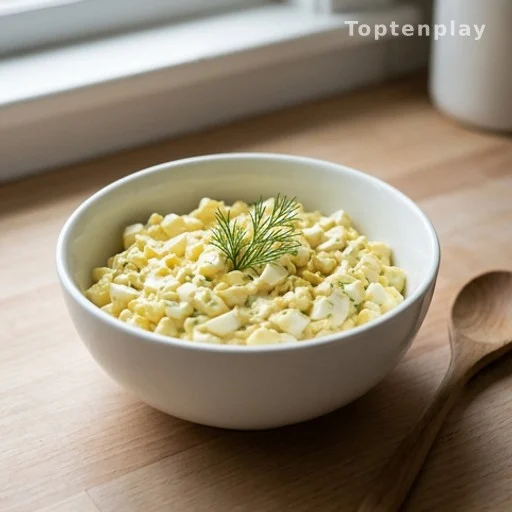
Seasoning at this stage is important. Salt and black pepper should be added gradually and tasted as you go, since the mayonnaise and mustard already carry their own salt levels. The optional lemon juice, if used, is best added here — it lifts the overall flavor and prevents the salad from tasting flat.
The mixture should look creamy and cohesive but not wet. If it seems too dense, a small additional spoonful of mayonnaise or yogurt loosens it without diluting the flavor. The entire process from chopped eggs to finished bowl takes well under 15 minutes, assuming the eggs were boiled in advance.
Chilling before serving and three ways to use the finished salad
Once mixed, the recipe recommends chilling the egg salad for at least 30 minutes before serving. This resting time allows the mustard, herbs, and onion to fully integrate into the mayonnaise base, producing a noticeably more rounded flavor than a salad served immediately after mixing.
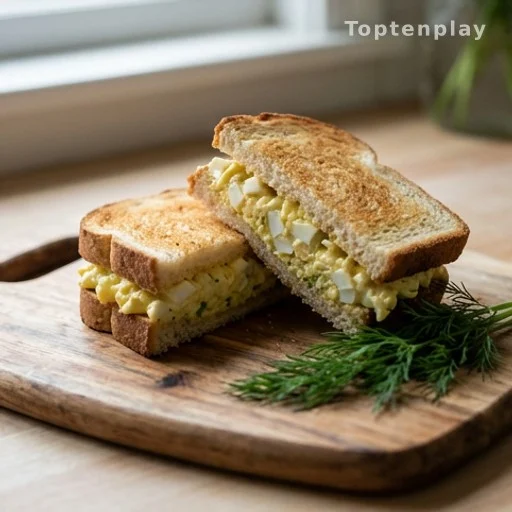
The three most natural uses are as a sandwich filling, spooned into lettuce wraps for a gluten-free option, or eaten directly from the bowl as a standalone light lunch. Each format suits the texture of this recipe — the hand-chopped eggs hold together well on bread without becoming soggy, and the celery provides enough structure to work in a wrap without falling apart.
At a cost of under $5 for four servings, this is one of the more economical recipes in the budget meal category. The ingredients are standard pantry and refrigerator staples, meaning it can be assembled on short notice without a dedicated shopping trip. Leftovers keep well refrigerated for up to two days.
The next step for anyone making this recipe is the 30-minute chill — the window between mixing and serving that the recipe identifies as key to the final flavor. From there, the open questions are largely personal: mustard variety, the choice between dill and parsley, and whether to add paprika or lemon juice. For those looking to extend the recipe, the base is also a workable starting point for stuffed avocado halves or as a topping for crackers, though those applications go beyond what this version specifies.