📌 Christmas Gratin Dauphinois: Philippe Etchebest’s recipe with parsnips and chestnuts that is prepared the day before
Posted 23 December 2025 by: Admin
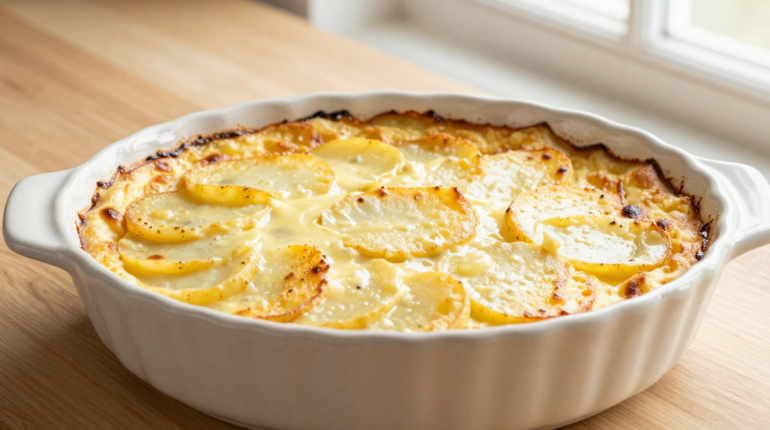
Gratin Dauphinois: The Star Accompaniment Recommended By Philippe Etchebest
Faced with the eternal question of the Christmas meal accompaniment, Philippe Etchebest decides without hesitation. The gratin dauphinois stands out as his flagship recommendation, a choice that surprises with its apparent simplicity but seduces with its formidable effectiveness. “An accompaniment that hits the mark, I want to say the gratin dauphinois,” confides the Michelin-starred chef during a recent interview.
The major asset of this classic lies in a little-known characteristic: its ability to enhance its flavors once reheated. “It’s better when it’s reheated. So, you make it the day before, put it in the fridge and reheat it the next day,” Etchebest specifies. This revelation radically transforms the organization of the big day. No more stress of juggling between cooking the capon and the side dishes; the gratin waits patiently in the refrigerator.
This anti-stress solution is all the more attractive as it requires no compromise on quality. Unlike roasted vegetables that lose their crunch or mashed potatoes that dry out, the gratin dauphinois gains creaminess after a night’s rest. The flavors blend, the cream permeates each potato slice, creating that much-sought-after melting texture.
The chef thus proposes to shake up habits without offending traditionalists. The idea hits home with cooks in search of mastered originality, that right balance between boldness and comfort that characterizes great holiday tables.
The Detailed Recipe For The Reinterpreted Gratin Dauphinois For 8 People
This version of the gratin dauphinois transcends the traditional recipe by integrating two bold ingredients: 600 g of parsnips and 100 g of chestnuts. Alongside the recommended kilo of Bintje potatoes, these additions transform the classic dish into a festive creation worthy of Christmas tables.
Etchebest’s technique relies on a two-stage cooking process. The parsnips and potatoes, sliced with a mandoline to ensure a uniform thickness, cook separately in 1.5 l of cream flavored with garlic and thyme. This partial pre-cooking is the secret to a melting texture without falling apart. The professional tip: using a tea towel to hold the vegetables while slicing avoids accidents while ensuring precision of movement.
The assembly is done in successive layers in a buttered dish rubbed with garlic. Potatoes, parsnips, and chopped chestnuts are layered until they reach the edge, with the last layer consisting exclusively of potatoes. Three-quarters of the reduced cream coats the whole before cooking for at least 45 minutes at 180°C.
The final validation is done with a knife: the blade must pass through the gratin without resistance. Then comes the crucial step that justifies the whole process: cooling in the refrigerator until the next day. This overnight maturation allows the flavors to fuse, creating that taste harmony that will be unanimous around your festive table.
Autumnal Variations To Personalize Your Christmas Gratin
The principle of the gratin lends itself to infinite variations without betraying its comforting essence. Philippe Etchebest encourages this creative freedom by proposing to substitute potatoes with autumn vegetables. “You can use sweet potato, but also parsnip, squash or even Jerusalem artichoke. You keep the same recipe principle, simply, you change the ingredients.”
This approach addresses a delicate issue of holiday meals: innovating without hurting family traditions. Sweet potato brings a sugary sweetness that contrasts with the cream, while Jerusalem artichoke deploys subtle hazelnut notes. Squash, for its part, offers a velvety texture that pairs particularly well with aromatics.
The advantage of these substitutions lies in their ability to transform the appearance of the dish while maintaining Etchebest’s proven technique. The same steps of separate pre-cooking, layered assembly, and slow cooking apply, guaranteeing a mastered result even for novice cooks.
This flexibility allows for bringing a “breath of fresh air to the festive menu” without taking inconsiderate risks. The gratin remains recognizable, familiar in its structure, but reveals a new personality that will pleasantly surprise your guests. An elegant way to leave your mark on the Christmas meal while respecting the spirit of traditional celebrations.
Adding Cheese: The Gourmet Touch Validated By The Chef
Traditional gratin dauphinois comes with a strict rule: no cheese should interfere with the purity of the cream and potatoes. Philippe Etchebest sweeps away this culinary orthodoxy with a definitive sentence: “Of course, we don’t forget the cheese for indulgence, it’s mandatory.”
This formal authorization frees cooks from a constraint that no longer has a place during holiday meals. Gruyère, Comté, Emmental, or Parmesan transform the gratin into a truly festive dish, where each bite reveals that melting texture and pronounced taste that define great Christmas gatherings.
The cheese plays a strategic double role. It reinforces the comforting side of the dish, that feeling of warm envelopment particularly sought after in winter. But above all, it allows for personalizing the gratin according to family preferences. Comté brings aromatic power, Parmesan refined umami notes, while Emmental guarantees that visual stretch that will seduce the youngest guests.
This gourmet touch fits perfectly into Etchebest’s philosophy: respecting technical fundamentals while allowing adjustments that serve taste pleasure. A balance that transforms a simple accompaniment into a true tasting moment, capable of rivaling the most elaborate main courses of the Christmas menu.