On weekends, this chocolate fondant has exactly the right tempo: you take out the butter, gently melt, let the oven work without rushing. It’s the cake for quiet afternoons, when the kitchen already smells of chocolate before anyone even asks what’s for dessert.
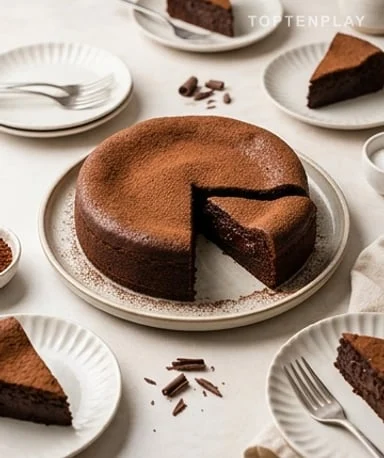
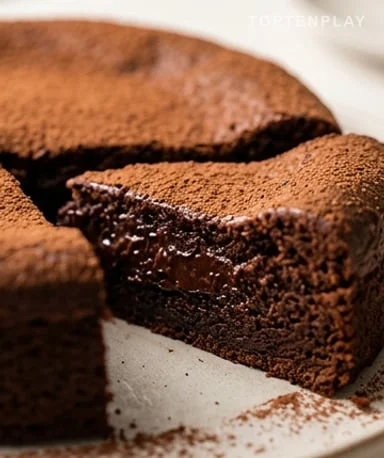
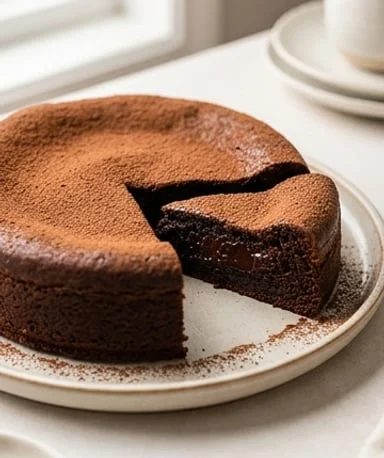
Its surface remains sober, sometimes barely cracked, with that dusting of cocoa catching the light. When cut, the blade meets a dense, moist, almost truffle-like crumb that doesn’t crumble everywhere. The blend of dark and milk chocolate gives a round, warm aroma with a slightly bitter edge that avoids being too sweet. It’s a fragile cake when warm, and that’s exactly its charm.
Why you’ll love this recipe
Ingredient Notes
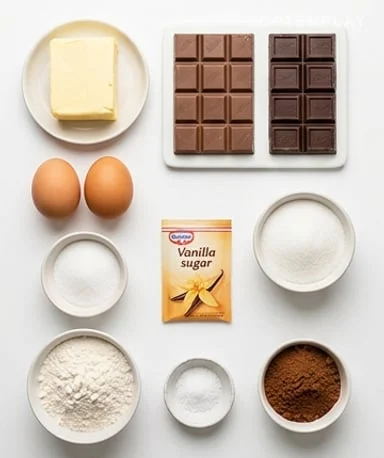
Butter, dark chocolate, milk chocolate, eggs, sugar, flour, and a pinch of salt: few ingredients, so choose them well.
- Dark chocolate : It gives the backbone of the fondant: bitterness, deep color, and length on the palate. Choose a chocolate between 55% and 70% cocoa according to your taste; higher will make the cake more intense and less rounded.
- Milk chocolate : It softens the recipe and adds a milky note that makes the fondant more accessible. If you want a less sweet, more adult result, replace it with dark baking chocolate, gram for gram.
- Butter : It provides the moistness, the shine of the batter, and that melting sensation that lingers on the tongue. Use good-quality unsalted butter; if you only have salted, omit the pinch of salt in the recipe.
- Eggs : They structure the cake without drying it, especially when well whisked with sugar. Take them out of the fridge a little ahead: at room temperature, they whip better and mix more easily with the warm chocolate.
- Sugar and vanilla sugar : Sugar doesn’t just sweeten; it also helps achieve a softer texture and a slightly satiny surface. The vanilla sugar should remain discreet; if you use real vanilla, a tiny bit is enough not to mask the chocolate.
- Flour : It stabilizes the fondant and helps it hold its shape when unmolded, but don’t add too much. Sift it to avoid small white lumps in the chocolate batter; for a gluten-free version, use a gluten-free baking mix suitable for cakes.
Melt gently for a smooth chocolate
Place the butter, both chocolates, and salt in a bowl over a bain-marie, then let the heat work without rushing the mixture. The chocolate should become shiny, fluid, almost satiny, with a deep aroma rising from the bowl. Stir with a spatula occasionally, just enough to help the pieces disappear without incorporating too much air. If the mixture gets too hot, it may become heavy or grainy; we want a calm melt, not a boil. Once melted, let it cool slightly, because chocolate that’s too hot would deflate the whisked eggs.
Whisk the eggs to give structure to the fondant
In the mixer bowl, whisk the eggs with sugar and vanilla sugar until light, airy, and forming a ribbon. This step matters: it prevents the cake from becoming compact like a cooked paste. The mixture should increase in volume and sound more airy under the whisk, almost frothy. No need to aim for a meringue; we mainly want to dissolve the sugar and lighten the base. When you add the warm chocolate, pour slowly to keep a smooth, flexible batter.
Fold in the flour without breaking the texture
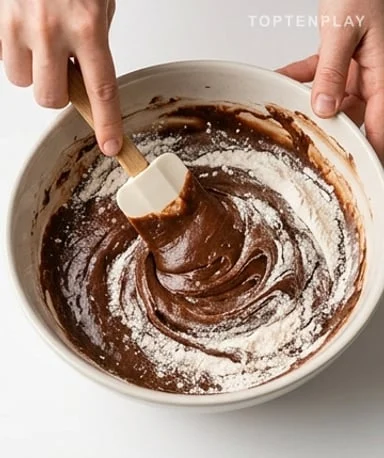
Sift the flour directly over the bowl, then fold it in with a spatula using wide, gentle strokes. The batter becomes thicker, more velvety, and keeps a uniform chocolate color if you don’t overmix. This is where many ruin the fondant: overworking the flour gives a more elastic texture, less pleasant in the mouth. Scrape the bottom of the bowl well, because pockets of flour can hide in the chocolate. As soon as the batter is smooth, stop; it doesn’t need further beating.
Prepare the pan for stress-free unmolding
Butter a 20 cm springform pan thoroughly, especially the sides, because this fondant remains fragile when it comes out of the oven. If your pan sticks a bit, add a disk of parchment paper at the bottom and a strip around the edge: this small step prevents breaking the cake at the most frustrating moment. The batter should flow slowly into the pan, thick and shiny, then level itself with a few gentle taps on the counter. Don’t use a pan that’s too large, or the fondant will be flatter and bake too quickly. The right size helps keep a dense, moist center.
Let it cool before aiming for a nice slice
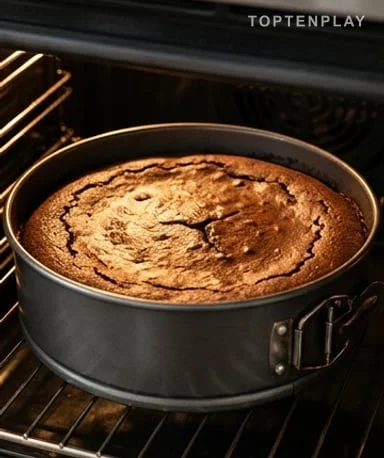
Bake at 160°C and let it cook without constantly opening the oven, because temperature fluctuations can weaken the cake’s structure. The surface should be set, sometimes slightly cracked, with a smell of hot chocolate and butter that becomes very clear toward the end. When out, resist the urge to unmold immediately: the fondant is tender, almost trembling, and needs to settle. As it cools, it firms up just enough to hold a beautiful slice. A dusting of cocoa at the end adds a fine bitterness and a matte finish, but it’s optional.
Tips & Tricks
- Always let the butter-chocolate mixture cool slightly before adding it to the eggs, because a mixture that’s too hot can cook them slightly and give a less smooth batter.
- Don’t mix once the flour is incorporated, because the fondant should remain dense and tender, not elastic or dry.
- Use a well-prepared springform pan, because this cake is fragile when hot and easily breaks if the bottom sticks.
- For a cleaner slice, prepare it a few hours ahead: resting firms up the crumb and concentrates the chocolate flavor.
How do I know if the chocolate fondant is baked enough?
The surface should be set and slightly matte, but the cake should remain soft in the center. If you insert a blade, it should not come out completely dry: that would be a sign of overbaking.
Can I replace the milk chocolate with dark chocolate?
Yes, and it’s even a good idea if you like more intense desserts. Replace the 200 g of milk chocolate with 200 g of dark chocolate, without changing the rest of the recipe.
Why do I need to let the fondant cool before unmolding?
When it comes out of the oven, it is very fragile because its texture is still soft and moist. As it cools, it firms up just enough to be unmolded without breaking.
Can I make this fondant the day before?
Yes, it keeps very well in the refrigerator for several days. The next day, its texture becomes denser, almost like a truffle; take it out a little before serving so it regains some meltiness.
How can I prevent the fondant from sticking to the pan?
Butter the pan well, then ideally add a disk of parchment paper at the bottom. For a tricky springform pan, a strip of parchment paper around the edges avoids unpleasant surprises when unmolding.
Chocolate Fondant
French
Dessert
A dense, moist, and very chocolatey chocolate fondant, perfect for a weekend dessert when you take the time to do things calmly.
Ingredients
- 200g butter
- 200g milk chocolate
- 200g dark chocolate
- 3g fine salt
- 6 eggs
- 190g granulated sugar
- 10g vanilla sugar
- 100g flour
- 1 tablespoon cocoa powder, optional
Instructions
- 1Preheat the oven to 160°C.
- 2Melt the butter, milk chocolate, dark chocolate, and salt in a bain-marie, stirring occasionally with a spatula.
- 3Remove the bowl from the bain-marie and let the chocolate mixture cool slightly.
- 4Whisk the eggs, granulated sugar, and vanilla sugar at high speed until frothy.
- 5Gently pour the warm butter-chocolate mixture into the whisked eggs, then mix just until smooth.
- 6Sift the flour over the bowl and fold it in gently with a spatula.
- 7Pour the batter into a well-buttered or parchment-lined 20 cm springform pan.
- 8Bake for about 45 minutes at 160°C, then let it cool before unmolding.
- 9Optionally dust with cocoa powder once the fondant is warm or cold.
Notes
• For a more intense flavor, replace the milk chocolate with dark chocolate.
• The fondant is fragile when hot: let it cool before unmolding.
• A pan lined with parchment paper makes unmolding much easier.
• Store the fondant in the refrigerator for several days and take it out a bit before serving.
Nutrition Facts (per serving, estimated)
| 665 kcalCalories | 8gProtein | 70gCarbs | 41gFat |