Beef stir-fry often gets a bad reputation. A weekday meal, a fridge-clearer, the default recipe when you’re out of ideas. Except that—when executed well, with truly caramelized onions and properly seared meat—it’s exactly what your guests will be asking for seconds of.
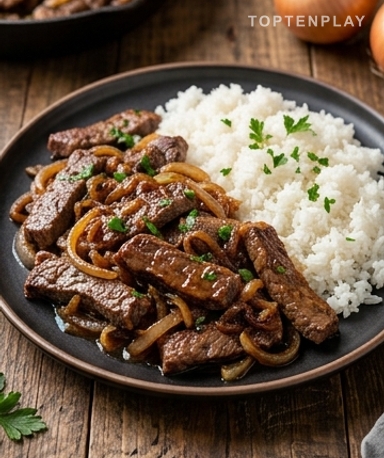
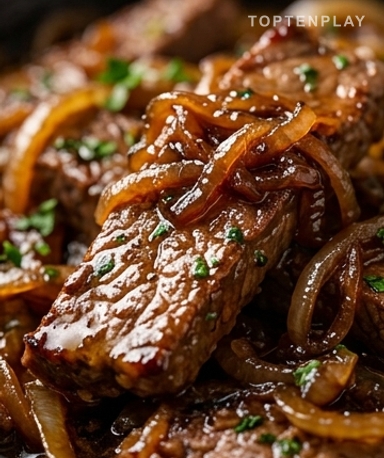
The beef strips, seared on the edges but still slightly pink in the center, disappear under a veil of onions that have turned a light caramel brown, almost translucent. The aroma rising from the pan mixes grilled meat and warm sugar, with that hint of soy sauce that you can’t quite identify but changes everything. The surface shines with a natural glaze—that sticky juice that clings just right to your fork. Hot, hearty, and ready in 30 minutes.
Why you’ll love this recipe
Ingredient Notes
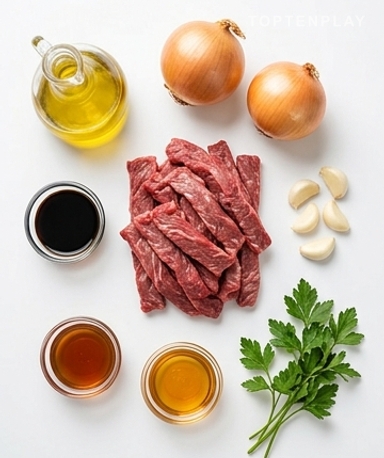
Everything you need for a successful beef stir-fry: good meat, onions, and a few pantry staples.
- The Beef : Rump steak, hanger steak, or sirloin—avoid stewing beef or shoulder at all costs; they are too fatty and take too long to tenderize for this type of quick cooking. Hanger steak is the best choice: reasonable price, bold flavor, and a firm texture that holds up perfectly to searing. Ask your butcher to slice it thinly if you want to make your life easier.
- Yellow Onions : Two large ones, sliced into thin half-moons of 3-4 mm max. Not red onions—they turn a weird color after cooking and their natural sweetness tips over into being too sugary too quickly. The classic yellow onion is ideal: it caramelizes cleanly, with that slight bitterness that balances the meat.
- Soy Sauce : Technically optional. In practice, it’s what brings that umami depth that you can’t quite name but notice immediately when it’s there. Kikkoman or any standard supermarket brand, one tablespoon, no more.
- Honey : One teaspoon to kickstart the onion caramelization. Honey provides a slightly floral base and caramelizes more gradually than white sugar. If you have maple syrup on hand, even better—it gives a superb amber color and a discreet fragrance that is a pleasant surprise.
Prepare the meat cold
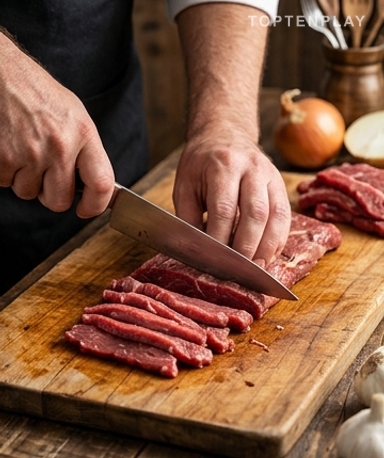
The secret to a tender stir-fry is the cut. Thin strips—4 to 5 mm—cut against the grain. A classic problem: fresh meat is soft and slips under the knife. Simple solution: 15 minutes in the freezer before slicing. It firms up just enough for the blade to cut it cleanly, with that satisfying little crunch under the knife. No special equipment needed. A sharp knife, cold meat, and you’re good to go. Don’t salt yet—salt draws out moisture, and we don’t want that before searing.
Onions deserve their time
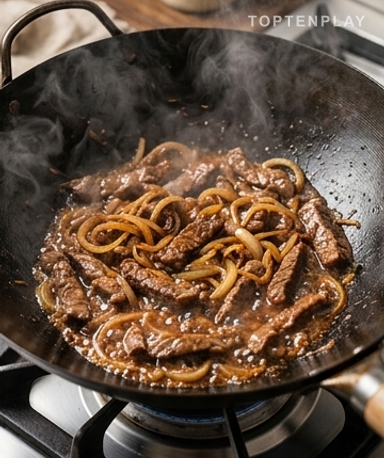
This is where most people rush and sabotage the whole dish. Onions need 10 to 12 minutes over medium-low heat to truly melt. No high heat, no impatience. At first, they are white, almost raw under the spatula. Then they become translucent, like frosted glass. This is the stage to add the honey—just one spoonful. Two minutes later, they’ve taken on a light caramel color, slightly sticky, and the smell rising from the bottom of the pan is sweet and savory in a way that has nothing to do with the raw onions you started with. That’s the moment we’re waiting for.
High heat, and fast
The onions are ready. Turn the heat up to maximum. The pan must be truly hot—if a strip of beef placed in it doesn’t sizzle immediately, wait another minute. Add the meat in a single layer, without crowding. It needs to sear, not steam. The sound changes: you go from light sizzling to a sharp, dry crackle. Three to five minutes, no more. The strips should be browned on the surface and remain slightly pink inside. Minced garlic goes in at the very last minute, never before, so it perfumes without burning.
The final touch—the one that changes everything
Soy sauce, salt, pepper. Mix quickly so every strip is coated in the amber glaze formed at the bottom of the pan. It’s brief—thirty seconds, a minute. We don’t want to overcook. Remove from the heat, let it rest for two minutes so the juices redistribute within the meat. Then fresh parsley or cilantro, torn by hand directly over the dish. Serve without delay—this dish doesn’t like to sit around.
Tips & Tricks
- Never overcrowd the pan. If the strips touch and there’s no space between them, the temperature drops sharply and the meat steams instead of searing—resulting in a gray, crustless, uninteresting finish. Cook in two batches if necessary; it’s worth it.
- Burnt garlic ruins the dish. Always add it in the very last minute of cooking, never at the beginning with the onions. One minute too long and it turns bitter, and that bitterness permeates everything else beyond repair.
- Stay in front of the stove during the searing. Three minutes is short. This is definitely not the time to go answer a message.
What cut of beef should I choose for a stir-fry?
Hanger steak, rump steak, or sirloin are the best choices: tender, flavorful, and suitable for quick cooking over high heat. Avoid braising cuts like chuck or brisket—they stay tough in a stir-fry as they need time to tenderize.
How do I prevent the meat from becoming tough or rubbery?
Two essential things: cut the strips thinly (4-5 mm) against the grain, and sear over very high heat without overcrowding the pan. If the pieces touch, the temperature drops and the meat steams instead of searing—that’s when it becomes elastic.
Can I prepare this dish in advance?
The caramelized onions can be prepared the day before and kept for 3 days in the fridge. On the day of, you only need to sear the meat at the last minute—it takes 5 minutes and the dish is much better fresh than fully reheated.
How to store and reheat leftovers?
Leftovers keep for 2 days in the refrigerator in an airtight container. To reheat, toss directly into a pan over high heat for 2-3 minutes—don’t use the microwave, as it softens the meat and destroys the texture of the onions.
Can I make this stir-fry without soy sauce?
Yes, the dish works without it. Soy sauce adds umami and depth, but if you don’t have any, compensate with a teaspoon of tomato paste and a bit more salt. The result is different but still very good.
What should I serve with this stir-fry for a complete meal?
White basmati rice is the classic accompaniment—it absorbs the caramelized juices perfectly. Stir-fry noodles or quinoa also work very well. For a lighter version, steamed vegetables (broccoli, green beans) balance the richness of the dish.
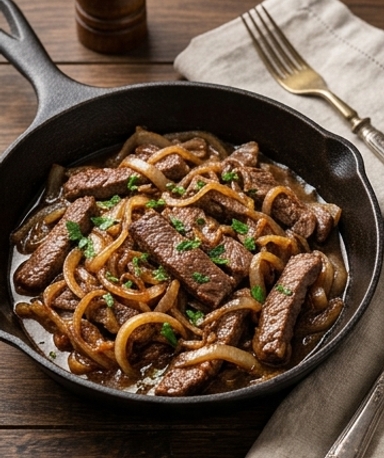
Beef Stir-Fry with Caramelized Onions
French
Main Course
Beef strips seared over high heat, coated with melted and caramelized onions. An everyday dish that prepares in 30 minutes and impresses every time.
Ingredients
- 500g beef (rump steak, hanger steak, or sirloin), cut into thin strips
- 2 large yellow onions, thinly sliced into half-moons
- 2 cloves of garlic, finely minced
- 30ml (2 tbsp) olive oil
- 15ml (1 tbsp) soy sauce
- 7g (1 tsp) honey (or maple syrup)
- Few sprigs fresh parsley or fresh cilantro
- To taste salt and freshly ground black pepper
Instructions
- 1Place meat in the freezer for 15 minutes to firm up, then cut into thin strips (4-5 mm) against the grain.
- 2Finely slice onions into half-moons and mince the garlic. Set aside separately.
- 3Heat oil in a large pan or wok over medium heat. Add onions with a pinch of salt and cook for 10 minutes, stirring regularly, until translucent.
- 4Add honey and continue cooking for 2-3 minutes until a light caramel color and slightly sticky texture are achieved.
- 5Increase heat to high. Add beef strips in a single layer (in two batches if necessary) and sear for 3-5 minutes without stirring too much.
- 6Add minced garlic during the last minute of cooking. Pour in soy sauce, add salt and pepper, and mix quickly to coat the meat.
- 7Remove from heat, let rest for 2 minutes, then garnish with hand-torn parsley or cilantro. Serve immediately.
Notes
• Storage: leftovers keep for 2 days in the refrigerator. Reheat in a pan over high heat rather than the microwave to preserve the texture.
• Make ahead: caramelized onions can be prepared up to 3 days in advance and stored in the fridge. On the day, you just need to sear the meat.
• Variation: add red and yellow bell pepper strips with the onions for more color and an extra sweet note.
Nutrition Facts (per serving, estimated)
| 370 kcalCalories | 30gProtein | 14gCarbs | 22gFat |