Tragedy Strikes Dhaka: Air Force Jet Crashes Into Crowded School
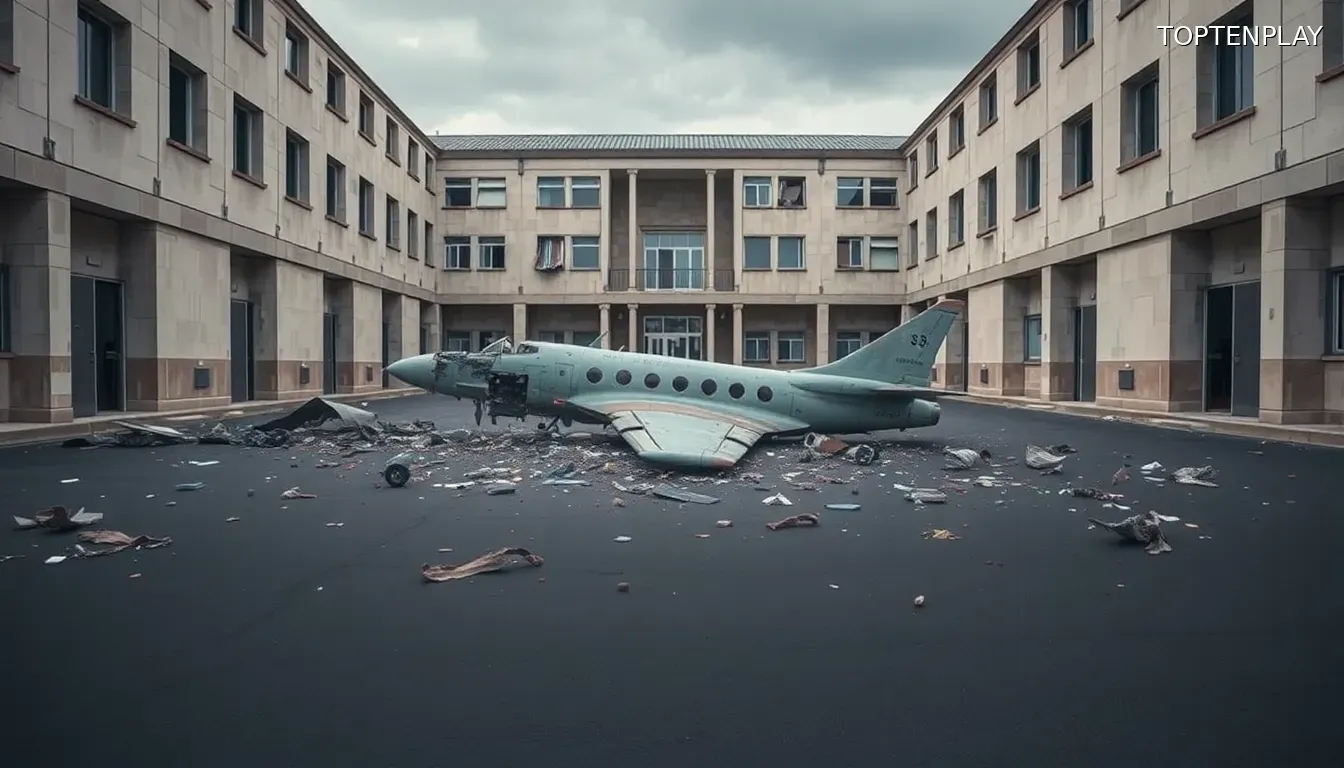
A catastrophic malfunction turned a routine training flight into Bangladesh’s deadliest aviation disaster in recent memory. At 1:06 p.m. Monday afternoon, a Chinese-made F-7 BGI training aircraft experienced technical failure moments after takeoff from A.K. Khandaker air force base.
Flight Lt. Mohammed Toukir Islam faced an impossible choice. With his aircraft spiraling out of control over Dhaka’s densely populated Uttara neighborhood, the pilot made a desperate attempt to divert away from crowded residential areas toward a less inhabited location.
His heroic effort couldn’t prevent the inevitable. The crippled jet plunged into the campus of Milestone School and College, a two-story educational complex housing 2,000 students just 11 kilometers from the air base. The impact was devastating.
Students described buildings trembling violently before a massive explosion sent them fleeing for safety. The aircraft struck with such force that debris scattered across the school grounds, igniting fires that would soon engulf portions of the facility.
Within minutes, what had been a normal Monday afternoon transformed into a scene of chaos and terror. Emergency responders rushed toward the crash site as thick black smoke billowed into the sky above one of Dhaka’s busiest districts.
The pilot’s final moments revealed the split-second decision-making that defines aviation emergencies. Rather than attempt a risky return to base over populated areas, Islam chose to sacrifice himself in hopes of minimizing civilian casualties.
Human Cost: At Least 20 Dead, 171 Students Injured in School Inferno
The flames claimed Flight Lt. Mohammed Toukir Islam and transformed a school day into a medical emergency of staggering proportions. The final death toll reached at least 20 people, with the pilot and 19 others—predominantly students—losing their lives in the inferno.
Yet the scope of suffering extended far beyond the fatalities. Emergency teams pulled 171 injured students from the smoldering two-story building, many bearing severe burns that would mark them for life. The rescue operation unfolded with desperate urgency as helicopters, motorized rickshaws, and the bare hands of firefighters and parents carried victims to safety.
The youngest victims bore the heaviest burden. More than 60 students, most between ages 12 and 16, required immediate transfer to specialized burn treatment facilities. Medical teams at Uttara Adhunik Hospital worked frantically to stabilize the most critical cases before helicopter evacuations whisked them to advanced care centers.
The rescue scene painted a picture of systematic devastation. Students who moments earlier sat in classrooms now lay on stretchers, their young bodies testament to the aircraft’s destructive power. Emergency responders moved methodically through debris-filled corridors, searching for survivors amid the wreckage.
As medical helicopters disappeared into Dhaka’s skyline carrying the most severely injured, the true human cost became undeniable. This wasn’t merely an aviation accident—it was a tragedy that would forever alter hundreds of families across Bangladesh’s capital.
Scenes Of Desperation: Parents’ Nightmare Unfolds At Crash Site
While helicopters carried the wounded away, a different kind of chaos erupted below. Panicked relatives flooded the crash site, their desperate searches creating scenes of raw human anguish that would haunt witnesses for years.
A father sprinted through the debris, his daughter cradled in his arms, her small body testament to the aircraft’s devastating impact. Nearby, a mother’s cries pierced the smoky air—she had found one child alive, but her frantic search for another continued amid the wreckage.
The most harrowing account came from Jewel, whose daughter attended classes in the building where the F-7 BGI struck. « The plane crashed on the building where my daughter was. My wife called me, but I was praying so I could not pick up, » he recounted at the scene. « When I came here I saw there was a huge fire. There was a dead body of a child. »
His daughter survived, but Jewel witnessed other children suffering from severe burns—a sight that captured the tragedy’s indiscriminate cruelty.
Students who rushed to witness the aftermath described their shock. « We fought with the crowd and the soldiers to get close to the crash site in our school, » said 11th-grader Estiak Elahi Khan. « What I saw I can’t describe that… that’s terrible. »
Screams filled the air at nearby hospitals as families learned their children’s fates. The desperate scene painted a picture of a community shattered, where prayers went unanswered and ordinary school days transformed into unimaginable nightmares.
National Mourning Declared As Investigation Begins
As ambulances delivered the final casualties to overwhelmed hospitals, Bangladesh’s leadership confronted a tragedy of unprecedented scale. This marks the deadliest plane crash in the capital’s recent memory, surpassing the 2008 F-7 training jet incident that claimed only its pilot’s life.
Interim leader Muhammad Yunus moved swiftly to address the nation’s grief. The government declared Tuesday a national day of mourning, with flags ordered to fly at half-staff across the country. « This is a moment of deep national grief, » Yunus stated, pledging a comprehensive investigation into the catastrophic technical malfunction that destroyed so many young lives.
The official response extended beyond symbolic gestures. Military authorities confirmed they would conduct a thorough probe into why the Chinese-made F-7 BGI aircraft experienced its fatal technical failure just moments after takeoff from A.K. Khandaker air force base.
International solidarity quickly emerged. Indian Prime Minister Narendra Modi expressed shock and sadness over the tragedy. « Our hearts go out to the bereaved families, » Modi posted on X. « India stands in solidarity with Bangladesh and is ready to extend all possible support and assistance. »
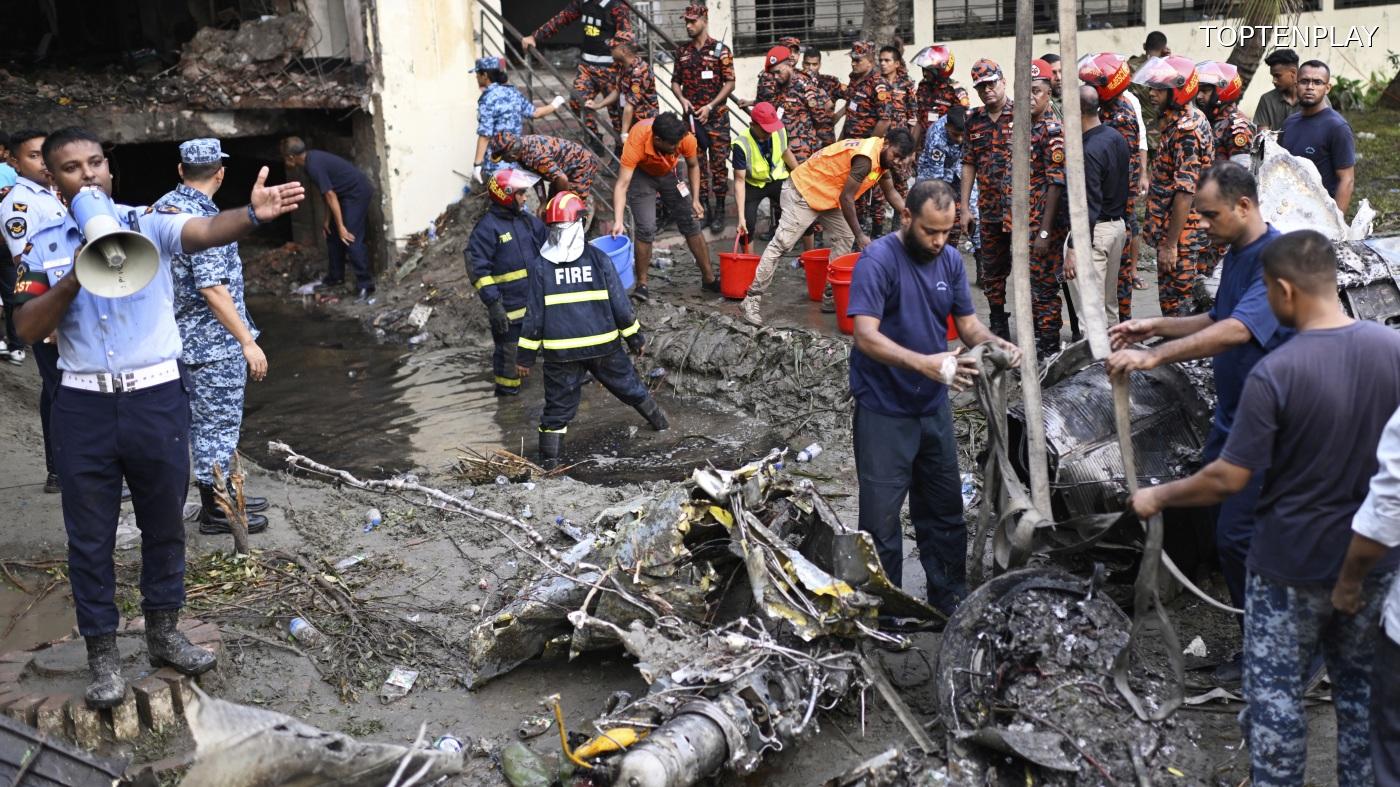
By evening, rescue operations continued at the devastated Milestone School campus. Cranes worked methodically to remove debris as searchers combed through the wreckage, still hoping to locate additional survivors among the 2,000-student institution’s rubble.
The investigation’s findings will determine whether this catastrophe stemmed from mechanical failure, maintenance issues, or other factors that turned a routine training flight into national mourning.