📌 Banana Milk Bread: how ripe bananas transform this homemade bread into irresistible tenderness and softness
Posted 18 January 2026 by: Admin
The Recipe That Transforms Bananas Into Soft Bread
The Banana Milk Bread reinvents the world of homemade bread by combining two ingredients with opposing textures: the velvety sweetness of ripe bananas and the airy lightness of Japanese milk bread. This fusion creates a naturally sweet bread of rare tenderness that escapes the codes of traditional bread to sit somewhere between bakery and pastry.
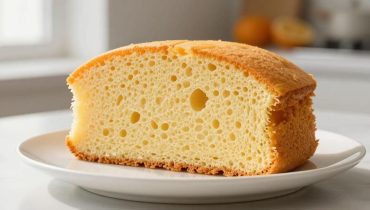
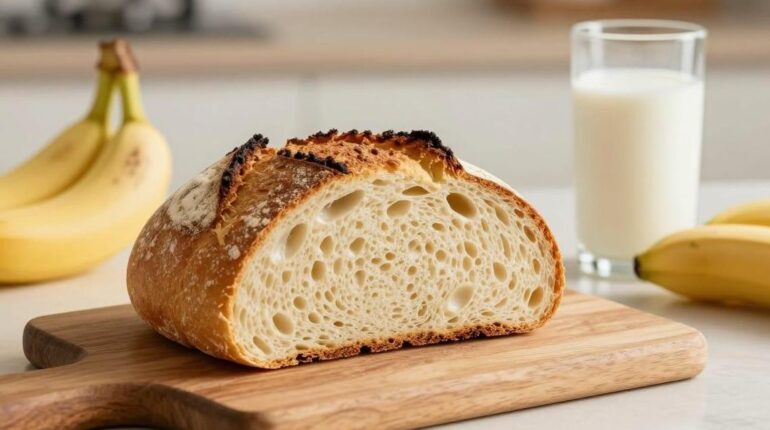
The secret to this incomparable texture lies in a precise alchemy: 206g of mashed ripe bananas, 90ml of whole milk, and 28g of melted butter form a trio that injects deep moisture into every bite. Unlike dense and compact American banana breads, this version draws inspiration from Asian kneading techniques to achieve a honeycomb-like, almost cottony crumb, encased in a finely crispy golden crust.
This versatility makes it an everyday ally: sliced thick for a comforting breakfast with salted butter, cut into fingers for an afternoon snack, or transformed into a creative base for improvised desserts. The subtlety of the banana flavor never dominates; it discreetly envelops each bite in a fruity sweetness that easily does without added sugar.
The contrast between the soft crumb and the golden crust testifies to an accessible technical mastery: the milk wash before baking, then the butter finish out of the oven, sculpt this double texture that marks great baking successes. A recipe that promises to conquer families from the very first batch.
Precise Ingredients For A Guaranteed Result
This baking success relies on millimeter-precise proportions that eliminate all guesswork. The list is divided into two categories: the dough components and the finishes that sculpt the final appearance.
For the base, the dosage starts with 206g of ripe bananas after peeling, which is about two medium fruits whose advanced ripeness guarantees natural sweetness. This measurement is not trivial: too much banana would drown the structure, too little would erase the fruity character. Added to this are 350g of bread flour or all-purpose flour (2.25 cups), whose gluten will develop the characteristic airy crumb of milk bread, 4g of instant yeast (0.5 tablespoon) for the honeycomb structure, and 3g of salt (0.5 teaspoon) which balances the sweetness.
The moisture elements complete the equation: 90ml of whole milk (6 tablespoons) which brings creaminess, and 28g of melted unsalted butter (2 tablespoons) which enriches the texture without weighing it down. This liquid-fat-banana trio forms the alliance responsible for the prolonged softness, even 48 hours after baking.
The finishes require milk to brush the surface before baking, creating that shiny golden crust, then unsalted butter applied upon leaving the oven to enhance the appearance and add a silky touch. These details transform a standard recipe into an exceptional bread, the kind that disappears even before cooling completely.
The Step-By-Step Method That Simplifies Creation
These meticulously weighed ingredients find their expression in a process structured into distinct phases, each contributing to the final balance between lightness and structure.
The start requires mashing the bananas into a smooth puree before incorporating the lukewarm milk and instant yeast, letting it rest for five minutes to activate fermentation. This liquid base then receives the cooled melted butter, avoiding any thermal shock that would kill the yeast. The gradual addition of flour mixed with salt follows, in three parts, alternating between a spatula and then manual kneading until a supple, slightly sticky but manageable dough is obtained.
Kneading lasts 8 to 10 minutes, developing the gluten network necessary for the milk bread’s honeycomb structure. The banana-enriched dough remains moister than classic preparations, requiring patience rather than extra flour. Once elastic, it rests for 60 to 90 minutes under plastic wrap until doubled in size.
After gentle degassing, the shaping depends on the chosen mold: three equal logs for a loaf pan, or division into individual portions for buns. The second rise, crucial, lasts 40 minutes before the milk wash that will create that characteristic amber crust. Baking at 180°C (350°F) for 25 to 30 minutes concludes with the immediate application of melted butter, sealing in moisture and providing that satiny shine. Cooling completely on a rack preserves the texture, even if the temptation to slice while still warm is hard to resist.
A Versatile Bread That Adapts To Every Moment
This cooled bread then reveals its true versatility, moving beyond the strict framework of a technical recipe to become a staple in family daily life.
Plain, each slice exposes the subtle banana flavor integrated into the airy crumb of the milk bread, distinct enough to stand out without dominating. The soft texture, inherited from the double-rise process and the final butter wash, is sufficient on its own for breakfast. However, adding a thin layer of salted butter amplifies the contrast between fruity sweetness and milky richness, creating a more complex taste experience.
Honey, drizzled over a lightly toasted slice, accentuates the natural sweetness of the 206g of bananas incorporated into the dough. This combination works particularly well for afternoon snacks, accompanied by tea or coffee, transforming this bread into a comforting treat. Individual versions, shaped into round buns, are also perfect for lunch boxes, resisting crushing thanks to their solid honeycomb structure.
But this recipe goes beyond the traditional framework of table bread. Sliced double-thick, it becomes a base for cinnamon-soaked French toast, or a support for creative toppings combining cream cheese and red fruits. Some even use it crumbled in layered desserts, exploiting its ability to absorb creams and syrups without falling apart. This adaptability explains why Banana Milk Bread quickly establishes itself as a reference, satisfying various cravings while maintaining that unique taste signature that justifies its regular preparation.