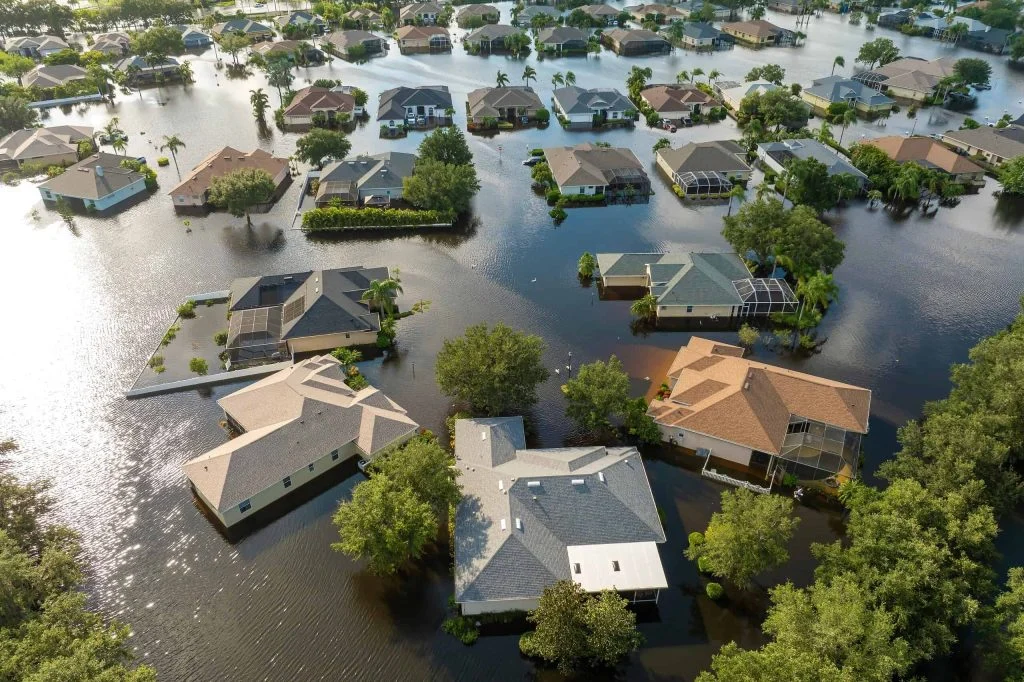
As climate change pushes entire regions toward uninsurability, a growing body of financial research is reframing adaptation not as a cost but as a measurable investment opportunity. From flood insurance startups to sovereign wealth funds, institutions are beginning to price, model, and profit from resilience — and the numbers are drawing serious attention.
In brief
- —Neptune Insurance: 18% loss ratio during Hurricane Helene
- —Adaptation market projected to reach $9 trillion by 2050
- —WRI documents average 27% return on resilience investments
Neptune Insurance’s IPO signals a market willing to price climate risk
When Neptune Insurance, the largest private flood insurance provider in the United States, went public last October, it quickly achieved a multibillion-dollar valuation. For investors, the listing signaled that climate adaptation can be both profitable and scalable — and that markets are prepared to reward business models built around resilience rather than retreat.

The St. Petersburg, Florida-based company uses AI-powered underwriting that integrates satellite imagery and forward-looking climate data. Its core premise: accurately pricing climate risk can restore insurability rather than signal an exit from vulnerable markets.
During Hurricane Helene, Neptune posted an 18% loss ratio — dramatically outperforming the federal National Flood Insurance Program — while offering premiums 30% to 40% lower than competing alternatives. CEO Trevor Burgess attributes this to a direct link between adaptation and insurability: «What we’re seeing in real time is that properties once considered uninsurable become insurable again when they’re rebuilt to modern codes and elevated. That’s climate adaptation in practice.»
A $9 trillion market by 2050, according to GIC and Bain
The scale of the opportunity is documented in a 2025 report by GIC, the Singapore sovereign wealth fund, conducted with consultancy Bain. The global investment opportunity for climate adaptation solutions is projected to grow from $2 trillion today to $9 trillion by 2050.
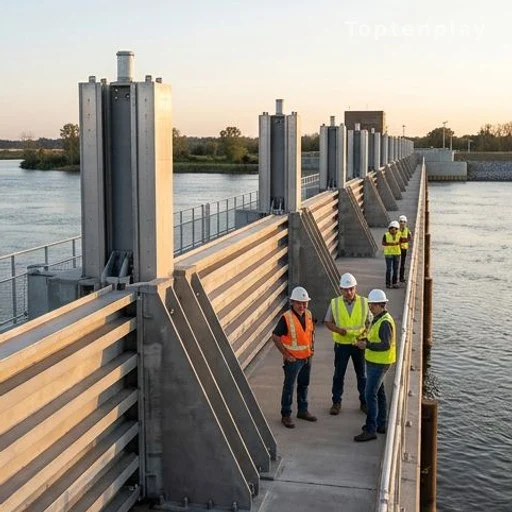
Annual revenues from adaptation solutions — spanning weather intelligence systems, wind-resistant building components, flood protection infrastructure, and water conservation technologies — are forecast to rise from approximately $1 trillion today to $4 trillion by 2050.
Major insurers are already moving. Adil Ilyas, who heads the insurance group at professional services firm Genpact, notes that the shift in mindset among property and casualty carriers is greater than he has ever observed, with AXA, Zurich, and Allianz among those that have launched parametric insurance solutions designed to give organizations fast-acting liquidity and cash flow following a disruptive event.
Why insurability is becoming the new financial frontier
Climate-related losses have accelerated the withdrawal of private insurers from high-risk markets, leaving homeowners and businesses in flood- and wildfire-prone areas without affordable coverage. This retreat has created both a protection gap and, increasingly, a market signal: companies that can accurately price and manage climate risk stand to capture demand that legacy models are abandoning. The shift from reactive insurance to proactive adaptation finance is now being tracked by sovereign wealth funds, central banks, and major asset managers.
Suggested Posts

Iran conflict exposes the hidden gaps in corporate insurance
The U.S. and Israel launched a joint attack on Iran on February 28, and the shockwaves reached well beyond the battlefield — straight into…