A spoonful of sugar water left in the backyard to revive a tired bee — the gesture has been shared millions of times on social media. But bee experts and entomologists warn that this well-meaning habit can, in most cases, actively harm the very pollinators it aims to help. Here is what the science actually says.
En bref
- —Sugar water offers bees zero nutritional value
- —Open feeding spreads viruses and fungal disease between bees
- —Wasps and ants are drawn to sugar water, threatening weak hives
Empty calories: what sugar water actually gives a bee
The comparison made by entomologists is blunt: offering a bee plain sugar water is like feeding a child only soda. It provides a short burst of energy but none of the building blocks the insect actually needs to survive and function.
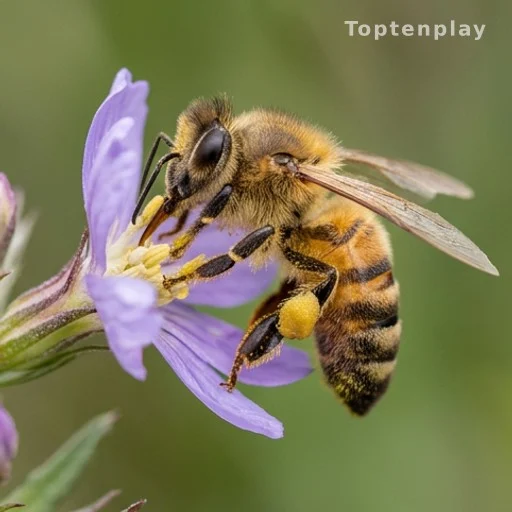
Bees draw their essential nutrition — proteins, fats, vitamins, amino acids, and micronutrients — from the nectar and pollen of diverse flowering plants. These compounds are critical not just for the individual bee, but for larval development and immune function across the entire colony.
Sugar water contains none of these elements. A bee that feeds on it may appear revived momentarily, but the underlying nutritional deficit remains. For a colony already under stress, repeated exposure to nutritionally empty food sources can compound existing weaknesses rather than address them.
A disease superhighway: how a shared spoon spreads pathogens
Beyond nutrition, the mechanics of open feeding create a direct public-health risk for bee populations. When multiple bees feed from the same sugary spot — a spoon, a bottle cap, a shallow dish — they exchange pathogens with every visit.
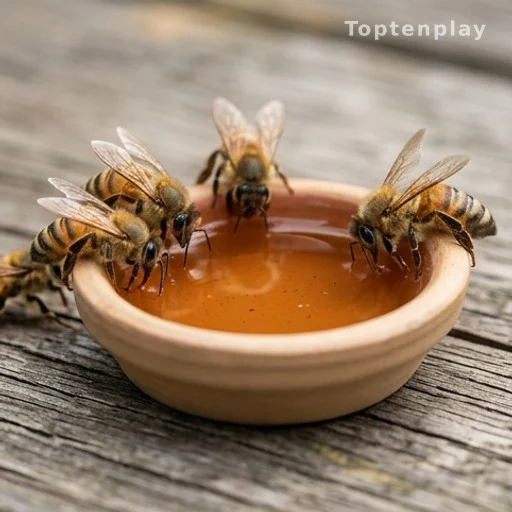
Among the threats transmitted this way are deformed wing virus and various fungal spores, both capable of devastating colonies. The risk is significant enough that professional beekeepers explicitly avoid open feeding as standard practice, precisely because it functions as a disease transmission vector.
A single contaminated bee visiting a communal sugar source can expose dozens of others from different hives or wild nests. What looks like a small act of kindness in a suburban backyard can therefore ripple outward into local bee populations in ways that are difficult to trace or reverse.
Why the sugar spoon went viral
The idea of leaving sugar water for bees spread rapidly on social media, framed as a simple rescue gesture for insects that appear exhausted or grounded. The impulse reflects genuine public concern for declining pollinator populations, which face real pressures from habitat loss and pesticide use. But the remedy circulating online was never based on entomological guidance — and experts say the gap between good intentions and good practice is exactly where harm enters.
Suggested Posts
The plastic bottle near your tire that could get your car stolen
An empty plastic bottle placed against a car tire may look like litter — but in some cases, it is a deliberate distraction used…