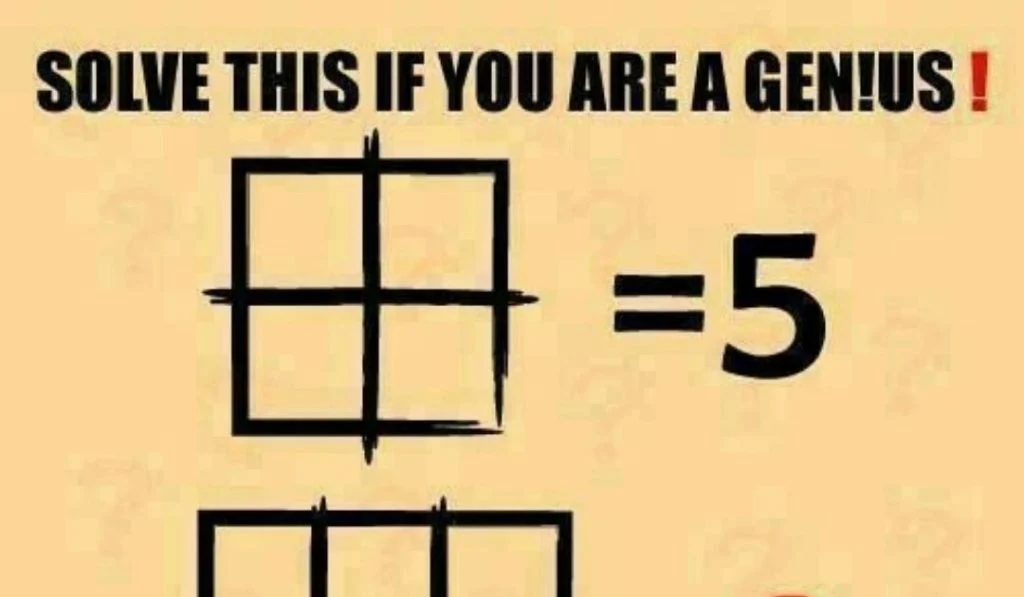
A deceptively simple image — a grid of lines — and one question: how many squares can you see? Millions of people have encountered this puzzle online and most get it wrong. The correct answer for a standard 4×4 grid is not 16, but 30, and there is a precise mathematical method to prove it.
En bref
- —Most people see only 16 squares in a 4×4 grid
- —The real answer is 30, counting all square sizes
- —One formula solves any grid size instantly
Why almost everyone stops at 16
When presented with a 4×4 grid, the instinctive move is to count the smallest visible units — the individual cells. Four rows, four columns, sixteen boxes. It feels complete, and most people stop there.
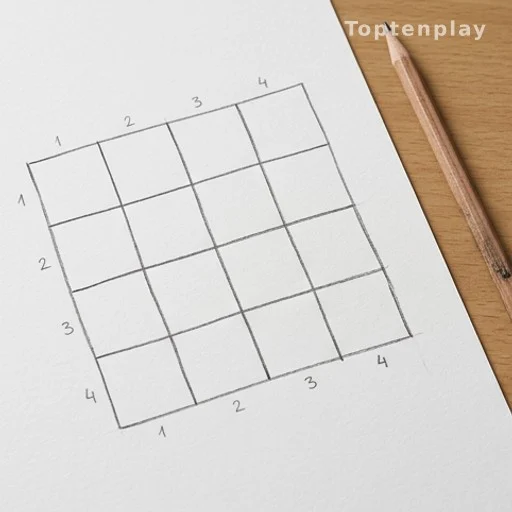
The mistake is a classic failure of visual perception: the brain defaults to the most obvious, discrete units and ignores the larger structures formed by combining them. A 2×2 arrangement of cells is also a square. So is a 3×3 arrangement, and so is the entire 4×4 grid itself.
This cognitive shortcut is not a sign of low intelligence — it is how human pattern recognition works under low effort. The puzzle exploits exactly that tendency, which is why it spreads so reliably online and generates such confident wrong answers.
A puzzle built on a real mathematical principle
The square-counting puzzle is not just a viral trick — it is a direct application of the sum of squares formula, a foundational result in combinatorics. The formula n(n+1)(2n+1)/6 has been known for centuries and appears in fields ranging from statistics to computer science. The puzzle works as a trap precisely because it disguises a solvable math problem as a simple visual task.
The step-by-step count that reaches 30
The correct approach is to count squares by size, systematically working from the smallest to the largest. In a 4×4 grid, four distinct sizes exist.
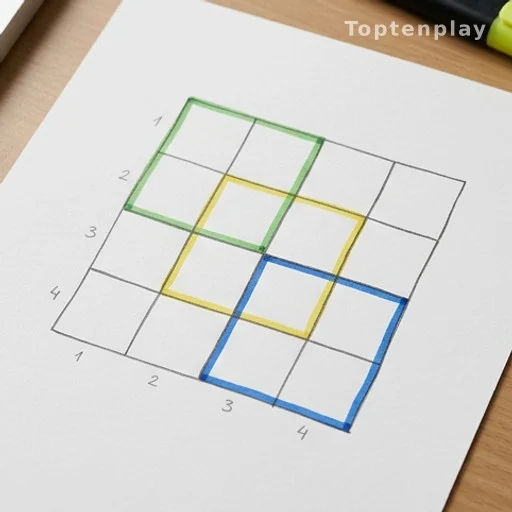
1×1 squares: with 4 positions along each axis, there are 4 × 4 = 16. 2×2 squares: a 2×2 square can start at any of 3 horizontal and 3 vertical positions, giving 3 × 3 = 9. 3×3 squares: the starting position can shift only twice in each direction, yielding 2 × 2 = 4. 4×4 squares: only one possible position — the full grid itself — giving 1.
Adding them together: 16 + 9 + 4 + 1 = 30 squares. Each size category follows the same logic: the number of valid positions along one axis equals the total grid size minus the square size, plus one. Multiply the two axes and the count for that size is complete.
Suggested Posts
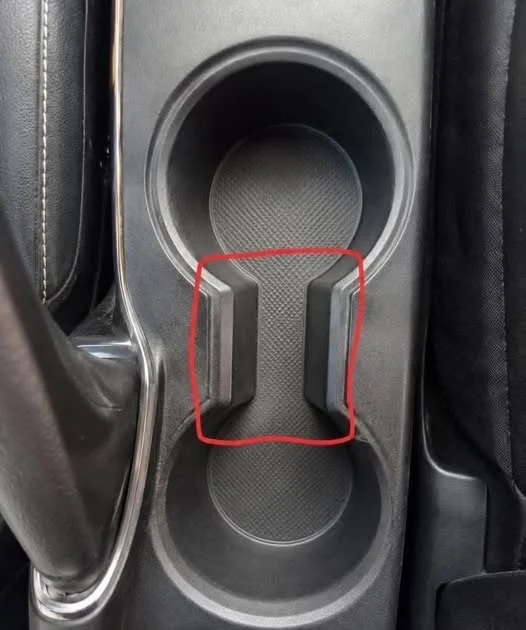
The gap in your car’s cup holders actually has 3 functions
Most drivers have spent years watching crumbs disappear into the narrow gap beside their car's cup holders without ever questioning its purpose. That slot,…