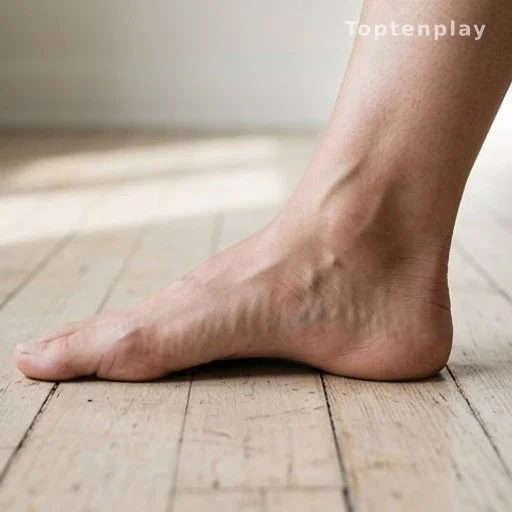
Runners, workers who spend hours on their feet, and anyone regularly wearing shoes with poor arch support face a higher risk of developing the condition. Left without attention, plantar fasciitis can become chronic, progressively limiting daily mobility.
A condition that worsens without early care
Plantar fasciitis develops when the plantar fascia — the ligament supporting the foot arch — is repeatedly strained or overloaded. The pain it causes is most acute during the first steps of the morning because the tissue tightens during rest. Without targeted care, the condition can become chronic and significantly limit everyday movement.
Four stretches that target the arch, calf, and inflamed tissue
The towel stretch is a gentle starting point: sitting with legs extended, loop a towel around the ball of the foot and pull it toward you until a stretch is felt in both the arch and the calf. Hold for 15–30 seconds and repeat two to three times.
The calf stretch addresses one of the root contributors to plantar fasciitis — tight calf muscles that transfer excess pressure onto the fascia. Standing facing a wall, step one foot back with both heels flat, bend the front knee, and press the back heel firmly into the ground for 15–30 seconds per side.
The plantar fascia stretch works directly on the inflamed tissue. Seated in a chair, cross the affected foot over the opposite knee, then gently pull the toes back toward the shin to feel the stretch along the arch. Hold 15–30 seconds, two to three times per side.
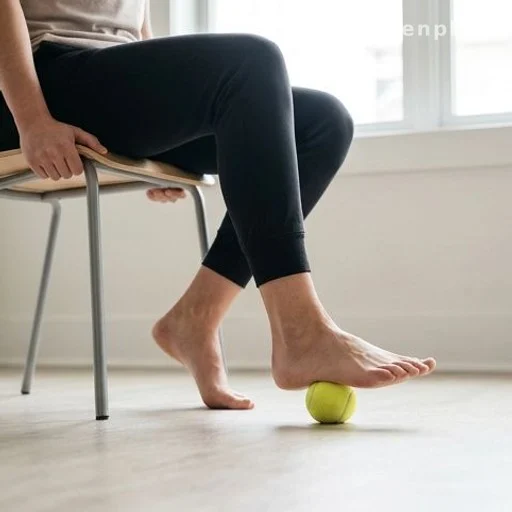
The ball roll functions as a self-massage: place a tennis ball, golf ball, or frozen water bottle under the arch while seated, then roll it slowly back and forth for one to two minutes. Repeating this several times a day — particularly after standing or exercise — helps break up tension and may reduce local inflammation.
Three strengthening moves to support the arch long-term
Toe taps build the small intrinsic foot muscles that underpin arch stability. Seated with feet flat on the floor, lift the toes upward toward the shin while keeping the heels down, hold briefly, then release. Two to three sets of 10–15 repetitions are recommended.
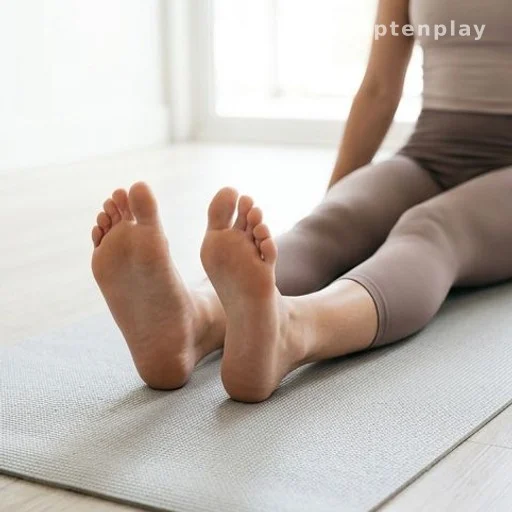
The foot flex and point exercise improves ankle flexibility and reinforces the muscles that support the plantar fascia. With legs extended, alternate between flexing the toes toward the shin for five seconds and pointing them forward for five seconds, repeating 10–15 times per foot.