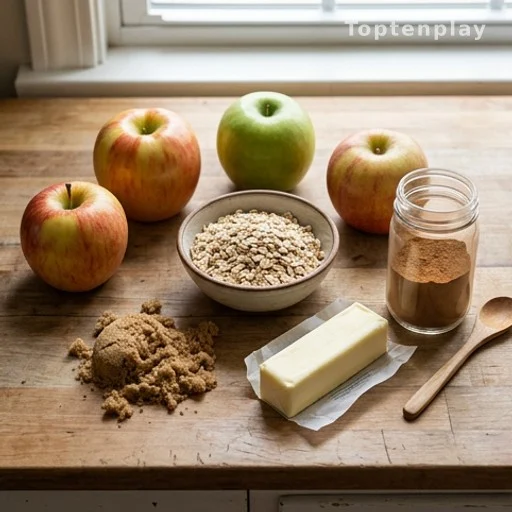
The total cost for six generous servings comes in at under $6, making this one of the more budget-friendly dessert options available without sacrificing flavor or texture. A pinch of nutmeg, a tablespoon of maple syrup, or a handful of chopped walnuts can be added as optional upgrades without changing the fundamental simplicity of the dish.
The recipe is naturally nut-free in its base form and can be adapted to be gluten-free by swapping standard rolled oats for a certified gluten-free variety — a practical detail for households managing dietary restrictions.
Choosing the right apple makes all the difference
Not every apple performs equally well under slow, moist heat. The recipe specifically recommends Honeycrisp, Fuji, or Granny Smith varieties — all firm, sweet-tart apples that hold their shape during the long cooking process rather than collapsing into mush.
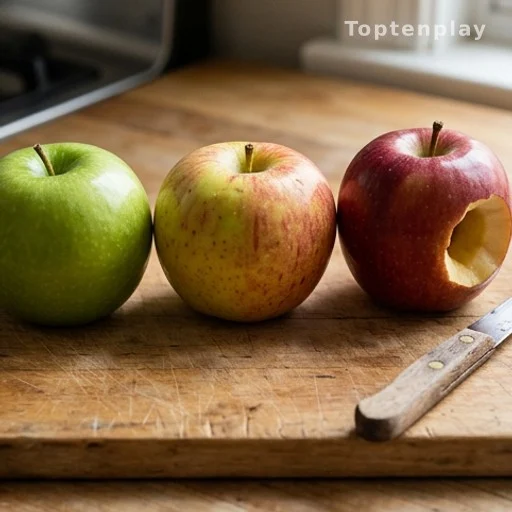
The coring technique matters just as much as the variety. Each apple should be cored carefully, leaving the bottom half-inch intact. That small plug of flesh acts as a natural seal, keeping the oat filling inside the apple rather than letting it sink into the liquid at the base of the slow cooker.
Peeling is optional. Leaving the skin on produces a more rustic texture and helps the apple hold together through cooking. Removing it gives a softer, more uniform result — a choice that comes down to personal preference rather than any technical requirement.
Why slow cookers work so well for fruit desserts
Slow cookers maintain a steady, low temperature that softens fruit gradually without drying it out — a key advantage over oven baking, which can cause the exterior to cook faster than the interior. The sealed environment also traps moisture, meaning the apples essentially steam from the inside out. This method is particularly forgiving for beginner cooks and requires no temperature monitoring.
Water or apple cider in the base: a step that cannot be skipped
Before the lid goes on, half a cup of water or apple cider is poured into the bottom of the slow cooker. This liquid is not incidental — it generates the steam that cooks the apples gently and evenly, and it prevents the sugars from the filling from scorching against the ceramic insert.
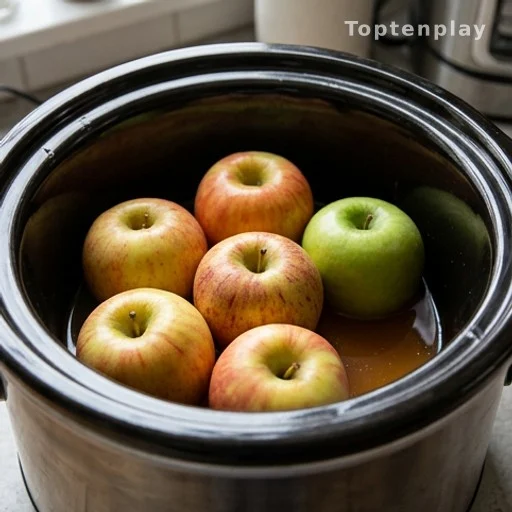
Apple cider is the more flavorful choice of the two, reinforcing the apple notes already present in the fruit and adding a subtle depth to the cooking juices that collect at the bottom of the pot. Those juices can be spooned over the finished apples when serving.