Reinvented Keto Main Dishes: Cauliflower Fried Rice and Tuscan Salmon
The ketogenic diet disrupts the codes of traditional cooking by offering ingenious substitutions that preserve flavors and textures. Two recipes perfectly embody this culinary revolution: cauliflower fried rice and Tuscan salmon in garlic cream.
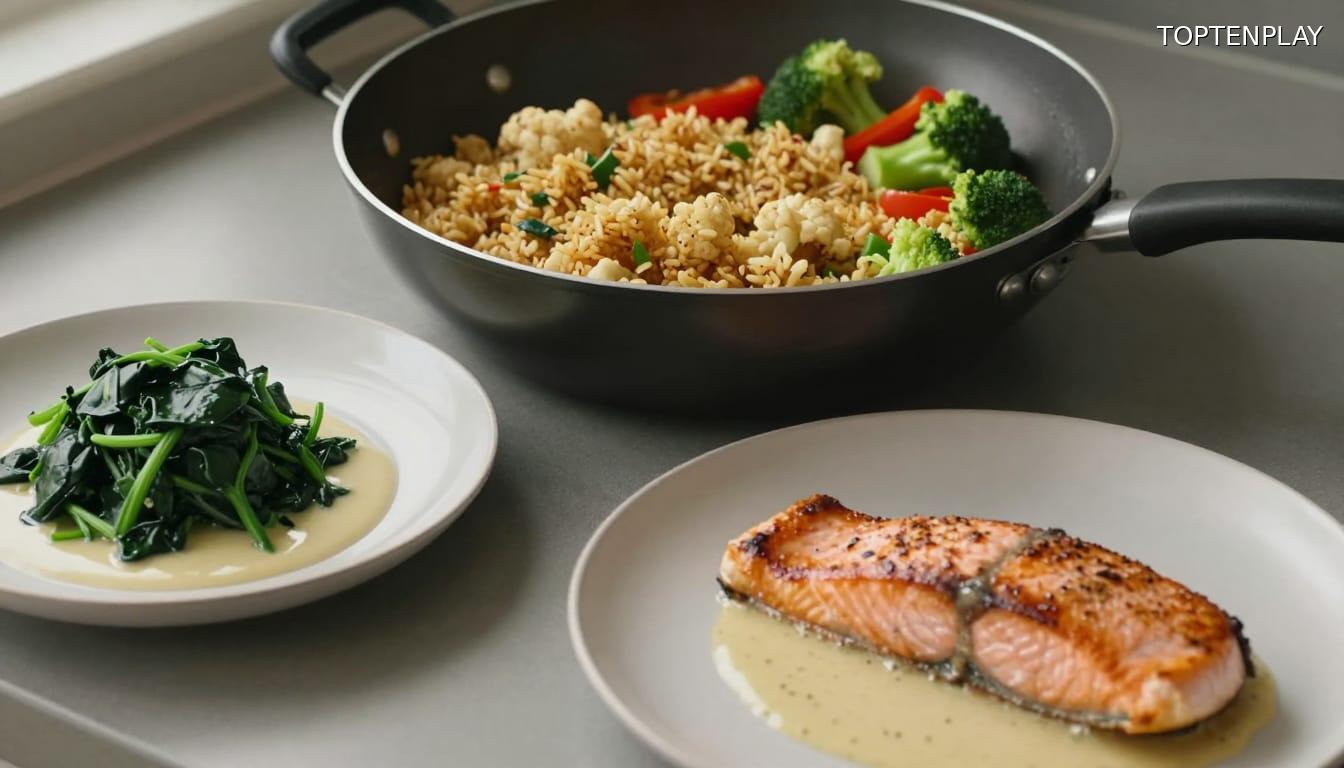
Cauliflower fried rice replaces white rice with grated cauliflower, thus eliminating carbohydrates while maintaining the taste experience of a comforting Asian dish. Preparation requires only 3 to 4 minutes of cooking in 2 tablespoons of coconut oil. Beaten eggs, incorporated directly into the pan, provide protein and creaminess, while mixed vegetables (peppers, broccoli) and soy sauce or tamari create a symphony of umami flavors. This quick cooking technique over medium heat preserves the crunch of the vegetables and avoids the soggy texture often blamed on keto alternatives.
Tuscan salmon illustrates how heavy cream and Mediterranean ingredients transform a simple fish fillet into a gourmet dish. A cup of cream enriched with fresh spinach and sun-dried tomatoes coats the golden salmon, creating a velvety sauce reminiscent of Italian trattorias. Sautéed garlic releases its aromas into the olive oil, while the spinach brings its vegetable touch without weighing down the carbohydrate profile.
These two recipes prove that giving up starches requires no taste sacrifice, opening the way to a rediscovery of vegetables in unexpected forms.
Pasta Alternatives: Zucchini Noodles and Cauliflower Mac and Cheese
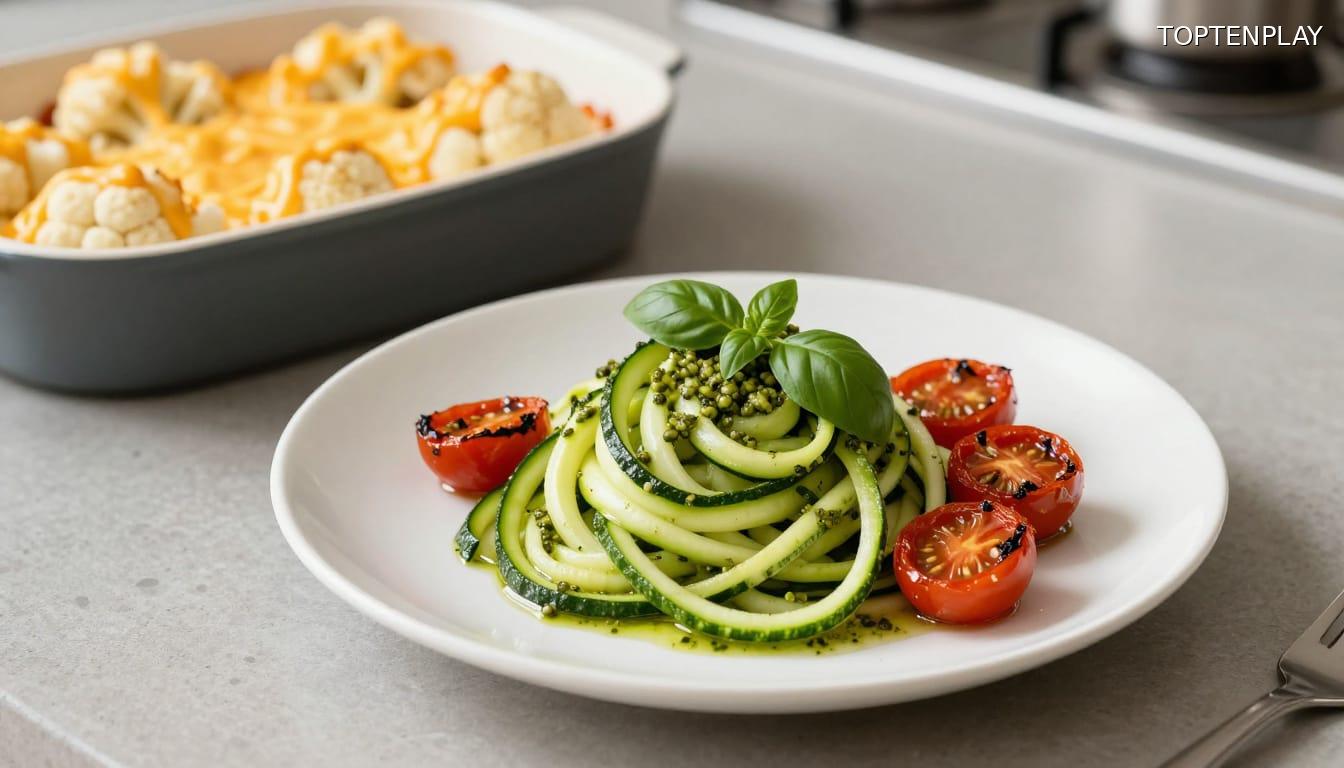
The transformation of vegetables into starch substitutes reaches its peak with two variations that now rival their traditional models. Spiralized zucchini, or zoodles, offer a surprising al dente texture when cooked for exactly 3 to 4 minutes in olive oil. This critical cooking window avoids the excessive release of water that would turn the dish into a watery mush.
Basil pesto, whether homemade or store-bought, coats these vegetable noodles in an herbaceous sauce that pairs perfectly with roasted cherry tomatoes. The latter, sautéed for 2 to 3 minutes until softened, concentrate their natural sugars and bring a welcome touch of acidity. The final grated parmesan adds the characteristic salty note of authentic Italian dishes.
Cauliflower mac and cheese pushes the keto reinvention even further. A whole head of steamed cauliflower replaces the macaroni, smothered in a sauce composed of 2 cups of cheddar melted in heavy cream. The addition of garlic and onion powder compensates for the absence of fresh aromatics while intensifying the flavor profile. Baking in the oven at 375°F for 15 to 20 minutes creates a golden crust on the surface, while the interior remains creamy and smooth.
This low-carb version faithfully reproduces the melting texture and comfort of the classic American dish, demonstrating that traditional culinary techniques adapt remarkably well to modern nutritional constraints.
Keto Culinary Technique: Precision and Execution Tips
Beyond the ingredients, mastering these recipes relies on precise technical gestures that guarantee optimal textures and flavors. The systematic use of healthy oils as a cooking base constitutes the first pillar: coconut oil for cauliflower rice, olive oil for salmon and zoodles. These heat-stable fats preserve nutrients while promoting the satiety characteristic of the ketogenic diet.
The “push to the side” technique perfectly illustrates keto efficiency. By pushing the sautéed cauliflower to one side of the pan, space is created to scramble the beaten eggs before incorporating them into the vegetable rice. This method preserves the distinct texture of each element while optimizing the use of a single utensil. Tuscan salmon applies a similar principle: after browning the fillets, the same pan is used to prepare the creamy sauce, thus capturing the cooking juices that enrich the final result.
Cooking over medium heat is a universal rule across these recipes. Whether it’s the 3-4 minutes to soften the grated cauliflower, the 2-3 minutes to soften the cherry tomatoes, or the al dente cooking of the zoodles, these short times preserve nutrients and crunchy textures. Systematic salt-pepper seasoning at the end of preparation adjusts the flavors without masking the natural tastes of the vegetables, while fresh aromatics provide the final touch that transforms these keto dishes into true gourmet experiences.
The Unexpected Keto Dessert: Chocolate-Avocado Mousse
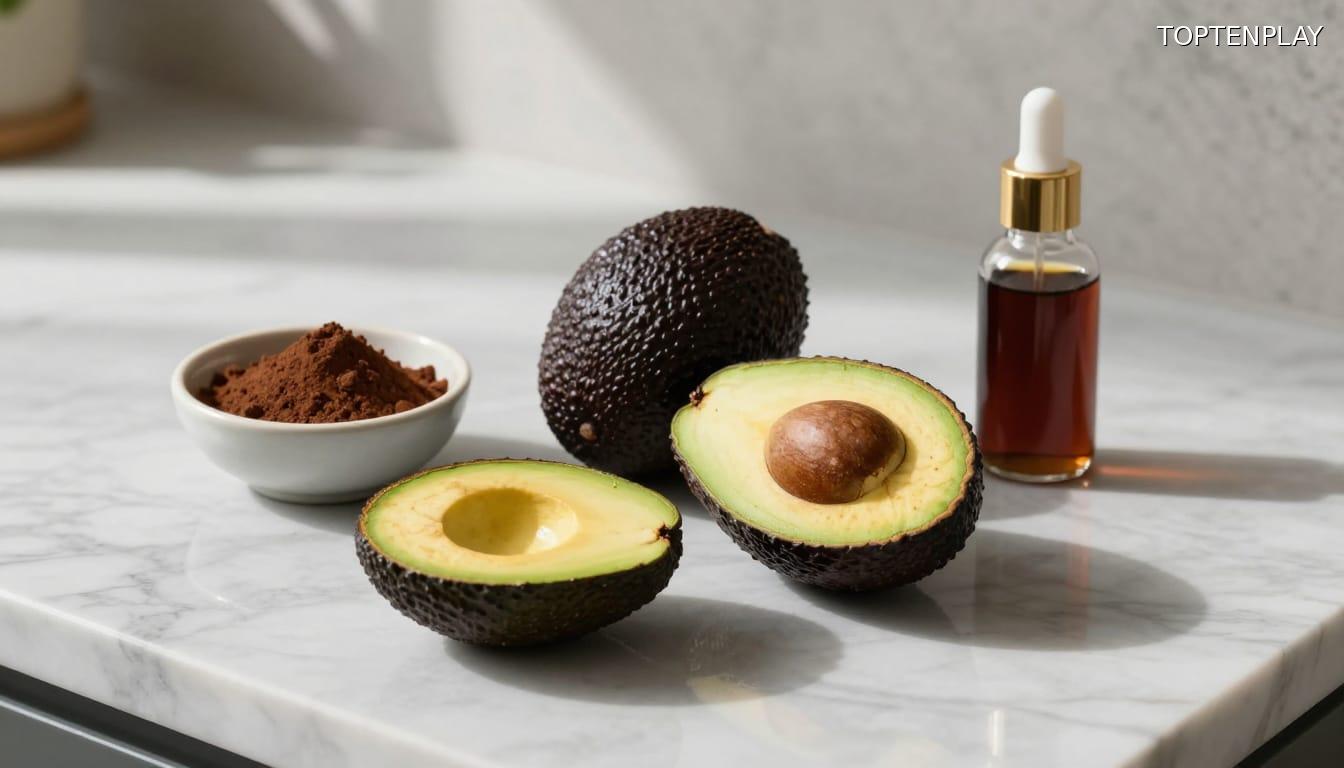
While these cooking techniques apply to savory dishes, the keto revolution extends to dessert with a counter-intuitive association that defies pastry conventions. Two ripe avocados replace traditional dairy products here, their smooth flesh serving as a creamy base for a chocolate mousse of unsuspected decadence. Blended with half a cup of unsweetened cocoa powder, these fruits transform their neutral taste profile into pure chocolate intensity.
The balance of this preparation relies on the intelligent substitution of sugar with low-carb sweeteners like erythritol or stevia. A quarter cup is enough to compensate for the bitterness of the cocoa without causing a glycemic spike, while a teaspoon of vanilla extract and a pinch of salt enhance the aromatic complexity. Almond or coconut milk adjusts the consistency according to preference, allowing for a texture as airy as a classic chocolate mousse.
This final recipe illustrates the fundamental principle of the ketogenic diet: indulgence compatible with strict carbohydrate restriction. Where traditional desserts accumulate refined sugars and flours, this mousse proves that a creative approach to natural ingredients can satisfy sweet cravings while respecting keto macros. Avocado, a fruit-vegetable with healthy lipids, thus becomes the unexpected ally of a sustainable and tasty dietary transition.