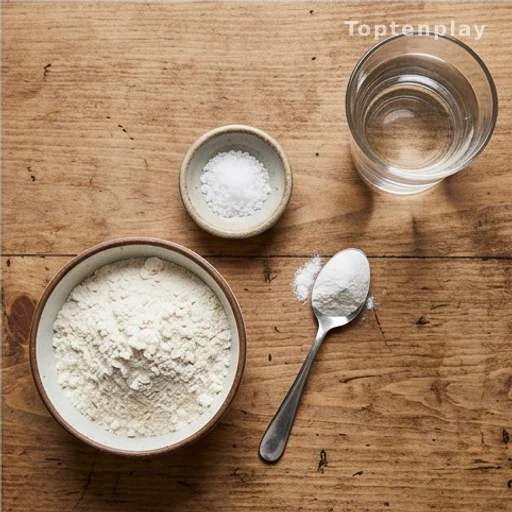
Substitutions are simple and low-cost. Bread flour can replace all-purpose flour for a chewier result. Warm milk in place of water produces a richer, slightly softer flatbread. Both swaps stay well within the under-$3 total for six pieces.
The recipe is naturally nut-free, and a gluten-free flour blend can be used for those with dietary restrictions. With no specialist equipment and no ingredients that require a special trip to the store, this is genuinely an any-night recipe.
Mix, knead for two minutes, then let the dough rest
Making the dough starts with whisking the dry ingredients — flour, baking powder, and salt — directly in a mixing bowl. Warm water and one tablespoon of oil or melted butter are then stirred in until a rough, shaggy dough comes together.
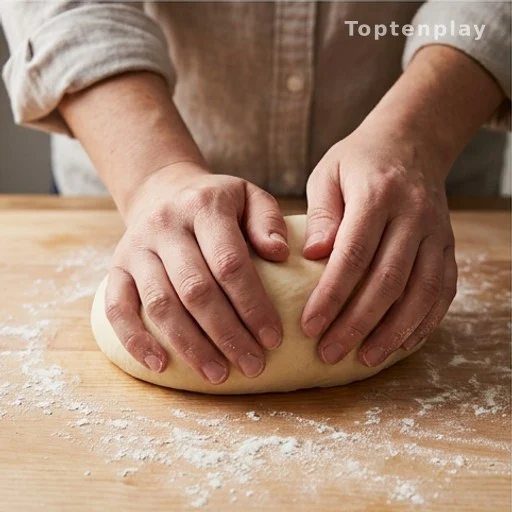
The dough is turned out onto a lightly floured surface and kneaded gently for two to three minutes, just until it becomes smooth. Over-kneading develops too much gluten and can make the finished flatbread tough rather than tender.
Once smooth, the dough is covered and left to rest for 10 to 15 minutes. That short rest allows the gluten strands to relax, which makes rolling significantly easier and produces a noticeably softer bread.
A bread tradition found across every culture
Flatbreads are among the oldest and most widespread forms of bread in the world, found in cuisines from South Asia to the Middle East, North Africa, and Latin America. Most traditional versions share the same principle: a simple dough of flour and water, cooked quickly on a hot surface. This skillet version draws on that same farmhouse logic — no specialized equipment, no lengthy process, and results that rival far more complex recipes.
Thickness at the rolling stage decides the final texture
After resting, the dough is divided into six equal portions. Each piece is rolled out individually on a floured surface. The target thickness is ¼ inch — thin enough to cook through quickly and develop crisp, blistered edges, but substantial enough to stay pliable.
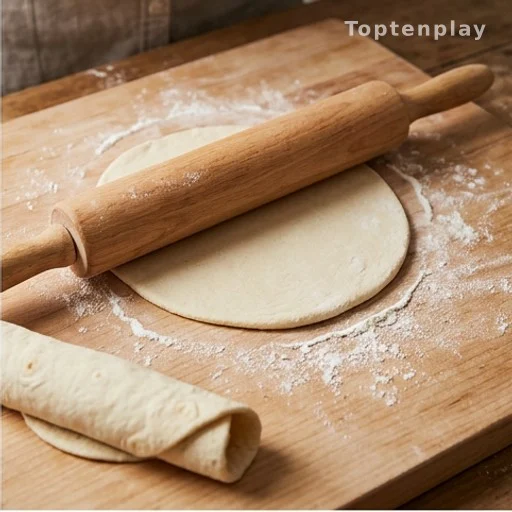
Rolling thicker produces a bread-like result with a soft, pillowy interior. Rolling thinner pushes the flatbread toward a crispier, cracker-adjacent texture with more pronounced charred spots. Both are valid depending on how the flatbread will be used.