The Scientific Explanation Of The Phenomenon
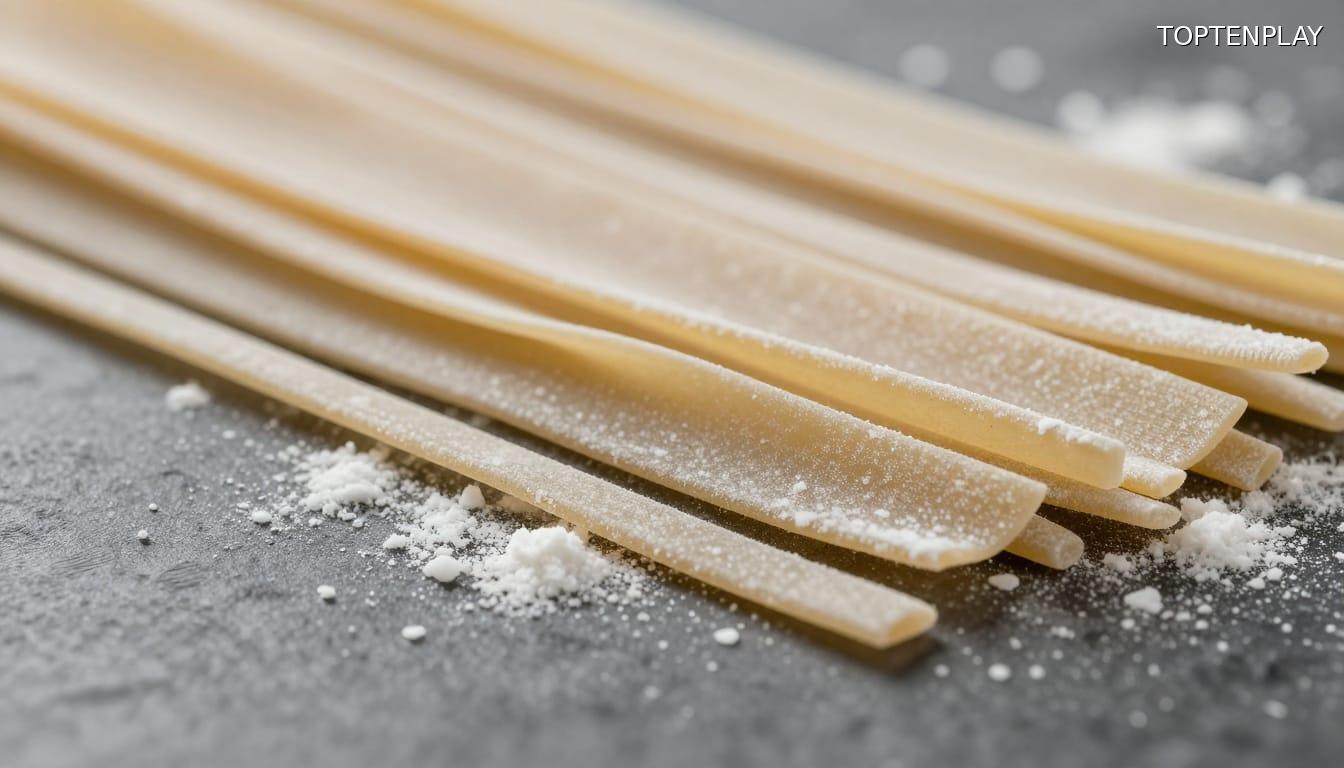
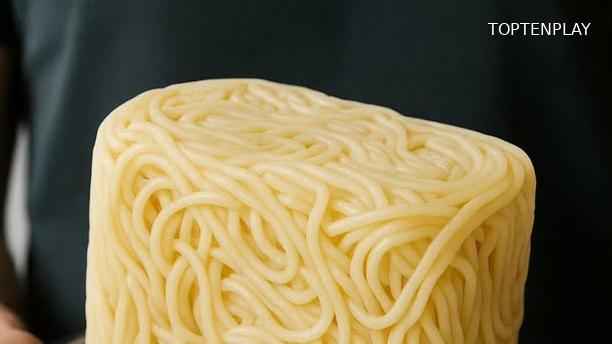
This frustrating transformation of your noodles into a compact and inextricable block is explained by a precise chemical process. During cooking, the noodles release starches that migrate to their surface. Once drained, these starch molecules exposed to air dehydrate quickly, creating a sticky film that literally welds the strands together.
Cooling dramatically amplifies this phenomenon. By losing their heat, the noodles release their residual moisture, making the starch layer increasingly rigid. This double action — drying and cooling — progressively transforms your dish into a compact mass with remarkable adhesive properties.
Space also plays a determining role. When the noodles rest piled up in a colander or a narrow dish, the contact points multiply. Each area where two strands touch becomes a potential bonding site. The more confined the noodles are, the more the surface starch creates molecular bridges between them.
The speed of this reaction often surprises. One minute is enough for the starches to begin their destructive work, explaining why a brief distraction in the kitchen can have disproportionate consequences. This understanding of the mechanism reveals that intervening immediately after draining represents the crucial moment to preserve the ideal texture of your pasta.
Aggravating Factors Of This Transformation
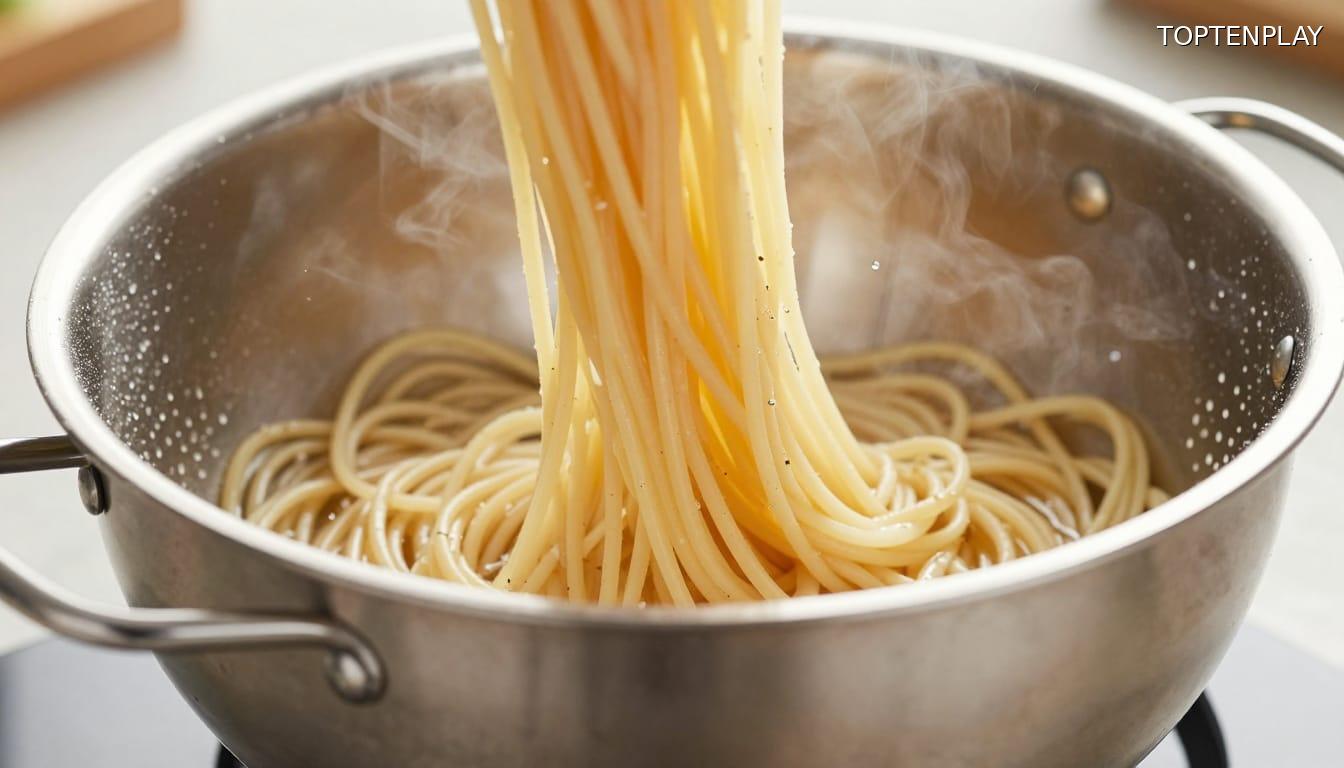
This destructive mechanism does not activate by chance. The cooking water is the primary culprit: it concentrates the starches released by the noodles, creating a saturated starch bath that permeates each strand. Without rapid intervention after draining, this starch-laden film behaves like a fast-setting glue.
The fatal error occurs in those few minutes of inattention. Letting the noodles rest without handling them activates a chemical countdown. The surface starches, still moist at the time of draining, immediately begin their dehydration process. This critical window — generally between 60 and 90 seconds — determines whether your pasta will remain separable or form a monolithic block.
Temperature plays a decisive amplifying role. Every degree lost accelerates the stiffening of the starch layer. Hot noodles maintain a certain flexibility thanks to their internal moisture, but as soon as they start to cool, evaporation intensifies. The starch molecules draw closer, concentrate, and create increasingly resistant bonds between the strands.
This fatal combination — unmanaged starches, prolonged waiting, progressive cooling — explains why a single minute of distraction is enough to irremediably compromise your dish. Understanding these aggravating factors reveals the crucial importance of immediate and targeted intervention right after cooking.
Understanding Starch Behaviors
This immediate intervention relies on precise knowledge of starch properties. Upon contact with air, this starch exposes its adhesive side and instinctively seeks to create bonds with neighboring surfaces. Contrary to popular belief, it is not moisture that sticks the noodles together, but rather the dried starch layer that acts as a natural polymer.
Professional chefs master this chemical reaction by intervening before the starch reaches its critical solidification point. They know that the window of action is measured in seconds, not minutes. Once the starch molecules have crystallized around the strands, separation becomes almost impossible without damaging the texture of the pasta.
Timing is therefore the determining element. Starch goes through several phases: liquid during cooking, gelatinous upon draining, sticky during initial cooling, then definitively solidified after a few minutes of exposure to air. Each phase requires a specific technical response to maintain the structural integrity of the noodles.
This understanding reveals why certain traditional techniques work remarkably well. Rinsing with cold water, adding oil, or constant stirring are not simple folkloric tricks, but scientifically based methods to control the erratic behavior of starch and preserve the separation of strands until serving.
Solutions For Maintaining Perfectly Separated Noodles
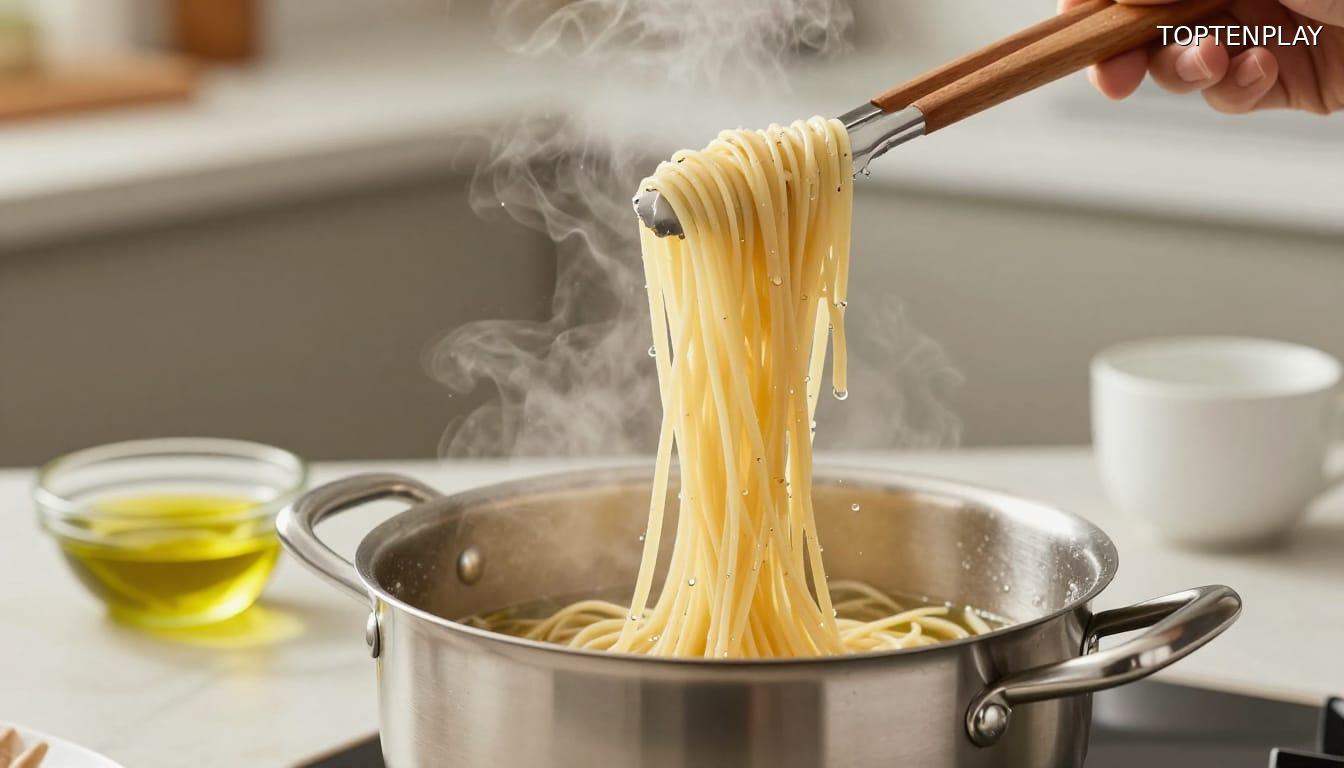
This technical knowledge translates into precise actions that turn an impending disaster into a culinary success. The first rule is to act immediately after draining, before the starch begins its crystallization phase. Professionals systematically reserve a cup of cooking water and use it to keep the noodles slightly moist, creating a temporary barrier against drying.
Adding a fat source constitutes the second line of defense. A spoonful of olive oil mixed vigorously into the still-hot pasta creates a protective film that prevents starch molecules from coming into direct contact. This technique only works if it occurs within thirty seconds of draining, a period during which the starch remains fluid enough to be coated.
A quick rinse with cold water proves particularly effective for preparations that will not be served immediately. This thermal shock removes excess surface starch and instantly stops the gelatinization process. The noodles can then wait for several minutes without risk of clumping, provided they are stirred occasionally.
Prevention, however, remains the most reliable approach. By scrupulously respecting the timing and keeping the noodles in constant motion until serving, the formation of the dreaded compact block becomes physically impossible. These simple gestures guarantee perfectly separated pasta, ready to welcome any sauce without compromise on texture.