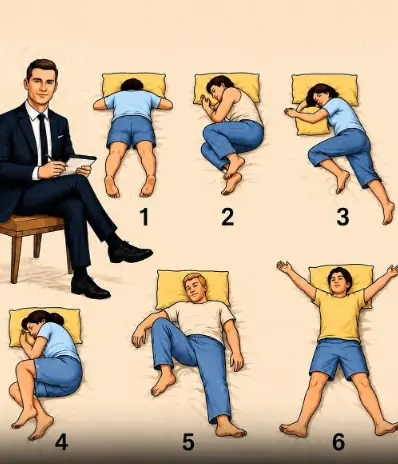
The way you position yourself in bed each night could reflect more than just a comfort preference. Psychologists and body language specialists have long suggested that sleeping positions may hint at personality tendencies and emotional habits — though these associations remain informal observations, not scientific diagnoses.
In brief
- —Six sleeping positions, each linked to distinct personality traits
- —No scientific proof these links are real, experts warn
- —Posture is also shaped by age, pain, and mattress quality
Stomach and fetal sleepers: control, sensitivity, and the need for security
People who sleep face down with their arms above or around the pillow are often described as independent and protective. Despite an outwardly confident appearance, they are said to be surprisingly sensitive to criticism and to prefer having control over their surroundings.

Trust does not come easily to them, according to these interpretations, but once a bond forms they tend to become loyal and dependable companions.
The fetal position — curling on one side with knees drawn toward the chest — is one of the most common sleeping styles. Those who favor it are generally described as caring, thoughtful, and emotionally aware. They may appear reserved at first meeting but tend to open up gradually and build lasting friendships. The position is also seen as reflecting a search for comfort and emotional security after a stressful day.
Body language and sleep: a long-standing but informal field
The idea that physical posture during sleep reflects psychological tendencies has circulated among psychologists and body language specialists for decades. These interpretations draw on the assumption that unconscious resting positions reveal habitual emotional states. No peer-reviewed framework, however, has established a validated link between sleep posture and personality type.
Pillow-huggers and relaxed side sleepers: empathy, balance, and adaptability
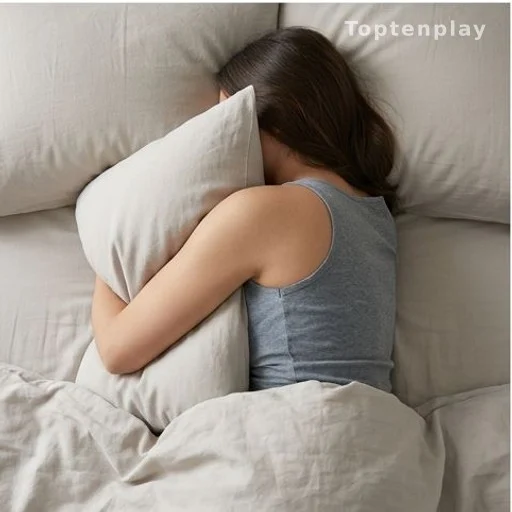
Those who naturally hug a pillow while sleeping are said to place high value on close relationships. Personality interpretations associate them with building trust easily, preferring peaceful environments, avoiding unnecessary conflict, and showing empathy toward others.
A related but distinct posture — sleeping on one side with legs only slightly bent, rather than tightly curled — is linked to a different profile. These sleepers are described as balanced, adaptable, and emotionally stable, tending to think carefully before major decisions and remaining calm when unexpected challenges arise.
Others reportedly perceive them as dependable and easy to get along with.
One leg raised, arms wide open: adventure and confidence in two contrasting postures
Sleeping on one side with a single leg bent upward is an unusual position frequently associated with adventurous personalities. Those who adopt it are said to enjoy new experiences, adapt quickly to change, and dislike overly predictable routines. Despite their spontaneous streak, they are generally described as determined once they commit to a goal.
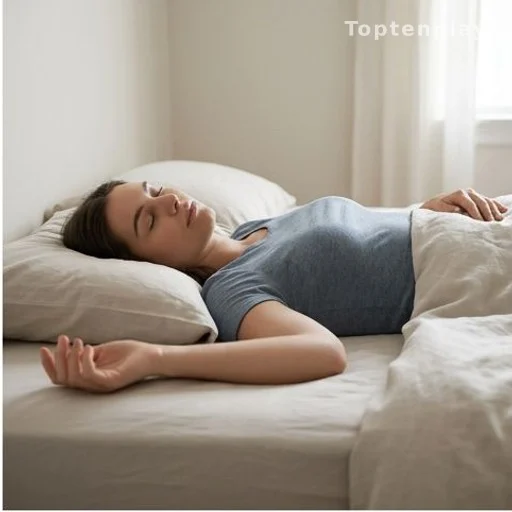
At the opposite end of the spectrum, sleeping flat on the back with arms spread wide is linked to confidence and optimism. People who favor this posture are said to enjoy leadership roles, value honesty, and appreciate clear communication in both personal and professional settings.
There is a practical note attached to back sleeping, however: it may increase snoring in some individuals, making the position less comfortable for certain sleepers.
No scientific proof: why experts call these observations, not diagnoses
The source is explicit on one point: there is no strong scientific evidence proving that sleeping position alone determines personality. Experts recommend treating these descriptions as entertaining observations rather than medical or psychological conclusions.

Sleeping posture is shaped by a wide range of physical and practical factors, including age, mattress quality, existing pain or injuries, pregnancy, and sleep disorders. Comfort and habit play an equally significant role.
The broader takeaway, according to the source, is that while a preferred position may hint at how a person seeks comfort or responds to stress, it cannot fully define who they are. Getting enough high-quality sleep each night remains the factor that matters most.
As sleep research continues to evolve, the question of whether posture carries any measurable psychological signal remains open. No large-scale study has yet tested these associations in a controlled setting, leaving the field squarely in the realm of popular psychology for now.