What if the best weekend recipe is the one you make without rushing, while the house smells of warm vanilla? This vanilla-prune ice cream mostly requires calm, a bit of planning, and a real night’s rest in the cold. The result is simple, round, with that family dessert feel that lingers in your mouth.
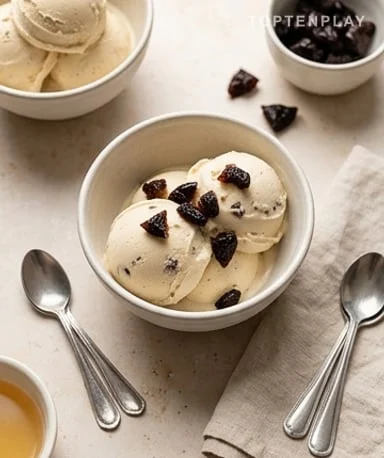
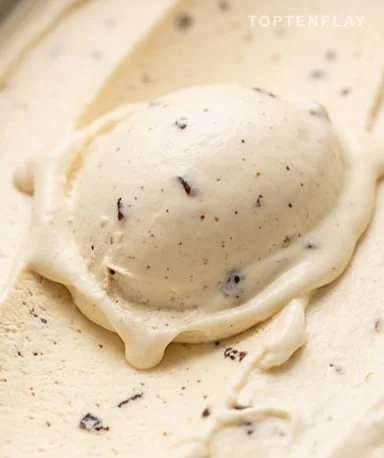
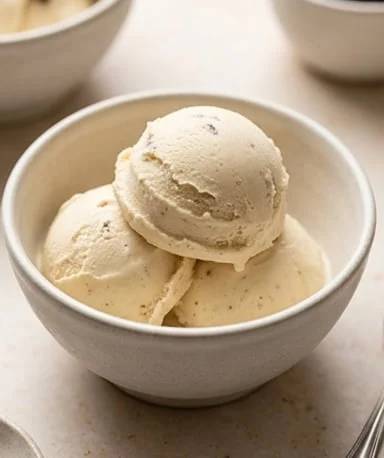
The ice cream comes out pale and creamy, dotted with small bits of dark, shiny prunes. With a spoon, it should bend softly, not break like a block of ice. The vanilla brings a sweet, almost buttery scent, while the prunes add a fruity, deep, slightly candied note. It’s exactly the kind of dessert you make on Saturday to serve calmly on Sunday.
Why you’ll love this recipe
Ingredient Notes
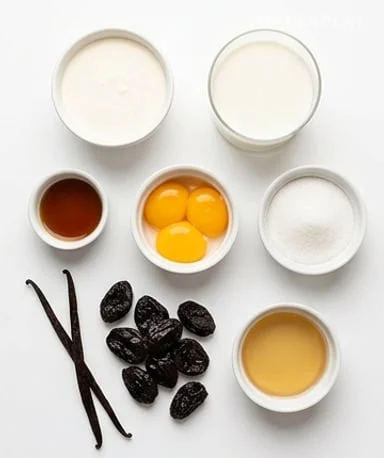
Cream, milk, egg yolks, sugar, vanilla, and prunes: simple, but you need good products.
- Heavy cream : It provides the fat needed for a soft, velvety texture. Choose liquid heavy cream, not light, otherwise the ice cream becomes harder and less pleasant in the mouth.
- Whole milk : It lightens the base without making it watery. If you want a richer ice cream, replace a small part of the milk with cream, but keep balance to avoid a too-heavy effect.
- Egg yolks : They thicken the base and help the ice cream stay creamy after freezing. Use fresh eggs and heat gently: if the cream boils, it curdles and smells like sweet omelet.
- Sugar : It’s not just for sweetness, it also limits crystal formation. Regular white sugar is fine, but a small amount of brown sugar can add a warmer note with the prunes.
- Vanilla : It perfumes the cream and gives that sweet scent that hits you right during heating. A split pod is ideal, but a good quality natural extract works well.
- Prunes : They bring fruit, softness, and a slight candied depth. Choose tender, shiny prunes; if they’re dry, soak them in cooled black tea or reduced grape juice.
Prepare a base that coats the spoon
Start by gently heating the milk, cream, and vanilla, just enough to see a light steam rise from the pot. This slow heating awakens the vanilla scent without rushing the dairy. Meanwhile, whisk the yolks with sugar until the mixture is lighter, thick, and slightly satiny. Gradually pour the hot liquid over the yolks, then return to low heat, stirring constantly. The right texture comes when the cream coats the spatula: it glides slowly, leaving a clear trail when you run your finger.
Let the prunes become soft
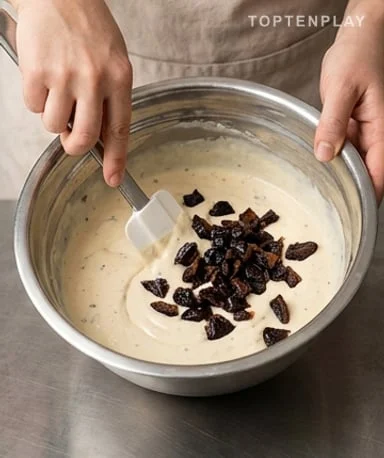
Prunes shouldn’t be thrown into the cream as is if their flesh is firm. Cut them into small pieces, then let them soften in a flavored liquid like cooled black tea or reduced grape juice. They will become shinier, softer, and their flavor takes on an almost stewed note. Drain them well before adding, otherwise excess liquid can form icy flakes. This short rest really changes the final texture.
Cool without skipping steps
A warm base put too quickly in the freezer often gives a coarse ice cream with crystals that crunch under the tooth. Pour the cream into a clean container, press plastic wrap onto the surface, and let it cool in the fridge until well chilled. It should smell clearly of vanilla and have a smooth texture, almost like thick custard. This rest also lets flavors settle. On the weekend, it’s the right time not to cheat on this wait.
Mix to keep the ice cream soft
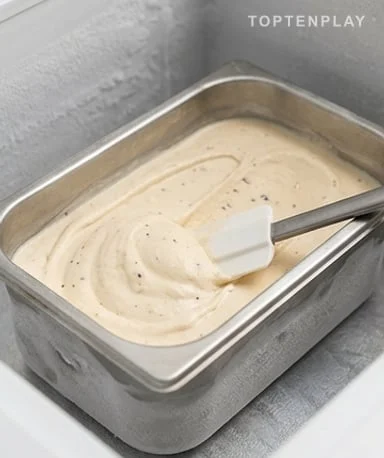
If you have an ice cream maker, churn the base until it reaches a dense, gelato-like texture, then fold in the prunes at the end so they stay evenly distributed. Without a machine, place the base in the freezer and stir vigorously every 30 to 40 minutes at first. The goal is to break the crystals before they set. You’ll see the cream go from liquid to foamy, then thick and cold, with a dull sound under the spatula. Add the prunes when the ice cream starts to hold, otherwise they sink to the bottom.
Serve after a few minutes’ wait
Homemade ice cream often comes out very firm from the freezer, especially without additives. Let it sit at room temperature for five to ten minutes before scooping. The surface becomes slightly shiny, the edges round off, and the spoon glides in without force. Serve in cold bowls or on a plate with a few prune bits. It needs little else: too much accompaniment would mask its milky sweetness and candied fruit.
Tips & Tricks
- Taste the base before freezing and adjust sugar slightly, because cold dulls the perception of sweetness once the ice cream is set.
- Cut the prunes small enough that they are pleasant to eat frozen, otherwise large pieces become too hard under the tooth.
- Press plastic wrap onto the cream during resting, because a skin on the surface would create unpleasant bits in the ice cream.
- Take the ice cream out a few minutes before serving, because a too-cold texture masks the vanilla and makes the prunes less soft.
Can I make this ice cream without an ice cream maker?
Yes, but you need to stir it several times during freezing. The first stirs break the crystals and give a finer texture, especially with a cream-rich base.
Which prunes should I choose for this ice cream?
Choose soft, shiny, pitted prunes. If they are a bit dry, soak them in cooled black tea or grape juice before adding.
Why must the cream be cooled before freezing?
A well-chilled base freezes faster and forms fewer crystals. It also retains its vanilla flavor and smooth texture better.
How long does homemade ice cream keep?
It keeps for about 2 weeks in the freezer in a sealed container. After that, it’s still edible, but the texture becomes harder and the flavors less clear.
Why take the ice cream out before serving?
Homemade ice cream is firmer than commercial ice cream. Letting it sit 5–10 minutes at room temperature makes it softer and the prunes more melt-in-your-mouth.
Vanilla-Prunes Ice Cream
French
Frozen Dessert
A creamy, soft, and fruity homemade ice cream, perfect for preparing on the weekend when you can let the base rest quietly.
Ingredients
- 300ml heavy cream
- 250ml whole milk
- 4 egg yolks
- 90g sugar
- 1 vanilla bean
- 160g pitted prunes
- 120ml cooled black tea or grape juice
- 1 pinch salt
Instructions
- 1Cut the prunes into small pieces and let them soak for 20 minutes in cooled black tea or grape juice, then drain thoroughly.
- 2Split the vanilla bean, scrape the seeds, then gently heat the milk, cream, seeds, and pod until just steaming.
- 3Whisk the egg yolks with sugar and salt until the mixture is paler and slightly thick.
- 4Gradually pour the hot mixture over the yolks while whisking, then return everything to the saucepan.
- 5Thicken over low heat, stirring, until the cream coats the spatula, without letting it boil.
- 6Remove the vanilla pod, pour the cream into a container, press plastic wrap onto the surface, and let cool completely in the refrigerator.
- 7Churn in an ice cream maker until creamy, then add the drained prunes at the end of churning.
- 8Without a machine, place the base in the freezer and stir every 30 to 40 minutes for 3 hours, adding the prunes when the ice cream starts to thicken.
- 9Transfer to an airtight container and let set in the freezer for at least 8 hours before serving.
Notes
• Take the ice cream out 5–10 minutes before serving to restore a soft texture.
• Do not boil the egg cream, otherwise it may curdle.
• Drain the prunes well to avoid crystals in the ice cream.
• For a richer texture, replace 50ml of milk with 50ml of cream.
Nutrition Facts (per serving, estimated)
| 350 kcalCalories | 5gProtein | 36gCarbs | 20gFat |