We often imagine the flan pâtissier as a display dessert, a bit technical, reserved for bakers. In reality, it’s mainly a well-managed cream, a calm bake, and a real resting time. It’s the ultimate comfort food dessert: simple, dense, vanilla-flavored, with that cold slice that holds neatly on the plate.
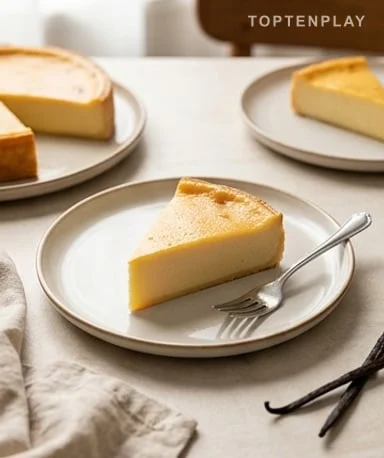
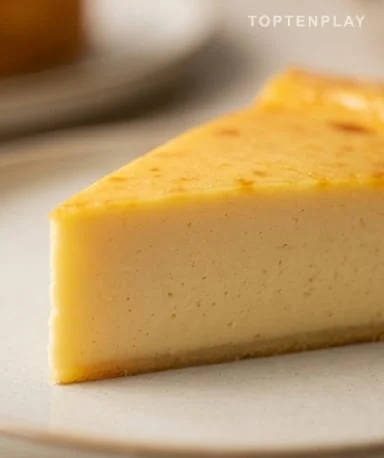
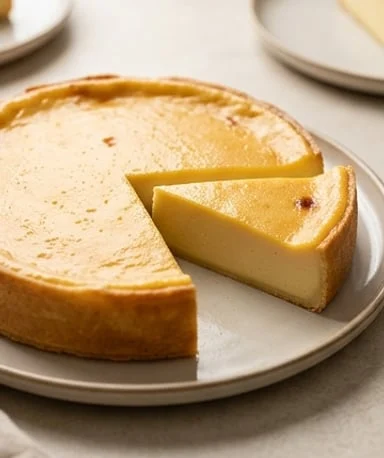
A good flan pâtissier should have a nicely golden top, almost speckled, and a pale yellow cream that barely trembles when you cut a slice. At the first bite, the vanilla comes gently, then the whole milk gives that creamy roundness that lingers on the tongue. The crust, if you use one, provides a crispy edge that contrasts with the smooth heart. It’s the kind of dessert that smells like a Sunday bakery, without fuss, but with real presence.
Why you’ll love this recipe
Ingredient Notes
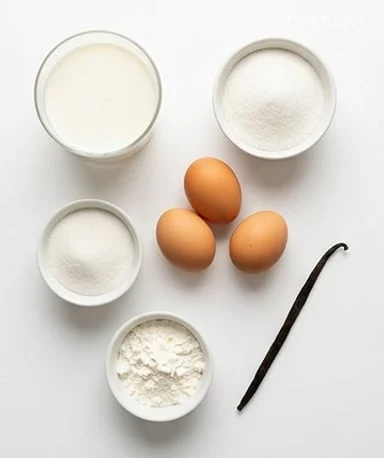
Whole milk, eggs, sugar, cornstarch, and vanilla: few ingredients, so don’t skimp on quality.
- Whole milk : It provides the body and milky flavor of the flan, with that round and smooth sensation in the mouth. Choose whole milk rather than semi-skimmed: the cream will be more velvety and less watery after chilling.
- Eggs : They structure the cream and give it its soft yellow color. Use eggs at room temperature if possible; they mix more easily and avoid too abrupt a shock with the hot milk.
- Sugar : It sweetens, of course, but also helps soften the texture and balance the cornstarch. You can slightly reduce the amount if you prefer less sweet desserts, but don’t go too low or the flan will seem flat.
- Cornstarch : It thickens the cream before baking and ensures a clean cut. Sift it or incorporate it gradually to avoid small white lumps that are easily felt in such a smooth cream.
- Vanilla : It gives the soul of the dessert, that warm aroma that releases as the milk heats. A pod infused in the milk gives the best result, but a good vanilla extract works well if you want to keep it practical.
- Shortcrust or puff pastry : It serves as a base and provides a crispy contrast with the cold cream. Shortcrust gives a neater, more traditional result, while puff pastry will be lighter but also more fragile when cutting.
A flan with character, not a timid cream
Start by heating the milk with the vanilla, gently, without boiling like a forgotten pan. The goal is to infuse the flavor, not to cook the milk noisily. When steam begins to rise and the vanilla scent becomes clear, turn off the heat or lower it significantly. If using a pod, scrape the seeds well: they give those tiny black specks and a deeper flavor. This step seems quiet, but it already decides whether your flan will have taste or just a vague milky sweetness.
The egg-sugar mixture deserves more than a quick whisk
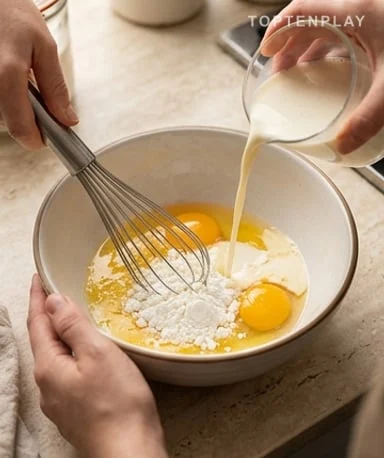
Whisk the eggs with the sugar until the mixture is lighter, slightly frothy, but no need to aim for a sponge cake texture. This gesture dissolves part of the sugar and prepares a more even base to receive the cornstarch. Then add the cornstarch, mixing carefully, because lumps love to hide at the bottom of the bowl. The texture should become smooth, thick, almost silky under the whisk. If it catches or you see small dry packets, take thirty seconds now: it’s always easier than fixing a grainy cream after cooking.
Hot milk is poured patiently, or it will take revenge
Pour the hot milk little by little over the egg mixture, whisking non-stop. If you dump it all at once, the eggs may coagulate and you’ll end up with a cream that smells good but has the texture of a thin omelette. The right rhythm is a steady stream, then a whisk that turns calmly, until the bowl becomes warm in your hands. Then return everything to the pan and thicken over medium heat. The cream is ready when it coats the spatula firmly, becomes heavy and shiny, with a dull sound when you stir the bottom.
Baking should brown, not dry out
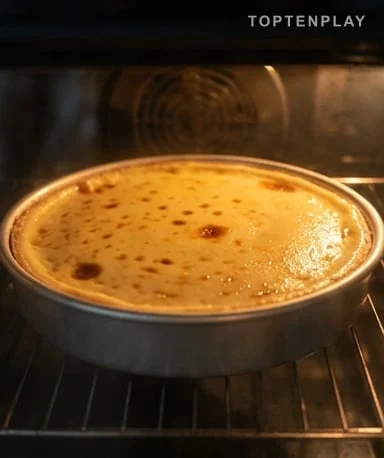
Pour the thickened cream into the mold, onto the cold pastry if using one, or directly into a prepared mold. Smooth the surface without overdoing it: small waves will largely disappear in the oven. At 180°C, the flan should bake until the top is golden, with some darker areas that signal a slightly caramelized taste. It can still tremble slightly in the center, that’s normal, as it will finish firming up as it cools. The real trap is to extend the baking out of fear: an overbaked flan becomes dry, heavy, and loses the creamy heart that makes all its charm.
Rest is non-negotiable
When out of the oven, let the flan cool down quietly to room temperature before refrigerating. It will settle a bit, firm up, and its golden surface will become more matte. In the fridge, the aromas settle and the cream takes on that cold, dense, melting texture expected from a true flan pâtissier. Two hours is the minimum; overnight is often better. The cut then becomes clean, the blade glides through the cream, and the slice stands upright without collapsing on the plate.
Tips & Tricks
- Strain the cream before pouring it into the mold: this removes any small lumps or cooked egg bits, and gives a smoother texture in the mouth.
- Keep the pastry chilled while you prepare the cream: a well-chilled pastry holds better in the oven and absorbs moisture from the filling less quickly.
- Don’t overbake even if the center moves slightly: the flan continues to set as it cools, whereas overbaking makes the cream floury and less melting.
- Wait until completely cool before unmolding or cutting: warm, the flan seems fragile and the cream deforms; cold, it slices cleanly with a nice creamy thickness.
Can you make a flan pâtissier without a crust?
Yes, and it works very well. Simply pour the thickened cream into a buttered or lined mold, then bake as directed: you’ll have a lighter flan, very creamy, with a slightly more fragile cut.
Why does my flan pâtissier release water?
Most often, it was overbaked or not cooled enough before cutting. Let it set in the fridge for at least 2 hours, ideally overnight, to get a clean, melting texture.
How to avoid lumps in the cream?
Pour the hot milk gradually over the eggs while whisking constantly. If you want a really smooth texture, strain the cream before pouring it into the mold.
Should I use shortcrust or puff pastry?
Shortcrust pastry gives a more classic result, more stable and easier to cut. Puff pastry adds crispiness, but it softens faster in contact with the cream.
Can I prepare the flan pâtissier the day before?
Yes, it’s even better. The cold rest firms up the cream, intensifies the vanilla flavor, and allows for very neat slices.
Vanilla Flan (Flan Pâtissier)
French
Dessert
A homemade flan pâtissier, nicely golden, creamy in the center, and perfumed with vanilla. A simple, comforting recipe, perfect for dessert or afternoon tea.
Ingredients
- 1 l whole milk
- 4 eggs
- 150 g sugar
- 100 g cornstarch
- 1 tsp vanilla extract or 1 vanilla pod
- 1 shortcrust or puff pastry, optional
Instructions
- 1Preheat the oven to 180°C.
- 2Line a mold with the pastry if using, prick the bottom with a fork, then set aside in the fridge.
- 3Heat the milk with the vanilla in a saucepan without bringing to a boil.
- 4Whisk the eggs with the sugar in a bowl until the mixture lightens slightly.
- 5Add the cornstarch and mix until smooth.
- 6Gradually pour the hot milk over the egg mixture, whisking constantly.
- 7Return the mixture to the saucepan and cook over medium heat, stirring, until thickened.
- 8Pour the cream into the mold, over the pastry or directly into a prepared mold.
- 9Bake for 40 to 45 minutes, until the top is golden.
- 10Let cool to room temperature, then refrigerate for at least 2 hours before cutting.
Notes
• For a very smooth texture, strain the cream before pouring into the mold.
• The flan may tremble slightly in the center when taken out of the oven: it firms up in the fridge.
• An overnight rest gives better hold and a more distinct vanilla flavor.
• Store in the refrigerator for 3 to 4 days, well covered.
Nutrition Facts (per serving, estimated)
| 260 kcalCalories | 7gProtein | 34gCarbs | 10gFat |