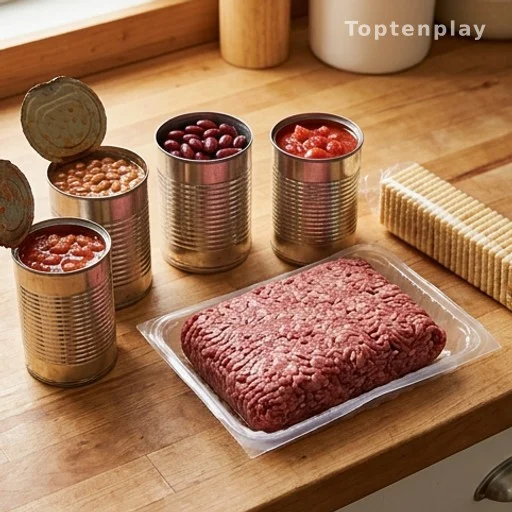
The core shopping list is deliberately short: 1½ lbs (680g) of ground beef, two 15-oz cans of baked beans, one can of kidney beans, one can of diced tomatoes, a small onion, and a cup of crushed buttery crackers such as Ritz or saltines. Unsalted butter binds the crumb topping.
Optional additions — a teaspoon of mustard, half a teaspoon of garlic powder, or a dash of brown sugar — allow cooks to adjust the flavor profile without straying from the spirit of the dish. The recipe is also naturally nut-free and can be made gluten-free with a simple cracker swap.
The Pennsylvania Dutch cooking tradition
Pennsylvania Dutch cuisine refers to the food traditions of German-speaking settlers — including Amish and Mennonite communities — who established farms in Pennsylvania from the 17th century onward. Their cooking is defined by practicality: minimal waste, abundant use of preserved and canned goods, and dishes designed to sustain large households through long working days. Casseroles, stews, and one-pot meals are central to this tradition.
15 minutes of prep: browning the beef and building the filling
The process begins by preheating the oven to 350°F (175°C) and lightly greasing a 9×13-inch baking dish. While the oven warms, ground beef and finely chopped onion go into a skillet over medium heat until fully browned, then excess fat is drained off.
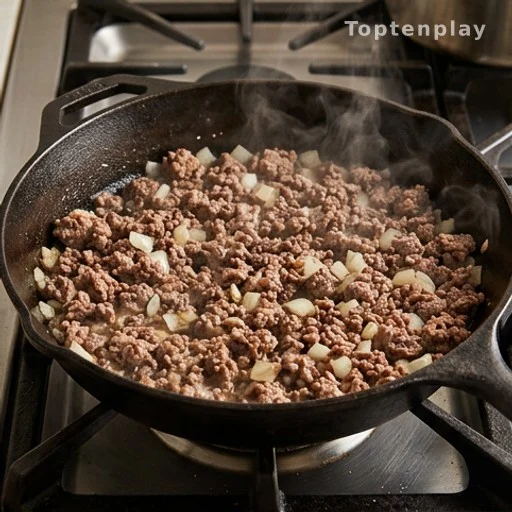
Choosing lean ground beef — a 90/10 blend — is recommended to reduce the amount of fat that needs draining, keeping the filling clean and cohesive. Once the beef is ready, it is combined in the baking dish with both types of beans and the undrained diced tomatoes.
A key detail: the baked beans should not be rinsed. Their sauce carries significant flavor and adds richness to the finished casserole, acting as a natural binding liquid that ties the filling together during baking.
The golden cracker topping that sets this casserole apart
Once the filling is assembled in the baking dish, the finishing touch is a layer of crushed buttery crackers mixed with 2 tablespoons of melted unsalted butter. This mixture is spread evenly across the top before the dish goes into the oven.
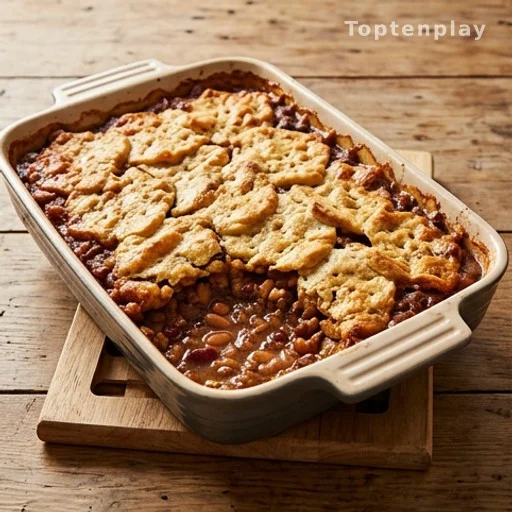
The technique for crushing the crackers matters more than it might seem. Crushing them by hand — rather than using a food processor — produces uneven crumbs of varying sizes. That irregular texture creates a topping with more contrast: some pieces turn deeply golden and crisp while others stay slightly softer, adding complexity to every bite.